


To set up spring preload, we first measure the spring’s free length without any load to guarantee accuracy. Next, we adjust the preload using the collar system, tightening until the springs rattle, indicating zero preload. Remember to document ride height changes and spring compression at full droop. Keeping an eye on preload levels is essential since too much can stiffen the ride, while too little leads to movement issues. There’s more to explore about optimizing your settings!
Key Takeaways
- Measure the free length of the spring accurately using calipers, ensuring no load compresses the spring during the measurement.
- Adjust preloads using compatible collars and straight-handled tools to maintain safe and precise adjustments.
- Establish a zero preload baseline by tightening the preload nut until the springs rattle, then secure adjustments.
- Test suspension after adjustments by measuring ride height and documenting shock shaft extension for accurate evaluation.
- Understand the impact of preload levels on vehicle dynamics, adjusting for preferred ride quality and performance.
Understanding Spring Preload
When we plunge into the world of spring preload, it’s fascinating to see how this technique can markedly enhance the performance and reliability of various systems. Fundamentally, spring preload involves compressing a spring to create initial spring tension, ensuring it’s always under load. By doing this, we reduce the risk of coil binding, which can lead to uneven performance. The key here is setting up the right amount of preload. We can measure it by adjusting the upper spring adjuster; each additional inch we compress adds to the preload. This careful setup allows springs to respond more accurately to external forces, making our systems more stable and efficient. Ultimately, understanding spring preload is vital for achieving best mechanical performance! Additionally, proper setup of shock absorbers can further enhance vehicle handling and stability.
Importance of Spring Preload

Understanding the importance of spring preload can truly transform how we approach mechanical systems. By implementing preload, we enhance system stability and control, eliminating gaps between components for precise alignment, especially under vibrations or shocks. This tight connection prevents unwanted movement and guarantees smoother operation. We also experience improved response and sensitivity, allowing our systems to react rapidly to changes and external forces. This is especially critical in high-speed operations or applications needing quick adjustments. The preload benefits extend to an even load distribution, reducing fatigue and component wear, thereby enhancing reliability. Ultimately, consistent preload enhances bearing performance and prolongs their life, leading to better vehicle performance, safety, and overall machinery efficiency. Additionally, using high-quality spring steel can significantly improve the durability and performance of the preload system.
Measuring Free-Length of the Spring
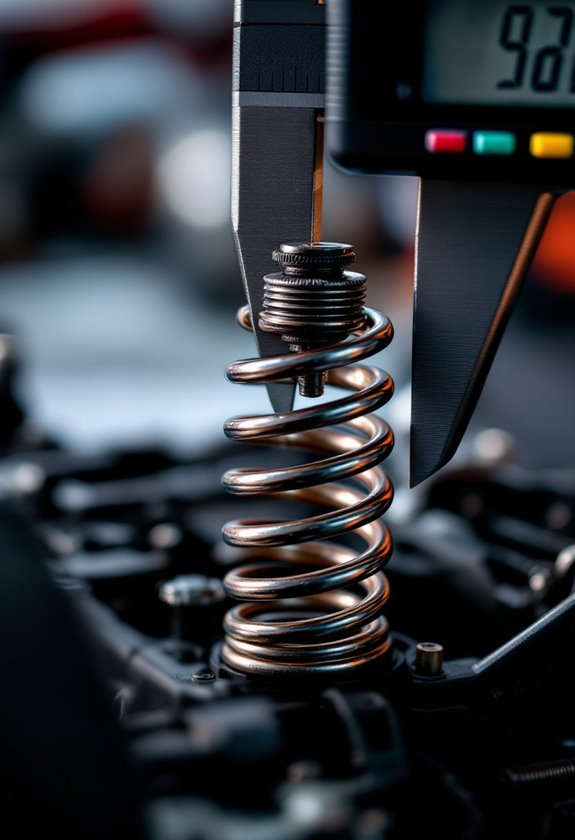
Measuring the free length of a spring is a crucial step in establishing its overall performance and reliability. This measurement, taken without any load, captures the spring’s natural dimension, right off the manufacturing floor. We should use calipers for this task, making sure we achieve measurement accuracy. To get the best results, we need to measure the spring length and wire diameter to three decimal places. It’s important to avoid compressing the spring during measurement. We’ll want to record multiple measurements since coil dimensions can vary. Remember, the accuracy of the free length affects our calculations for spring rate and travel distances. This measurement is essential for ensuring our springs work efficiently in various applications. Additionally, measurement accuracy is critical for achieving desired performance and tuning adjustments.
Signs of Incorrect Preload

Detecting signs of incorrect preload in your springs is essential for ensuring a smooth ride and ideal vehicle performance. When we hear loud coils or strong rattling noises while hitting bumps, it usually indicates insufficient spring tension. If our front end starts chattering during turns or feels light, it’s likely due to improper preload adjustments. We might also notice harsh jolts or the rear end slapping during compression events, signaling a lack of support. Uneven tire wear can indicate our springs aren’t properly holding up the vehicle, leading to further handling issues. If our ride remains bouncy even after replacing shocks, it’s time to re-evaluate our spring preload setup. Additionally, understanding droop travel can help us gauge suspension performance and optimize our setup. Let’s keep our suspension in top shape!
Achieving Zero Preload Configuration

Achieving a zero preload configuration can revolutionize your vehicle’s suspension performance, especially when we want to take full advantage of our springs’ capabilities. This setup occurs when the upper spring adjuster just contacts the spring without applying any compression. Here, we maximize available suspension travel because we’re fully utilizing the spring’s compression range.
Consider the importance of spring length in this setup; different lengths can achieve the same ride height with zero preload. Furthermore, this configuration allows our suspension geometry to remain effective, improving handling and reducing stiffness. Plus, there are no pre-compression limitations, which means better absorption of bumps. Overall, zero preload transforms how our vehicle responds during dynamic driving situations, making it essential for peak performance. Additionally, maintaining proper material durability ensures that your suspension components can withstand the rigors of performance driving.
Method for Setting Zero Preload
When setting up a zero preload configuration, it’s essential to follow a methodical approach to verify top suspension performance. First, we’ll measure the free-length of the spring when it’s fully unloaded. This gives us a baseline for accuracy. Next, we can use the rattling technique; by tightening the preload nut while gently rattling the spring, we can detect the contact point when the spring perches make proper contact. Once they stop rattling, we’ve hit zero preload! We also need to check thread visibility above the preload nuts. Each inch of thread shows how much preload we’ve set. This way, we confirm our springs aren’t compressed unnecessarily, allowing smooth movement along the shock body during use. Regular maintenance of your tools, such as cleaning RC shock tools, is crucial to ensure optimal performance and longevity throughout the tuning process.
Adjusting Preload With the Collar System
Adjusting preload with the collar system can greatly enhance your bike’s performance, ensuring a smooth and responsive ride. By selecting the right collar compatibility for your shocks, like the lightweight billet aluminum options or single-piece designs from FOX, we can achieve ideal setup. We can use various adjustment techniques, such as straight-handled tools, which let us adjust without risk of injury, or preload adjuster sticks for precise control. Remember, maintaining appropriate preload prevents coil bind and maintains ride quality. If we tweak preload levels, we can quickly adapt our bike for different track conditions, enhancing our overall experience. With the right knowledge and tools, adjusting preload is a straightforward yet effective way to improve our ride.
Tools Required for Preload Setup
Setting up preload effectively requires having the right tools on hand. To achieve adjustment precision, we need a variety of tool types. A C-spanner wrench specifically designed for shock absorber spring preload adjustment is vital, while a T-handle manual adjustment tool provides the leverage necessary for hand-operated systems. Heavy-duty gloves and pliers help in gripping adjustment knobs easily, guaranteeing a firm hold during the process. Don’t forget your hammer and punch tools; they’re indispensable for loosening and tightening lock nuts. Specialized options like the XTRIG Shock Pre-Load Adjuster deliver precise control. With these tools, we can guarantee that our preload setup is effective and safe, enhancing overall performance.
Steps for Preloading the Spring
Preloading the spring is an essential step in enhancing your suspension setup, and we’re excited to guide you through it! First, let’s install the coilovers with the springs mounted correctly. Verify that the dual rate nuts are positioned high, leaving the springs loose. We’ll lift the vehicle completely off the ground for easy access. Next, we establish a zero preload baseline by gradually tightening the preload nut while gently rattling the springs until they stop moving. Then, calculate your target preload based on your vehicle’s specifications, tightening the nut incrementally. Finally, secure the adjustment by locking the collars together and verifying the wrap of the spring along the shock body. Proper spring dynamics guarantees your suspension performs at its best!
Effects of Different Preload Levels
When we think about the effects of different preload levels on our suspension setup, it’s vital to recognize how even small adjustments can greatly impact our ride quality and performance. Increasing preload raises ride height, giving our vehicle a more aggressive stance but reduces suspension travel. This means that while we might feel a stiffer ride, tire contact improves, enhancing traction during articulation. On the flip side, low preload settings allow for more suspension compression, which can lead to a smoother ride on uneven terrain. Finding those ideal settings is imperative, especially for short-travel suspensions, as the preload effects can be amplified. Ultimately, understanding how preload impacts our setup helps us achieve our desired driving experience.
Common Mistakes to Avoid
It’s easy to overlook the finer details when we’re adjusting our preload settings. One common mistake is setting insufficient preload, which can cause noisy coils and unwanted movement in suspension components. We also need to be careful with excessive preload, as it can compromise spring performance and limit travel length. Another major preload misconception is using it to adjust ride height; most setups require zero preload for accurate height adjustments. Additionally, selecting the wrong spring rates can lead to bottoming out or coil bind. Finally, always remember to check vehicle-specific requirements. Different platforms have unique preload specifications, and we shouldn’t assume one size fits all for spring selections. Adjust with care to achieve best results!
Testing Suspension After Adjustment
Testing suspension after adjustments is essential for guaranteeing we achieve ideal performance from our vehicle’s setup. We start by measuring ride height at each corner, checking static sag with just the vehicle weight, and documenting shock shaft extension. This helps us verify our preload adjustments. During suspension tuning, we’ll also measure spring compression at full droop to establish a baseline. Don’t forget to watch for negative preload conditions, guaranteeing springs remain in contact with seats throughout the travel. As we apply dynamic load testing, we’ll check how the suspension responds under braking and during turns. Finally, monitor ground clearance and guarantee even ride height across all corners to confirm that our preload adjustments have been effective.
Final Thoughts on Spring Preload
Now that we’ve gone through the process of testing suspension adjustments, let’s take a moment to discuss spring preload and its significance. Understanding spring preload applications is crucial for improving overall vehicle performance. By intelligently adjusting preload, we enable our suspensions to respond quickly to the terrain, leading to smoother rides and better traction on those big bumps.
Here are some preload adjustment tips: verify the load is evenly distributed across springs, monitor the incremental changes, and remember that short-travel systems may require more precise tuning. Ultimately, proper preload helps not just with responsiveness but also extends the lifespan of components, reducing maintenance costs. Embracing these concepts can transform our riding experience for the better!
Frequently Asked Questions
How Does Preload Affect Tire Wear?
Excessive preload negatively impacts tire longevity, leading to irregular wear patterns and increased temperatures. By managing preload effects, we can maintain proper tire contact, ensuring better performance and extending the life of our tires.
Can Preload Settings Differ for Front and Rear Springs?
Absolutely, we can tweak preload settings for front and rear springs. Picture our ride transforming; adjusting preload tension enhances handling, with each spring’s unique characteristics impacting performance, creating a smooth and balanced experience through every twist and turn.
Is There a Maximum Preload Limit for Safety?
Yes, there’s definitely a maximum preload limit for safety. We should always adhere to preload measurement guidelines to avoid damaging our suspension system. Ensuring preload safety keeps our rides smooth and prevents unnecessary injuries from potential failures.
How Does Preload Influence Shock Absorber Performance?
Preload greatly impacts shock response; it alters how our suspension absorbs bumps. Excessive preload can lead to harshness and reduced sensitivity, while ideal preload enhances ride quality, control, and performance during varied riding conditions.
Can Preload Adjustments Cause Alignment Issues?
Absolutely, preload adjustments can lead to alignment problems. Like a tightrope walker teetering on a wire, improper preload can shift corner weights and disrupt our vehicle’s stability, making precision tuning essential for a balanced ride.