As an Amazon Associate, we earn from qualifying purchases. Some links on this site are affiliate links at no extra cost to you. Our recommendations are based on thorough research and editorial judgment.

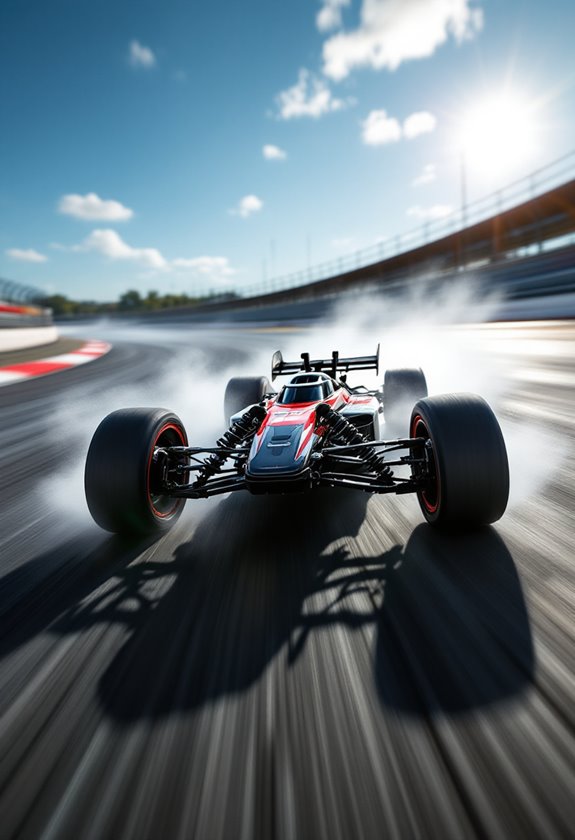
How To Setup Redcat Racing Cars?

To set up your Redcat Racing car, we’ll start with the radio control system. First, power off the LR6X radio and reset it to factory settings. Then, bind the transmitter and receiver by inserting the bind plug and powering them on together. Next, we’ll tune the nitro engine, adjusting the high-speed needle for full throttle and the low-speed needle for initial throttle responsiveness. We can also optimize car handling through suspension adjustments and guarantee our fuel system is primed and ready for action. Interested in specifics? Let’s dive deeper!
Key Takeaways
- Begin by binding the transmitter to the receiver, ensuring both are set to compatible modes for reliable communication.
- Configure the nitro engine by following proper tuning procedures and using the correct fuel for optimal performance.
- Prime the fuel system effectively by creating a vacuum to draw fuel into the engine, ensuring readiness before operation.
- Fine-tune the suspension and alignment settings to enhance handling and cornering capabilities for best racing performance.
- Regularly maintain the electric starter system and clean all components to ensure longevity and consistent operation.
Radio Control System Setup
You may be interested

Setting up the radio control system for your Redcat Racing car can feel like a thrilling adventure! First, we need to guarantee that our LR6X radio is fully powered off. Let’s set the transmitter’s ON/OFF switch to the OFF position. We must hold the cancel/save button until it beeps, resetting it to factory settings. While setting up, keep channel switches 3-6 all the way down. Next, we insert the bind plug into the B VCC slot on the receiver and power on the vehicle. When we see a fast blinking light, it means we’ve entered bind mode! Let’s hold the bind button as we turn the transmitter on. After binding, we might need to check for any necessary firmware updates to address potential radio troubleshooting! Additionally, ensuring proper transmitter and receiver binding is crucial for a stable connection.
Nitro Engine Configuration and Tuning
Nitro Engine Configuration and Tuning
Configuring and tuning your nitro engine can be an exhilarating part of the Redcat Racing experience! To get started, let’s make sure we’ve done our pre-tuning vehicle preparation. We’ll want to apply blue medium thread lock to engine mount screws and check that our air filter is oiled and installed properly. Once we run the engine for 3-7 minutes to reach peak temperature, we can begin tuning.
First, adjust the high-speed needle for smooth, strong full-throttle action. Next, we’ll move on to the low-speed needle, which governs fuel flow during initial throttle opening. Remember, adjusting the idle speed is the last step. Additionally, using a recommended fuel range of 20-25% nitro can significantly enhance performance. With careful tuning, our engine will perform fantastically on the racetrack!
Recommended Products

Miniature: Treated by aluminum CNC processing and oxidation coloring, the delicate engine features a meticulous surface, compact structure and lightweight body.

Make sure to LUBE SEAL BEFORE 1st USE, or it will tear and leak. As called out in the instructions.

🔧【All-in-One Engine Care Kit】Includes F-Type metal plug, 75ml plastic fuel tank, 50cm silicone oil pipe (3mm inner/5mm outer), and a 3-in-1 ignition module for seamless engine maintenance and upgrades
Suspension and Alignment Adjustments
When it comes to suspension and alignment adjustments, achieving peak performance for our Redcat racing cars is essential for a thrilling driving experience. First, we should focus on suspension tuning by fine-tuning the factory alignment. For better drift capabilities, we need to increase the steering angle closer to 90 degrees. Be certain to monitor the trailing wheel to prevent binding during these adjustments.
Next, let’s consider ride height and camber settings. Setting the ride height correctly guarantees we avoid excessive squat or lift. Negative camber can enhance cornering grip, but we must balance that with straight-line traction. With proper alignment techniques, our cars will perform at their best, enhancing every thrilling lap we take on the track! Additionally, incorporating quality shock absorbers can significantly improve handling and stability, further elevating the performance of our Redcat racing cars.
Fuel System Preparation
Preparing the fuel system for our Redcat racing cars is crucial, especially if we want to guarantee a smooth and reliable start. First, we’ll focus on fuel priming. We need to remove the air filter so we can access the carburetor directly. Next, with one hand plugging the exhaust tip, we can pull the cord to create a vacuum that draws fuel to the engine. We should feel a sprinkle sensation during this pull, indicating successful priming.
Now let’s adjust the air-fuel mixture for peak performance. The high-speed needle should be set 3.5 turns out from the brass fitting. By tweaking this and the low-speed needle, we guarantee our car runs smoothly through all throttle ranges, making our racing experience much more enjoyable! Additionally, using high-octane fuel is recommended to improve combustion efficiency and power output.
Recommended Products

Stunning Realism: The Redcat Custom Hauler features a meticulously crafted officially licensed 1953 Chevrolet "COE" body with a two-tone paint finish, chrome accents, and exquisite interior detailing, providing a visually striking and realistic appearance.

UNLEASH DRIFTING THRILLS: Experience precision control and sideways action with Redcat RC drift cars shaft-driven 4WD, scale drift tires, and a realistic drift body that slides effortlessly through every corner

UNLEASH MINI MONSTER POWER – Experience heart-pounding speed with a powerful 390 brushed motor, splash-proof ESC, and full-time 4WD. Conquer pavement, dirt, and grass with unmatched performance in a 1/16 RC truck
Initial Vehicle Setup Requirements
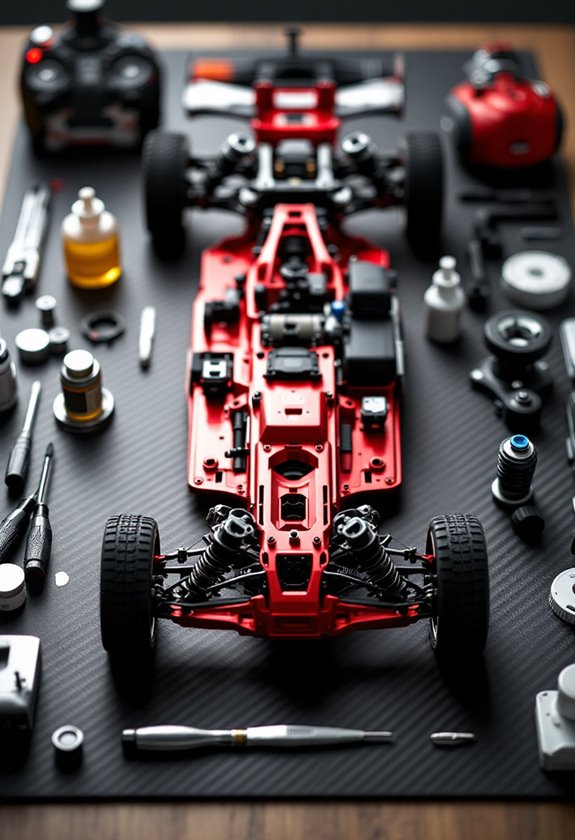
Setting up your Redcat racing car involves several key steps that guarantee your vehicle is ready for action. First, we need to confirm our radio system is functioning. We should install fresh batteries in both the transmitter and the vehicle, then turn on the transmitter before the receiver to avoid any mishaps. Next, we’ll perform a range test, moving controls to check responsiveness, especially turning functions.
Then, it’s essential to configure our Electronic Speed Controller (ESC) correctly, confirming it matches our vehicle specifications and part compatibility. High-quality speed controllers enhance battery life, ensuring efficient power management for peak performance. Finally, battery installation is critical; we need to follow the required pack configurations and keep connections secure for peak performance. Let’s get everything set up accurately for a thrilling race day!
Engine Starting and Break-in Procedures
Getting your Redcat racing car’s engine started and properly broken in is essential for its performance and longevity. To begin, we’ll run through multiple fuel tanks utilizing specific break-in procedures. During this process, we need to complete about four 15-minute sessions with 10-minute cooling periods in between for effective engine cooling. We’ll manage the throttle carefully, keeping it at 25 percent to avoid aggressive inputs. After these sessions, we’ll perform full-throttle runs in a straight line to finalize the break-in. Remember, we should vary RPMs and not exceed 5,000 during this initial stage. Finally, consistently apply after-run oil post-operation to protect the engine. This patience and care will pay off with improved performance and reliability! Additionally, understanding the importance of fuel tank capacity can help you plan your sessions more effectively, ensuring longer playtime and fewer interruptions.
Dual Rates Feature Adjustment
How can we enhance our driving experience with the dual rates feature on our Redcat racing cars? This awesome feature lets us adjust steering sensitivity and travel range for various driving conditions. By double-clicking the bind button, we set our channel to adjust these settings effectively. We can achieve a soft steering option perfect for beginners or switch to tight cornering sensitivity for more advanced maneuvers. The dual rates control helps prevent servo burnout by limiting excessive travel, ensuring our components stay safe during intense races. Remember, maximizing the dual rate settings gives us full steering motion when needed. With these adjustments, we’ll have precise control for any driving scenario, making every race even more exciting!
Battery Installation in Transmitter
Now that we’ve mastered adjusting the dual rates feature for precision control in our racing experience, it’s time to tackle another important aspect: battery installation in the transmitter. First, we need to choose our battery types. For R3C controllers, we’ll use four AA alkaline batteries, while two AA batteries work for basic Volcano-16 models. Now, let’s follow the installation precautions. We should slide off the battery cover and align the positive (+) terminals with the markings inside. Firmly insert the batteries, ensuring good contact before replacing the cover. After we finish, the power LED should light up! Remember, never mix old and new batteries or different types, and always check expiration dates for the best performance.
Recommended Products

UNSTOPPABLE CLIMBING POWER – Conquer rocks, trails, and tough terrain with rc crawler contain forward-mounted 550 42T brushed motor and quick-change under-drive transfer case for effortless gear tuning

BRUSHLESS POWER: Features a high-performance 3450KV outrunner motor delivering exceptional torque and speed with improved runtime efficiency for optimal crawling performance.

BRUSHLESS POWER: Features a high-performance 3450KV outrunner motor system delivering exceptional torque and speed with improved runtime efficiency for optimal crawling performance.
Connecting Additional Receivers
Connecting additional receivers to your Redcat Racing car can elevate your racing experience by allowing more versatility and control. To start, we need to guarantee that our transmitter enters bind mode before powering on the receiver. By pressing and holding the bind button while turning on the transmitter, we’ll see a rapid LED flash, indicating we’re on the right track. The receiver will automatically enter bind mode upon powering up in this sequence.
Remember to check mode compatibility for your receiver—newer models use the AFHDS protocol, while older ones may need AFHDS 2A. After binding, power cycle the transmitter to complete the connection. Proper installation guarantees that you’ll enhance your racing setup thoroughly!
Understanding Carburetor Types
Carburetors are the unsung heroes of our engines, playing a critical role in how well our Redcat Racing cars perform on the track. Understanding carburetor types helps us select the right one for our vehicles. For nitro engines, like the VX.16 and VX.18, carburetors require specific fuel mixtures, adjusting for methanol fuel systems. Models like Lightning STR and Tornado BB benefit from these specialized types. On the other hand, gas-powered engines, using Walbro carburetors, rely on gasoline fuel delivery. Each engine type has its unique fitting requirements and displacement considerations. By knowing the differences in carburetor types and fuel mixtures, we can guarantee our Redcat Racing cars run smoothly, maximizing performance on any course!
Engine Priming Techniques
When we’re gearing up to hit the track, understanding the engine priming techniques can make all the difference in our Redcat Racing cars. First, we’ll fill the fuel tank completely with nitro fuel using the included filler bottle. Next, we’ll turn on the transmitter and receiver before priming. By inserting the electric starter into the engine flywheel, we can turn over the engine and plug the exhaust port to create back pressure. For manual priming, we’ll remove the air filter, block the exhaust tip, and pull the starter cord in short bursts. We must watch for visible fuel flow entering the carburetor, confirming that our engine is ready to roll. Let’s get that engine primed right!
Using the Electric Starter System
While starting our nitro engines might have once seemed like a chore, the electric starter system revolutionizes that experience! This handy tool replaces the traditional pull starter, making ignition a breeze. First, let’s cover some installation tips. Verify you’ve set the proper gear mesh between the starter motor and the engine flywheel for seamless operation. After installation, test the system to confirm the starter engages and disengages properly.
This electric starter delivers consistent and reliable performance compared to manual methods. With just the push of a button, our nitro engines roar to life! So, let’s plunge into the world of electric starter systems, and enjoy smoother starts and less hassle on the track!
Recommended Products

🔧 Realistic L2 Engine Design Experience real twin-cylinder nitro engine structure with visible crankshaft, timing belt, camshaft, compression system, and glow plugs — a compact build that mimics real engine mechanics.

High-Powered 775-size motor for engine-firing torque and long life

Complete 4 Gauge OFC CK-Series 2-Channel Amplifier Installation Kit
Maintenance and Storage Tips
After getting our nitro engines running smoothly with the electric starter system, we need to think about keeping our Redcat Racing cars in top shape. First, let’s implement some cleaning techniques. After every run, we should remove dirt, debris, and moisture. This helps avoid performance degradation. Next, let’s stick to a lubrication schedule. We’ll apply silicone-based lubricants to plastic parts and oil-based ones to metal components. Regularly servicing drivetrain components is key to smooth operation. Don’t forget to inspect the electronics for damage and keep them clean to prevent corrosion. Finally, always charge and store batteries according to the manufacturer’s guidelines to maintain their lifespan. By following these tips, we can guarantee our cars perform at their best!
Frequently Asked Questions
What Is the Best Surface for Racing Redcat Vehicles?
For racing Redcat vehicles, we believe flat tracks are best for speed and control, while off-road terrain challenges our skills and vehicle performance. Both surface types offer unique thrills, enhancing our overall racing experience.
How Do I Clean and Maintain My Redcat Racing Car?
Like a well-oiled machine, our Redcat racing cars deserve careful attention. We’ll use effective cleaning techniques and follow essential maintenance tips to keep them running smoothly, ensuring peak performance and longevity for our thrilling adventures.
What Spare Parts Should I Keep on Hand?
We should keep essential spare parts like bearings, differential components, and tires on hand, along with essential tools such as screwdrivers and tire glue. This way, we can quickly tackle any maintenance issues that arise.
How Do I Troubleshoot Common Issues With My Redcat Racing Car?
When our Redcat racing car stutters like it’s lost its spark, we can tackle common problems with troubleshooting tips: check bindings, calibrate ESC, and verify batteries aren’t draining. Let’s keep our thrill on track!
Can I Upgrade My Redcat Vehicle With Aftermarket Parts?
Yes, we can absolutely upgrade our Redcat vehicles with aftermarket parts! These upgrades offer performance benefits and compatibility with various models, enhancing our driving experience and ensuring our cars stay competitive on the track.