


Shock tools are essential in drilling operations, and their function is to boost efficiency while safeguarding equipment. They absorb vibrations, protect drill bits, and reduce wear on the drill string. Key components like elastomeric elements and Belleville spring assemblies work together to maintain consistent pressure on the bit, increasing your drilling speed. Using these tools can greatly enhance your performance, and there’s much more to discover about their technical features and applications!
Key Takeaways
- Shock tools absorb vibrations to protect drill bits, enhancing drilling efficiency and extending equipment lifespan.
- They maintain consistent weight-on-bit, optimizing rate of penetration and reducing wear on the drill string.
- The mechanical components, like elastomeric elements and Belleville springs, dissipate shock loads and stabilize drilling operations.
- Their design allows for variable axial and torsional load capacities, adapting to different drilling conditions.
- Shock tools are vital in various industries, including oil and gas, heavy machinery, and safety-critical applications.
Purpose of Shock Tools in Drilling Operations
When we think about drilling operations, it’s vital to recognize the incredible role that shock tools play in our success. These tools provide essential shock tool benefits, enhancing drilling efficiency and extending the life of our equipment. By absorbing vibrations produced during drilling, shock tools mitigate destructive impacts from drill bits. This means less wear on the drill string, leading to fewer fatigue failures. The consistent weight-on-bit further increases our rate of penetration, improving borehole quality. Shock tools also protect sensitive downhole equipment, ensuring that we can tackle tough formations without interruptions. When we leverage these tools, we’re not just optimizing our operations; we’re reducing costs and maximizing performance on every drill. Additionally, understanding vehicle weight distribution helps us adjust our drilling techniques for better stability and control in challenging conditions. Let’s embrace the advantages shock tools bring!
Mechanical Components of Shock Absorbers

The mechanical components of shock absorbers are crucial in ensuring our drilling operations run smoothly and efficiently. Among these components, elastomeric elements play a critical role; they transmit both torque and weight to the drill bit, helping to absorb vibrations and protect our connections. When the drill bit stalls, these rubber elements prevent damage by handling the torsional and axial loads. Spring systems, like the Belleville spring assembly, continuously compress and relax, effectively dissipating shock loads during drilling and milling operations. They absorb the variable axial dynamic loads produced by the drill bits, enhancing stability. Together, these components work harmoniously to keep our drilling endeavors on point, showcasing the crucial balance between reliability and performance in our tools. Additionally, the maintenance and care needs of these shock tools are essential for maintaining their performance and longevity.
Enhancements in Drilling Performance
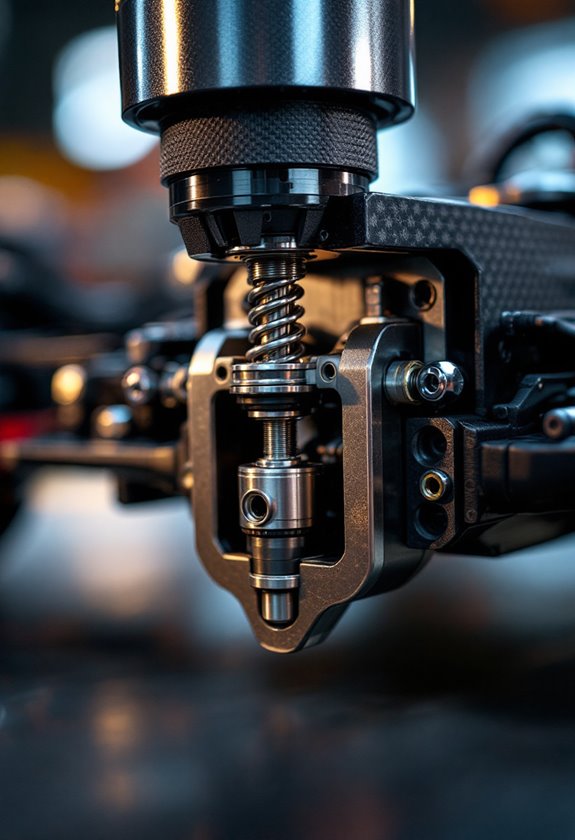
Enhancements in drilling performance represent a significant leap forward in our operations, as we continue to refine our techniques and tools. We’ve achieved remarkable improvements in Rate of Penetration (ROP), documenting increases of up to 77% in lateral drilling. This success stems from maintaining optimum bit weight and rotary speed while effectively reducing vibrations. Vibration reduction not only helps maintain consistent contact between the bit and rock formations but also enhances drilling efficiency. Additionally, our shock tools extend equipment life by minimizing shock loads, leading to less wear and tear on critical components. With these advancements, we’re experiencing faster drilling rates and heightened overall performance, making our operations more reliable and cost-effective while delivering noticeable results. Moreover, adjustable features in shock tools allow for tailored performance based on specific drilling conditions.
Technical Specifications and Design Features

Innovative design features define our shock tools, setting them apart in the drilling industry. With unique Belleville spring configurations, our tools guarantee optimum load and deflection characteristics. The adjustable spring rates, starting as low as 4,000 lbf/in., give you operational flexibility essential for distinct drilling applications.
Our axial load capacities range impressively from 100,000 to 3,796,000 units, accommodating various tool sizes and requirements. Additionally, the torsional load capacities, between 156,200 and 184,500 Nm, enhance overall performance. Each tool’s pressure-balanced design minimizes the effects of downhole hydrostatic pressure, assuring reliability. By incorporating fully oil-sealed components, we provide enhanced lifespan and durability. Together, these technical specifications and design features embody our commitment to effective and enduring shock tools in your drilling operations. The versatility of our tools is akin to the broad utility offered by various adhesive products, showcasing their effectiveness across multiple applications.
Optimal Applications for Shock Tools

Have you ever wondered how shock tools can elevate the performance of various industries? When exploring shock tool applications, we find them shaping industrial manufacturing, heavy machinery, transportation, and even specialized sectors. For instance, they enhance gantry systems by managing motion, boost crane efficiency in material handling, and control vibrations in the automotive industry.
With shock tool advantages like improved equipment longevity and maintenance cost reduction, these tools greatly transform operations. In the oil and gas sector, they withstand challenging conditions, while amusement park rides benefit from safety-critical motion control. By incorporating shock tools, we can guarantee predictable performance across various applications, offering both reliability and safety. Isn’t it fascinating how these tools contribute to safer, more efficient operations? Additionally, the use of quality shock absorbers in RC vehicles serves as a prime example of how shock tools can enhance handling and stability in performance-driven environments.
Operational Characteristics and Variations
When it comes to shock tools, their operational characteristics and variations play a significant role in defining their effectiveness across diverse applications. These tools utilize advanced shock absorption mechanisms, such as steel disk springs, to manage the load and guarantee ideal contact between the bit and formation. Adjusting spring rates as low as 4,000 lbf/in. gives us flexibility for different drilling conditions. The one-way dampening valve allows smooth oil flow, balancing tool closure against spring resistance. Additionally, the innovative design provides protection against vibrations that can harm drill bits, thereby extending their service life. With options for high-temperature seals, we can tackle extreme downhole conditions while maintaining reliable performance. It’s all about effective load management for successful drilling operations! Moreover, precise temperature control is essential in optimizing the performance of various tools, ensuring they operate effectively under different conditions.
Frequently Asked Questions
How Do Shock Tools Compare to Traditional Drilling Methods?
When we consider efficiency comparison, shock tools provide enhanced vibration absorption and damage prevention that traditional methods lack. This leads to smoother drilling, longer bit life, and protection from downhole tool damage for our operations.
What Maintenance Is Required for Shock Tools?
For effective shock maintenance, we need to conduct thorough tool inspections after each use, checking for wear and damage. Applying lubricants regularly and replacing seals enhances performance and prolongs the lifespan of our shock tools.
Are Shock Tools Compatible With All Drilling Rigs?
Shock tools boast compatibility with various drilling rig types, enhancing our operations considerably. With effective integration across numerous assemblies, it’s impressive how these tools can effortlessly adapt, reducing wear and optimizing performance regardless of rig selection.
How Does Temperature Affect Shock Tool Performance?
Temperature greatly affects shock tool performance; we notice increased temperature sensitivity leads to reduced thermal efficiency. As temperature rises, damping characteristics change, impacting overall effectiveness. As a result, maintaining ideal operating temperatures is essential for performance.
What Are the Costs Associated With Using Shock Tools?
Using shock tools can feel like we’re burning a hole in our pockets! Although we need a thorough cost breakdown for better expense management, we understand there are purchase, maintenance, and operation costs we can’t ignore.