As an Amazon Associate, we earn from qualifying purchases. Some links on this site are affiliate links at no extra cost to you. Our recommendations are based on thorough research and editorial judgment.
What Is a High-Torque RC Servo? Torque, Power and Fit Explained

A high-torque RC servo is a geared actuator with enough turning effort for a demanding job such as steering large tires. Its controller uses position feedback to move the output toward the command from the receiver. The label has no single torque threshold: compare ratings at the voltage your car actually supplies, then check fit, speed and current demand. More torque alone does not establish faster steering, lower energy use or weather resistance.
Key Takeaways
- High torque describes turning effort relative to the application; it is not a universal numerical class.
- A positional hobby servo combines a motor, reduction gears, control electronics and a position sensor in one case.
- Compare torque and speed at the same supply voltage, and distinguish stall torque from a sustainable working load.
- A stronger servo can require substantial peak current; the receiver power supply, wiring and connectors must support it.
- For RC steering, mounting dimensions, horn spline, linkage travel and electrical compatibility matter alongside torque.
Definition and Characteristics of High Torque Servo Motors
A typical positional RC servo contains a small motor, reduction gears and a controller that corrects output-position error. A potentiometer or another position sensor supplies internal feedback; an external industrial encoder and amplifier are not required on every hobby unit. The receiver sends a command rather than powering the steering mechanism through the signal wire. Industrial servo drives are a broader category with different interfaces and duty requirements. Calling both products “high torque” does not make their specifications or control modes interchangeable.
What More Steering Torque Changes
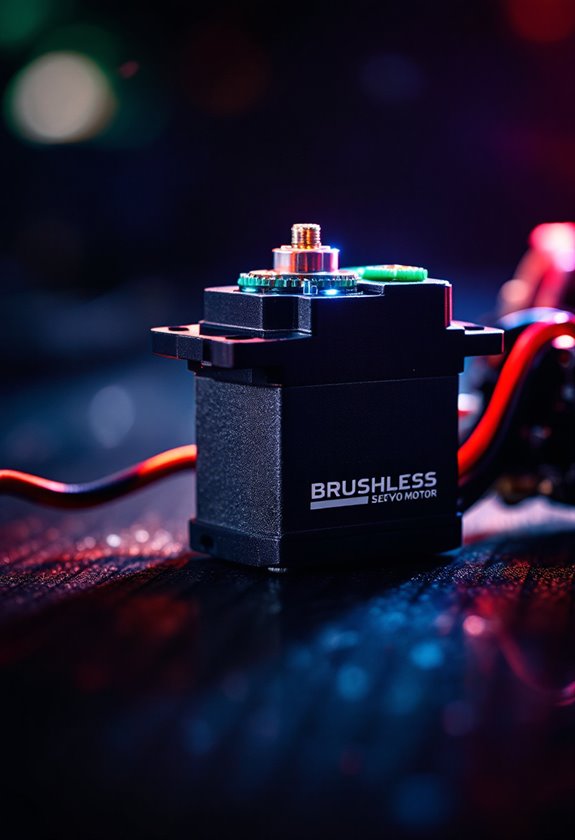
Additional torque can help a steering system move against tire scrub and linkage loads. It cannot cure a binding suspension, a slipping horn or incorrect endpoints. Torque and speed are separate specifications, and gearing can trade one for the other. Electrical demand also matters: a servo working hard can draw far more current than it does unloaded. Treat faster response and energy savings as model- and application-specific comparisons, rather than benefits established by the high-torque label.
Control Systems and Technology Behind High Torque Servos
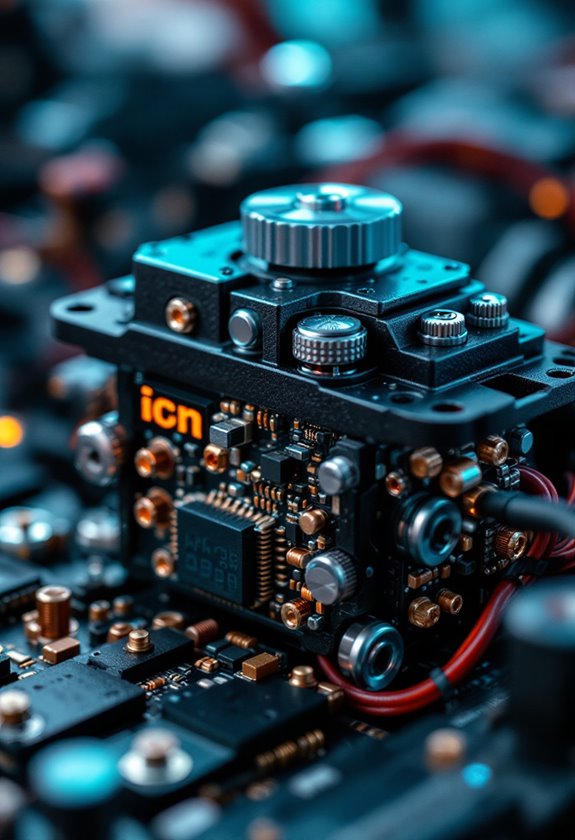
For a conventional positional RC servo, the internal controller compares the requested position with sensor feedback and drives the motor to reduce the error. Many hobby servos keep that feedback inside the case. A special feedback-output servo can expose position information to a separate controller, but an ordinary three-wire connection does not imply that the receiver receives measured shaft position.
Digital electronics can change how a servo processes commands and drives its motor. They do not imply that every unit offers user-selectable torque or speed control. Check the supported signal rate and programming features for the exact model and receiver. A setting intended for a different servo can be incompatible even when the plug fits.
Technical Specifications and Measurements
Read torque as turning moment, commonly stated in kgf-cm, oz-in or N·m, rather than as a free-standing lifting capacity. For example, Hitec lists the D645MW at 11.3 kgf-cm and 0.20 seconds per 60° at 6.0 V, compared with 12.9 kgf-cm and 0.17 seconds at 7.4 V. These are that model’s ratings, not limits for the category. Stall torque describes a blocked-output condition, not permission to hold the servo stalled. As a hypothetical geometry example, the same torque produces half the tangential linkage force at a 2 cm horn radius as at 1 cm, before losses and linkage-angle effects. Select a compatible supply voltage and sufficient current capacity; never raise voltage beyond any connected component’s rating simply to obtain more torque.
RC Uses and the Boundary With Industrial Servos
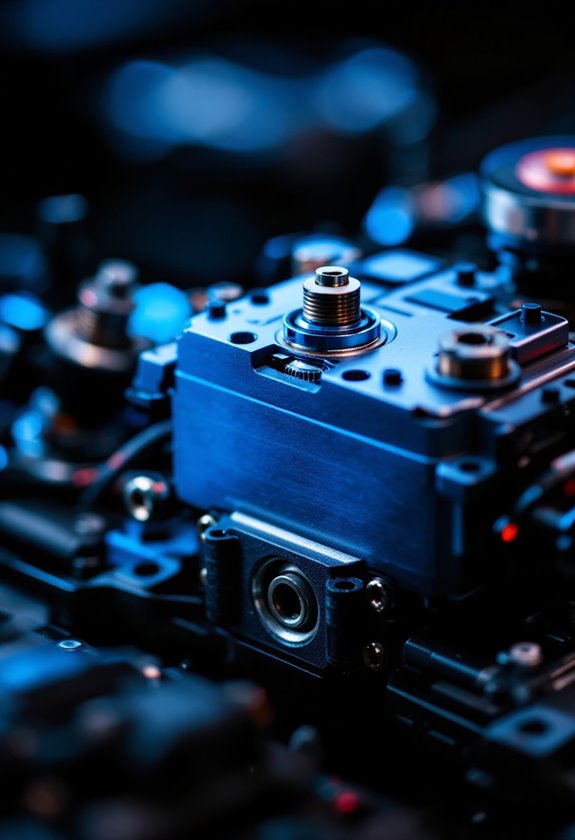
In an RC car, a servo may operate steering, a nitro throttle/brake linkage or a transmission function. The required force, travel and response differ between those jobs, so a larger steering servo is not automatically a suitable throttle replacement. Small robots and animatronics can also use hobby servos when the load and control interface fit. Medical machinery, heavy industrial arms and renewable-energy mechanisms require their own engineering, environmental protection and safety assessment; a hobby servo’s torque label establishes none of those approvals.
How Do I Choose the Right High Torque Servo Motor for My Project?
Check the vehicle’s mounting space, mounting tabs and horn spline first. Then match torque, travel and speed to the linkage at the available voltage. Confirm the receiver’s signal compatibility and the BEC or receiver battery’s current capability. Set endpoints so the linkage reaches its useful travel without forcing the servo against a mechanical stop.
Can High Torque Servo Motors Be Used With Renewable Energy Systems?
A suitably engineered servo system can position a mechanism such as a solar tracker. That does not make a hobby steering servo suitable for continuous outdoor service, a wind turbine or a safety-critical load. Choose equipment for the actual load, duty cycle, environmental conditions and required holding behavior rather than transferring an RC torque label to the whole installation.
What Is the Average Lifespan of a High Torque Servo Motor?
There is no useful universal lifespan for this category. Gear wear, impacts, water exposure, temperature and time spent under load differ considerably between installations. Watch for growing backlash, erratic movement, damaged wiring or persistent heating, and use the maker’s service or replacement guidance for the exact unit.
Are High Torque Servo Motors Suitable for Outdoor Applications?
Only within the environmental limits specified for the exact model and its installation. High torque does not mean waterproof. A protected servo does not protect exposed connectors, the receiver or the rest of the car, and a water-resistance claim does not establish suitability for every temperature, contaminant or immersion condition.
How Can I Maintain a High Torque Servo Motor for Optimal Performance?
With the vehicle safely powered down, inspect the horn, spline, mounting screws, linkage and cable for damage or looseness. Check that steering moves freely and that configured endpoints do not cause binding. Keep water and debris out as directed by the manufacturer; do not open a sealed case or add lubricant without appropriate service instructions. Persistent buzzing, heating or a receiver reset warrants checking the mechanical load and power supply before further driving.