As an Amazon Associate, we earn from qualifying purchases. Some links on this site are affiliate links at no extra cost to you. Our recommendations are based on thorough research and editorial judgment.

RC Fire Safety: LiPo Charging, Nitro Fuel and Emergency Basics

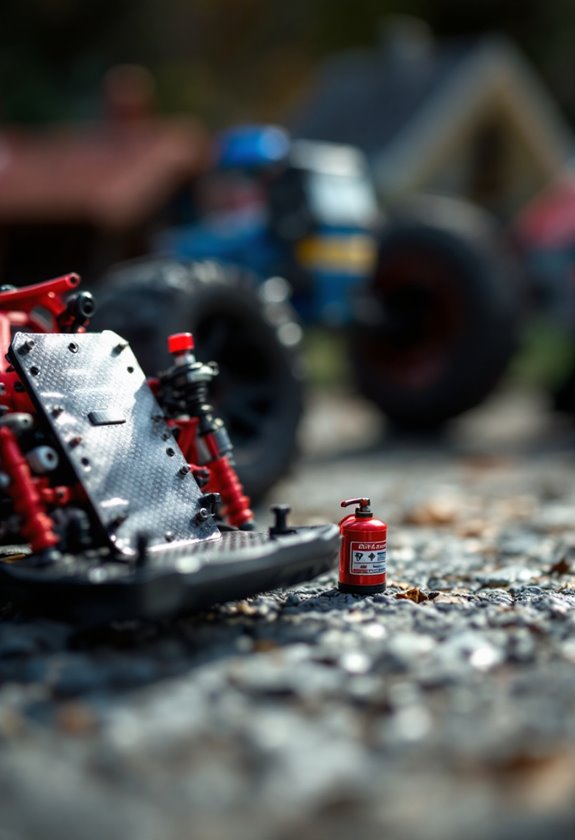
RC fire safety means reducing the risks associated with model batteries, charging equipment, fuel and hot components. It starts with the exact vehicle, pack and charger instructions, a clear work area and a plan for leaving safely if something goes wrong. Miniature fire-extinguisher replicas mounted on an RC crawler are decorations, not emergency equipment.
Key Takeaways
- Check the vehicle, battery and charger manuals together; matching plugs alone do not prove compatibility.
- Inspect packs and leads before use, and supervise charging away from combustible clutter.
- Keep nitro fuel away from ignition sources and follow the fuel label and model manual.
- Know the warning signs of battery failure and the workshop’s exit route.
- Do not confuse scale-model fire-extinguisher accessories with functional, rated equipment.
Start With Your RC Equipment Manuals
Identify the installed electronics and battery, including upgrades. Verify chemistry, series cell count, permitted current and connector polarity before powering or charging. The RC LiPo battery guide explains the terminology; the product manuals set the actual limits. Waterproof branding does not establish fire resistance or permission to charge a wet pack.
Decorative Extinguishers Do Not Protect Your Model
The products in our RC fire-extinguisher replica guide are scale decorations. They cannot suppress a battery or fuel fire. Select real emergency equipment with advice from the local fire authority and follow its servicing instructions. Do not infer a firefighting function from a miniature accessory’s name or appearance.
Check Charger Settings Before Every Session
For your 2026 RC setup, review the settings whenever the battery or equipment changes. Choose the correct chemistry, cell count and permitted charge current, and use the maker’s specified balance connection. A high discharge C rating is not a charging limit. Our balance-charger selection guide separates these requirements from automotive charging terminology.
Keep Nitro Fuel Separate From Ignition Sources
Nitro-model fuel presents different hazards from electric RC packs. Follow the fuel container’s precautions, keep it away from children and ignition sources, and run the model only where the manufacturer permits. Traxxas’s Jato owner manual warns about fuel flammability, hot engine parts and exhaust exposure. Use the manual for your exact model before refueling or servicing it.
Inspect Packs, Wiring and the Work Area
Inspect for damaged insulation, loose connections, crushed pack cases and signs of abnormal heating. Keep conductive tools away from exposed terminals and prevent cables from being trapped by the body or battery restraint. Stop using suspect equipment rather than trying to finish a run. Keep charging and fuel-handling areas clear of combustible clutter and preserve an unobstructed exit.
Recognize a Battery Emergency
A pack that swells, leaks, smells unusual, hisses or becomes abnormally hot needs immediate attention: stop using it and keep people away. Disconnect power only if it is safe to do so without touching an unsafe battery. If there is smoke or fire, leave and call 911 from outside. Follow the Oregon State Fire Marshal’s battery emergency guidance; do not handle the pack or reenter to retrieve equipment.
Plan Storage and End-of-Life Handling
Use the battery maker’s storage program, location and temperature instructions. Protect terminals against short circuits and do not routinely run a LiPo flat as maintenance. For a retired pack, contact an approved battery collection or household hazardous-waste program. Do not put it in household trash or curbside recycling. A damaged pack may need special acceptance and transport instructions from the receiving facility.
Build a Practical RC Safety Routine
Before each session, check the pack and cables, confirm charger settings and clear the work area. After a crash or abnormal heating, inspect the model before reuse. Know who will alert others and where everyone will leave if there is an emergency. Our RC workshop safety guide covers the wider workspace; no checklist, charging bag or accessory guarantees that a fire cannot occur.
Can I Leave a LiPo Charging Inside a Safety Bag?
No. A LiPo charging bag is one precaution within the manufacturer’s instructions, not permission to leave a pack charging unattended. Use the correct settings and location and stay available to respond to a problem.
Will a Miniature RC Fire Extinguisher Put Out a Fire?
No. The miniature crawler and scale accessories in our replica guide are decorations. They contain no functional firefighting system and cannot replace real emergency equipment or safe battery handling.
What Should I Do if an RC Battery Starts Smoking?
Stop use and move people away. If the battery is smoking or burning, get outside and call 911 from there. Do not pick up the pack, move it through the building or return for the model.
Does Nitro RC Fuel Need Different Precautions?
Follow the exact model manual and fuel label. Nitro fuel is flammable, engine parts can be hot, and exhaust is another hazard. Do not run a nitro model indoors or handle fuel near smoking, sparks or flames.
How Should I Retire an Old RC LiPo Battery?
Use an approved battery collection or hazardous-waste program, following its acceptance instructions. Do not dispose of a LiPo in household trash, and do not improvise shorting, puncturing or full discharge. Ask the facility about damaged packs before transport.