As an Amazon Associate, we earn from qualifying purchases. Some links on this site are affiliate links at no extra cost to you. Our recommendations are based on thorough research and editorial judgment.


What Is LiPo Battery For RC Cars?

LiPo batteries, or lithium polymer batteries, are a fantastic choice for RC cars. They’re lightweight and boast high energy density, giving you powerful performance. With a nominal voltage of 3.7V per cell, they deliver impressive discharge rates for instant acceleration. You’ll find configurations like 2S and 3S, offering higher voltage options for faster speeds. Plus, they have lower self-discharge rates, which means less downtime for you. If you stick around, we’ll explore more tips for ideal use and maintenance!
Key Takeaways
- LiPo (Lithium Polymer) batteries offer high energy density and lightweight designs, making them ideal for RC cars.
- They provide immediate acceleration due to superior discharge capabilities and low self-discharge rates.
- A typical LiPo cell has a nominal voltage of 3.7V, with multi-cell configurations increasing voltage for enhanced performance.
- Proper handling requires using balance chargers, storing at specific voltages, and avoiding deep discharges to extend lifespan.
- Compared to NiMH batteries, LiPo batteries deliver greater power and agility, making them preferred for high-demand RC applications.
Definition and Chemistry of LiPo Batteries
You may be interested



When you think about powering your RC car, LiPo batteries might come to mind—and for good reason! These rechargeable powerhouses are created from lithium-ion technology and housed in a flexible polymer casing, allowing for unique shapes and sizes. With abbreviations like LiPo and lithium-poly, they’re versatile and highly efficient.
The chemistry behind LiPo batteries features a solid or semi-solid polymer electrolyte, offering higher discharge rates compared to traditional batteries. They operate at a nominal voltage of 3.7V per cell, which is perfect for our high-demand RC applications. As market trends shift toward electric hobbies, understanding licensing regulations for battery safety becomes essential. Embracing LiPo technology means significant improvements in power performance while keeping an eye on changing regulations! Additionally, NiMH batteries are another popular option for RC enthusiasts, providing extended run times and compatibility with various models.
Advantages of LiPo Batteries in RC Applications
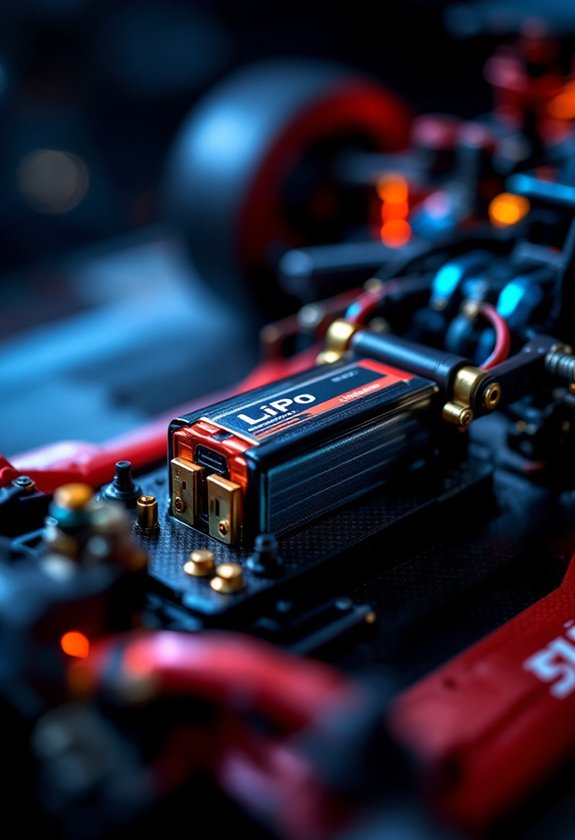
LiPo batteries offer some truly exciting advantages when it comes to powering our RC cars! One key benefit is their high energy density, allowing us to pack more power into smaller and lighter packages. This means longer run times and better performance on the track. With design flexibility, we can easily find battery shapes that fit perfectly within our RC vehicles, even in tight spaces. Additionally, LiPo batteries shine with their superior discharge capabilities, providing instant acceleration when we need it most. This is especially beneficial during competitive races or sharp turns, giving us that extra boost for aggressive maneuvers. Finally, their low self-discharge rate means our cars will stay ready for action, reducing downtime between races. Furthermore, choosing batteries with high discharge rates ensures optimal performance in high-demand applications, enhancing overall speed and agility on the track.
Technical Specifications and Performance Metrics
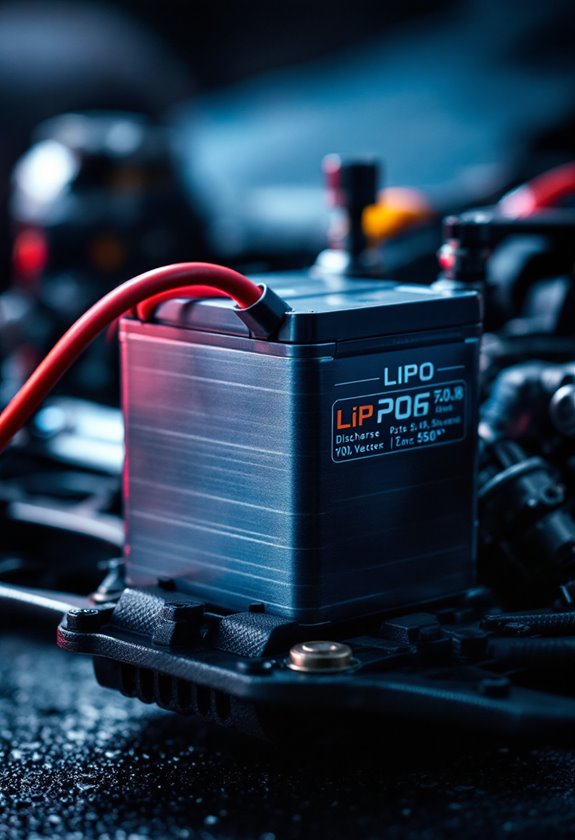
Understanding the technical specifications and performance metrics of LiPo batteries is key to maximizing our RC car experience. One major highlight is their impressive energy density, delivering about 180 Wh/kg, which is way better than NiMH batteries. The C ratings, ranging typically from 30C to 60C, determine how quickly we can discharge power—crucial for high-speed racing! Plus, LiPo batteries have a cycle life of 200-400 charge-discharge cycles, ensuring longevity with proper care. With lightweight construction, they improve our car’s handling and agility. When choosing batteries, we should focus on balancing capacity, discharge rates, and energy density to enhance our performance on the track. This attention to detail makes all the difference in our racing adventures! Additionally, considering discharge rates and performance can significantly impact our racing efficiency and overall enjoyment.
Understanding Voltage and Cell Configuration
In the world of RC cars, understanding voltage and cell configuration can really elevate your racing game. Each LiPo cell has a nominal voltage of 3.7V, so when we connect them in a cell series, we multiply that voltage. For instance, a 2S configuration gives us 7.4V, while a 3S configuration offers 11.1V. Knowing the voltage importance guarantees we match our battery with the motor and ESC ratings. We should always keep battery discharge limits in mind, avoiding draining the cells below 3.0V to protect their lifespan. Additionally, following proper charging practices—like using the right charger and storing between 3.80V to 3.85V—helps maintain performance and safety. Understanding these concepts will truly enhance your RC experience! Furthermore, high-performance LiPo batteries provide superior acceleration and speed, making them a top choice for competitive racing.
Capacity and Runtime Characteristics
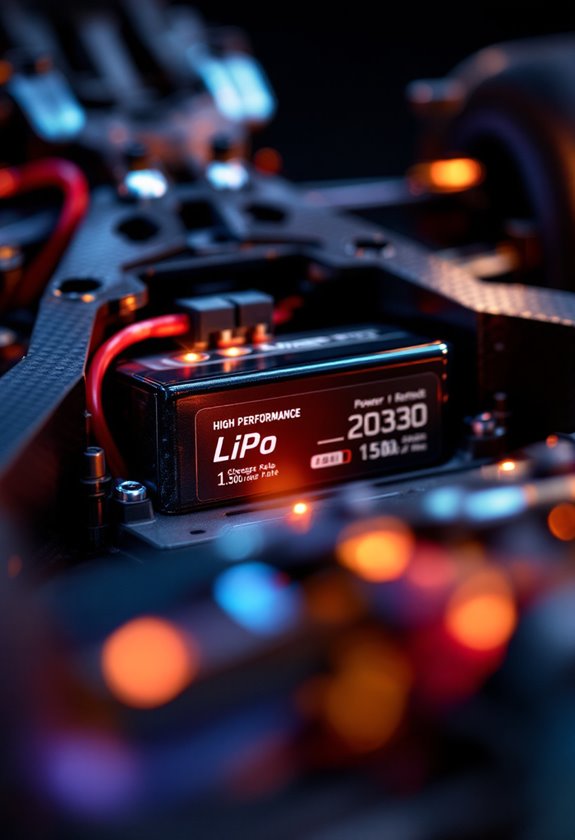
When we talk about battery capacity and runtime for our RC cars, it truly shapes how long we can enjoy racing without interruptions. Battery capacity is measured in milliampere-hours (mAh), like a fuel tank that determines how long we can drive before needing a recharge. For instance, a 5000mAh battery can provide 30-40 minutes of runtime under moderate use, but runtime variations can occur based on driving style. Aggressive driving can drain that same battery in just 8-12 minutes! Remember, higher capacity batteries can add weight, affecting handling and speed. These capacity factors are essential, so finding the right battery based on your racing style will keep the fun going longer and help you optimize your RC experience. Additionally, understanding charging capabilities can significantly enhance the efficiency of your battery management during races.
Comparison With Other Battery Types
As we plunge into the comparison of LiPo batteries with other types, it’s clear that choosing the right battery can really enhance our RC car experience. When we look at LiPo alternatives, we notice they offer impressive energy density, delivering 150-200 Wh/kg compared to NiMH’s 60-120 Wh/kg. This weight reduction improves our car’s speed and handling. LiPo batteries maintain higher voltage levels, making them ideal for competitive racing. Additionally, their higher power-to-weight ratios contribute to faster acceleration and improved overall performance. However, we should keep in mind the NiMH drawbacks, like their bulkiness and higher self-discharge rates of 20-30%. While NiMH batteries are easier to handle for beginners, they can’t reach the performance levels of LiPo batteries. In the end, for serious RC enthusiasts, LiPo batteries are often the way to go!
Proper Handling and Maintenance of LiPo Batteries
Proper handling and maintenance of LiPo batteries can make a huge difference in maximizing their performance and lifespan. First, let’s follow some essential safety precautions. Always use balance chargers to monitor cell voltages and prevent damage. When storing, we should aim for a storage voltage of 3.8V per cell if the batteries won’t be used for over a week. Ideally, we’ll keep them in airtight containers away from impact.
Regularly inspecting connectors and ensuring they’re clean helps maintain performance. Also, remember to cycle the batteries by fully discharging and recharging them. By observing these storage techniques and handling practices, we’re setting ourselves up for safe, optimized use of our LiPo batteries, ensuring they last as long as possible.
Frequently Asked Questions
How Do I Choose the Right Lipo Battery for My RC Car?
To choose the right LiPo battery for our RC car, we should focus on battery compatibility with our vehicle’s system and capacity considerations that balance runtime and performance. Higher capacities enable better bashing and racing experiences.
Can I Use Lipo Batteries in Other Devices Besides RC Cars?
Imagine a chameleon, adapting to every environment; that’s our LiPo batteries! Their versatility offers advantages across devices, yet we must be mindful of application limitations. They’re efficient, but not every device can harness their power.
What Is the Lifespan of a Lipo Battery When Properly Maintained?
With proper battery maintenance, we can expect a LiPo battery’s lifespan to range from 1 to 4 years. Factors like usage and storage play essential roles in maximizing this lifespan, so let’s take care of them!
What Are the Signs of a Failing Lipo Battery?
We can spot a failing LiPo battery by noticing battery swelling or puffing, experiencing voltage drops, and detecting reduced performance. If we see these signs, it’s essential to handle the battery with caution.
Are There Any Specific Charging Protocols for Different Lipo Capacities?
Charging LiPo batteries is like tuning a finely crafted instrument; we’ve got to follow specific protocols. For different capacities, we should use 1C for safety and consider 0.5C charging methods for longevity.