As an Amazon Associate, we earn from qualifying purchases. Some links on this site are affiliate links at no extra cost to you. Our recommendations are based on thorough research and editorial judgment.


What Is RC Car Failsafe Setup?

Setting up a failsafe in your RC car is essential for safety. A failsafe automatically applies brakes or shifts to neutral when the signal is lost, preventing runaways. We connect the failsafe unit to the throttle channel and program it to set specific positions for controls. Regular testing guarantees it functions perfectly. Understanding the indicator lights helps us monitor system health. Ready to discover more about optimizing your setup and securing smooth operation? Let’s keep going!
Key Takeaways
- Failsafe setups ensure RC cars automatically stop or neutralize controls during signal loss, enhancing safety and preventing runaway incidents.
- Programming involves setting receiver configurations; options include “Hold Last” for maintaining servo positions or “Preset” for specific control responses.
- Physical installation requires secure mounting of the failsafe unit in the receiver compartment, ensuring proper wire routing to avoid interference.
- Common issues include signal interference, low battery voltage, and incorrectly calibrated Electronic Speed Controllers, which can disrupt failsafe functionality.
- Understanding indicator lights on the failsafe unit, such as flashing patterns, can assist in confirming successful setups and maintaining control during emergencies.
Importance of Failsafe in RC Cars
You may be interested


When it comes to RC cars, having a failsafe isn’t just an option; it’s a necessity. We need to understand the failsafe’s importance in guaranteeing safe operation. By automatically applying brakes or moving to neutral when the transmitter signal is lost, the failsafe system protects us from runaway incidents. This is especially important for nitro-powered vehicles, as they can keep running without control. Safety regulations demand these features to prevent crashes and damage to both our cars and surrounding property. Mechanical backups, like rubber bands, offer added security when electronics fail. Regularly testing our failsafe settings guarantees we’re ready for that first operational run, keeping us and our environment safe while we enjoy the thrill of RC driving.
Types of Failsafe Configurations
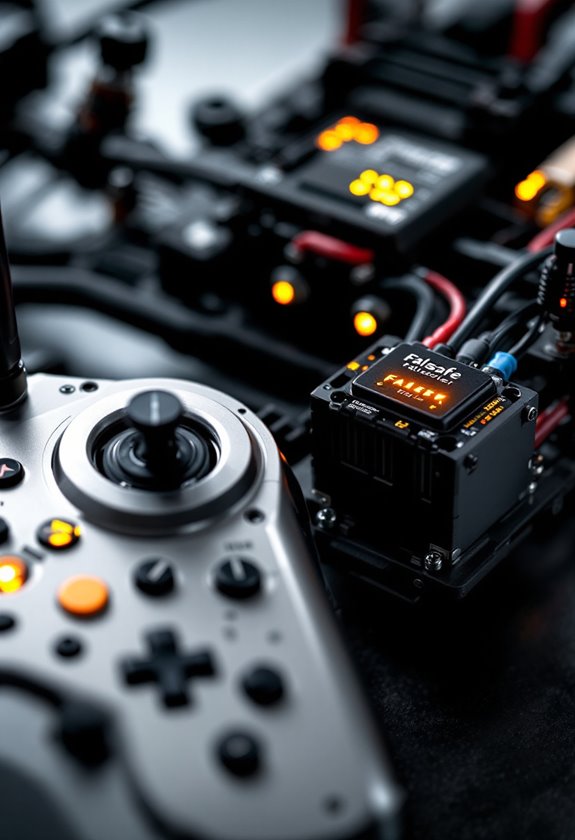
Setting up the right failsafe configuration is key to keeping our RC cars safe and sound. There are various types of failsafe sensors to choose from, ensuring we can tailor our setup based on our vehicles. Receiver-based systems are popular, returning controls to neutral when signal loss occurs. We can set failsafe signal thresholds to manage specific channel values, helping the system react properly during unexpected interruptions. For instance, Graupner GR-24 systems activate failsafe with specific OFF settings, while some configurations allow for a brief recovery period before full activation. Knowing these options empowers us to choose the best failsafe setup, making our RC experience more reliable and enjoyable, without the stress of sudden signal loss. Additionally, understanding tire selection and compatibility is crucial for maintaining control during high-speed maneuvers.
Recommended Products

Powerful Brushless Motor & ESC Performance – Equipped with a CEN Racing 3658 3000KV brushless motor and HobbyWing WP-MAX10-SCT 100A waterproof ESC, this 1/8 scale rally car delivers explosive acceleration, smooth throttle response, and reliable power management with advanced protections including low-voltage cutoff, overheat, and throttle signal loss.

EASY TO FLY RC AIRPLANE: The RC Airplane flies well and can be set easily from beginners to experts. It includes everything needed to get the rc airplane started, 8 channels transmitter(built-in battery) and receiver(built-in telemetry of engine voltage ), 4CH flight controller, 2pcs 2S lipo and charger, brushless motor and 15A ESC.

Excellent Anti-interference--DSSS&FHSS communication technology and 7dBi high gain antenna make AT10II transmitter with stable transmission signal and the control range is up to 2.5 miles(4km) in the air.
Physical Installation Process
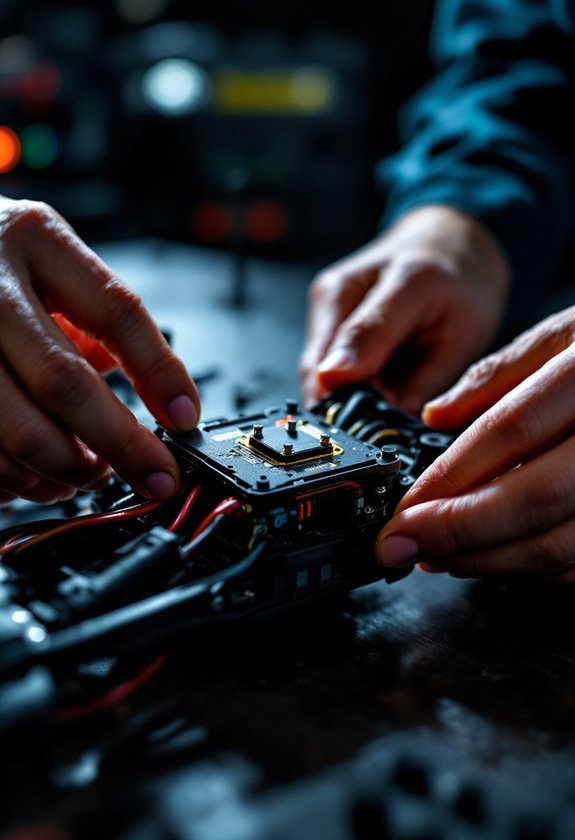
To guarantee our RC cars are equipped with a reliable failsafe system, we need to closely follow the physical installation process. First, we’ll remove the throttle servo plug from the receiver and connect the failsafe unit directly to channel 2. It’s essential that we pay attention to the polarity on the ends of the failsafe to avoid any damage. Next, we’ll securely mount the unit inside the receiver compartment, ensuring it’s protected but also accessible for programming. Remember, routing wires carefully is important; we should avoid any contact with moving parts. Once everything is connected, we can test the setup by turning off the transmitter to confirm the servo movement acts correctly during signal loss. Additionally, ensuring that the failsafe system is integrated with your RC car hauler’s weight limit can help maintain optimal performance during transport.
Programming and Setup Procedures
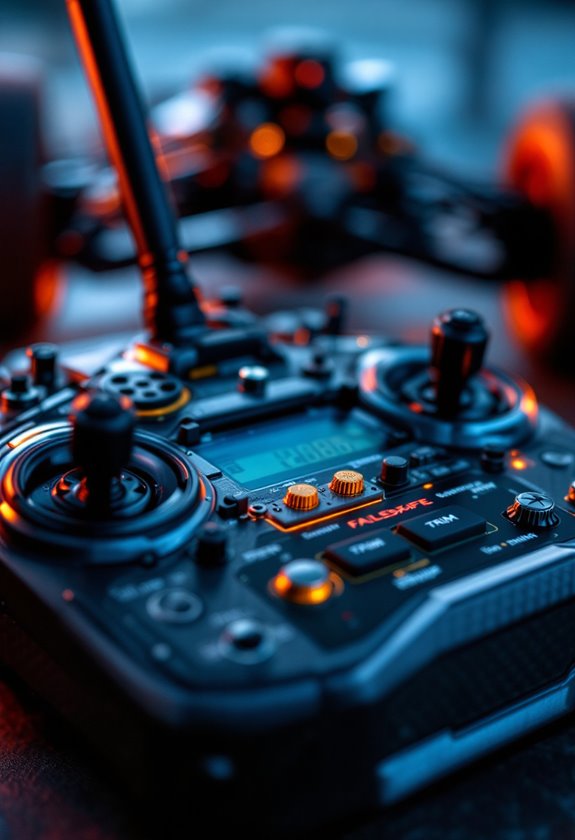
With our failsafe unit securely installed, we’re now ready to focus on programming and setup procedures, which can truly make or break our experience with the RC car. First, let’s access the failsafe programming through our receiver settings using the Forward Programming Interface. Here, we can easily navigate to adjust specific surfaces for individual behaviors during signal loss.
We can choose options like the “Hold Last” mode to keep servos in place or the “Preset” mode for predetermined positions. Additionally, setting the throttle failsafe to -100 guarantees an automatic motor shutdown. Remember, we can capture current transmitter positions as our failsafe presets, providing us complete control over our RC vehicle’s response during potential issues. This process is crucial for maintaining timing precision in critical racing scenarios.
Recommended Products

KYOSHO SPEED HOUSE is the strongest electric GT machine with brushless system for improved controllability with changes in transmitter and servo

Flysky Noble FS-NB4 2.4G 4CH Rc Transmitter with V2 Version FGR4 & FGR4B Receiver HVGA 3.5" TFT Color Screen for RC Car Boat; HVGA 3.5-inch TFT color screen, resolution 320 * 480, LCD white back light, capacities touch screen.

Real-time Voltage Telemetry: You can see real-time information on the screen when you use R6FG or R7FG including, remote control voltage, receiver voltage, RSSI value, etc. And R7FG also telemetry up to 8S model battery voltage.
Testing and Verification Methods
Before we hit the track, testing and verification methods are essential for ensuring our failsafe system operates as intended. First, let’s simulate signal loss by turning off the transmitter to see how the receiver responds. We should check if the failsafe consistently triggers, whether we’re at 10 or 100 feet away. It’s also important to observe the servo response; when signal loss occurs, we need to confirm that the throttle servo goes to the brake position for gas models, and that the ESC for electric cars switches to neutral. Don’t forget to monitor LED indicators for clear signs of failsafe activation. After bench tests, we’ll validate the system under real-world conditions, ensuring everything works smoothly before our first run.
Safety Functions of Failsafe Systems
We’ve just explored how to test our failsafe systems, so now let’s focus on the safety functions they offer. These systems are essential for signal loss protection. When the receiver loses communication with the transmitter, it automatically engages safety protocols. This feature guarantees our vehicle stops moving, preventing any dangerous runaway situations.
In the event of signal loss, throttle control defaults to a safe position, like braking, for petrol-powered models. Electric ESC systems apply drag brakes, stopping the motor altogether. During communication breakdowns, all control surfaces return to their neutral positions. This predictable behavior is critical for runaway prevention, reducing risks of crashes and injuries from uncontrolled movement. Overall, these features enhance our safety while enjoying RC car fun! Additionally, many vintage RC cars, like the Kyosho Tomahawk, incorporate advanced technology that improves overall performance and safety.
Common Issues With Failsafe Devices
When we plunge into the domain of common issues with failsafe devices, it’s easy to overlook the potential pitfalls that can disrupt our carefully set-up systems. One frequent issue is signal interference, often caused by nearby Wi-Fi routers or other RC vehicles on the same frequency. We also face challenges with binding and synchronization, where improper setups can lead to binding failures, preventing the failsafe from activating when needed. Battery and power supply problems are another concern; low voltage can result in weak signals. Remember, if components like the Electronic Speed Controller aren’t calibrated properly, it can mess with failsafe responses. For reliable performance, let’s keep these failsafe troubleshooting tips and signal interference solutions in mind during our setups! Additionally, ensuring that your ESC has essential safety protections, such as low voltage cut-off, can help mitigate some of these issues.
Recommended Products

XERUN XD10 Pro Series Cont./Peak Current(100A/800A) LiPo/NiMH Cells (2S LiPo/4-6S NiMH) BEC Output (5-7.4V Adjustable, Continuous Current of 5A (Switch-mode)

【Excellent Anti-interference】DSSS&FHSS communication technology makes AT9S Pro transmitter with stable transmission signal and long-range control up to 2.1 miles(3.4km) in the air.

4 Channels AFHDS 3 Receiver: The INr4-GYB receiver adopts Flysky's third-generation automatic frequency hopping digital system (AFHDS 3).It uses a single-antenna bidirectional transmission system, with built-in gyroscope and is uniquely designed to install. (Note: Currently only the Noble series can enable the INr4-GYB gyroscope function).
Solutions to Common Failsafe Issues
Setting up a reliable failsafe system can feel overwhelming, but we’re here to simplify the process and make sure your RC car stays under control. First, we must conduct regular failsafe maintenance, checking connections and making certain everything’s secure. If you’re experiencing signal interference, reposition your antenna away from metal parts and avoid dense electronic areas. For testing, disconnect the battery from the ESC and use a multimeter to check circuit continuity. Make sure to examine the transmitter and receiver antennas for any damage. Finally, run tests in open spaces to avoid interference issues. By following these steps, we can make sure our RC cars respond accurately, keeping our adventures thrilling and safe. Additionally, consider using a receiver with anti-interference technology to enhance signal stability during operation.
Best Practices for Failsafe Configuration
Failsafe configuration is a game-changer for anyone serious about maintaining control over their RC cars. To guarantee failsafe reliability, we should follow some best practices. First, let’s conduct safety testing by removing propellers and ensuring engines are off during setup. Always test failsafe functionality in a controlled environment before hitting the field. Next, we must carefully configure failsafe positions based on vehicle type; for petrol models, setting a full brake can prevent runaways. Remember to set steering channels to off and monitor throttle positions to guarantee they match our braking needs. Finally, double-check our work before operational runs, and always verify the responses during signal loss simulations. These configuration nuances help keep our vehicles safe and under control!
Understanding Failsafe Indicator Lights
Indicator lights play an indispensable role in the safe operation of our RC cars, providing real-time feedback on their performance. By understanding indicator light behavior, we can interpret vital visual signals that our car gives us. For example, a slow flashing LED suggests that the connection between our transmitter and receiver is lost, signaling an immediate need for action. During failsafe programming, a red flashing light indicates we’re in the process, and when it turns solid, we’ve successfully stored our settings. By consistently monitoring these light patterns, we guarantee peak operation and can quickly address potential communication failures. This visual signal interpretation helps us maintain control and prevents accidents before they occur. Let’s keep our RC cars running smoothly!
The Role of Failsafe in Emergency Situations
When we’re out having fun with our RC cars, it’s essential to have a reliable failsafe system in place for those unexpected moments. This system guarantees that, during signal loss, failsafe activation occurs quickly to stop our car from running away. The receiver continuously engages in signal monitoring, checking for interruptions. If the connection drops, the system waits briefly before kicking in, giving a chance for the signal to recover. Once activated, it immediately cuts the throttle and applies brakes, preventing costly damage and runaway situations. Plus, it keeps our control surfaces stable, defaulting them to neutral positions. With these features, we can enjoy our RC adventures without worrying about sudden emergencies or losing control.
Frequently Asked Questions
Can I Use a Failsafe With Any RC Car Model?
Absolutely, we can use a failsafe with most RC models. RC model compatibility is broad, and failsafe features are often available—whether through hardware or software—ensuring we get essential protection for our machines on the track.
How Often Should I Test My Failsafe Device?
We can’t skip on failsafe testing frequency; it’s essential for RC setup maintenance. We should test before each session, after modifications, and regularly to guarantee our vehicles respond properly during signal loss. Safety first!
Will a Failsafe Work in All Weather Conditions?
A failsafe won’t work perfectly in all weather conditions. We need to account for temperature impacts and moisture risks that can compromise its reliability. Regular maintenance and protective measures are essential to guarantee consistent performance.
Can I Manually Override the Failsafe Settings?
Did you know that about 30% of RC enthusiasts have encountered issues with failsafe settings? Yes, we can manually override those settings using a button or switch, ensuring our vehicles maintain control even in emergencies.
What Should I Do if My Failsafe Fails to Activate?
If our failsafe fails to activate, we should start with failsafe troubleshooting, checking for signal interference. Inspect connections, test components, and verify our antenna is properly positioned to prevent signal loss.