As an Amazon Associate, we earn from qualifying purchases. Some links on this site are affiliate links at no extra cost to you. Our recommendations are based on thorough research and editorial judgment.


How To Setup RC Car Networking?

To set up RC car networking, we first confirm compatibility between our transmitter and receiver. Next, we power the receiver and bind it by inserting the bind plug. After binding, we connect the ESC to channel two and the servo to channel one. Remember to check for correct polarity! Calibration is essential so our controls correspond accurately to the vehicle’s movements. By following these steps, we’ll have a solid setup, and there’s even more to explore next!
Key Takeaways
- Ensure compatibility between the radio system’s transmitter and receiver for seamless communication in your RC car setup.
- Power up the receiver by connecting it to the battery before initiating the binding process.
- Insert the bind plug into channel 4 of the receiver and use the transmitter’s bind button to establish the connection.
- Once connected, test the controls to confirm that steering and throttle operate smoothly through the assigned channels.
- Troubleshoot any issues by checking battery charge levels, connection integrity, and ensuring the receiver antenna is positioned correctly.
Understanding the Components of an RC Car
You may be interested

When we plunge into the fascinating world of RC cars, understanding their components makes the experience even more enjoyable. The heart of the vehicle lies in its RC car components, starting with the Electronic Speed Control (ESC), which manages power delivery from the battery to the motor. This little device controls how fast we accelerate or decelerate. Our steering is dictated by servo motors, ensuring precise movements. The radio system, made up of the transmitter and receiver, helps us communicate with the car effortlessly. Finally, the motor choice, whether brushed or brushless, substantially impacts speed and efficiency. Understanding these elements allows us to appreciate the intricate balance of technology and fun that each RC car embodies! Additionally, considering the flexibility and durability of RC tracks can enhance the overall racing experience.
Binding Remote and Receiver
Binding the remote and receiver is an essential step in getting your RC car up and running smoothly, as it assures that our transmitter and receiver communicate perfectly. First, we need to verify that both components are compatible and connect the battery to power the receiver. Before starting the binding process, let’s make certain the ESC and servo connections are secure. To enter binding mode, we’ll often insert a bind plug into the receiver’s channel 4. Next, we activate the bind button on our transmitter, which allows it to send signals that establish the unique pairing needed for effective control. After confirming a steady light on the receiver, we can test our controls to ascertain everything works smoothly. Additionally, it’s important to ensure that you follow the correct binding procedure to avoid connectivity issues. Happy racing!
Recommended Products

The Spektrum SR1015T surface receiver is compatible with DSMR and DSMR+ that expands surface channel use to 10 channels. DSMR+ makes more channels available than ever before for Spektrum surface enthusiasts. When matched with a DSMR+ capable transmitter, driver can unlock more options than ever before for your crawler, or basher vehicle. The SR1015T is Smart technology ready providing real-time telemetry data when used with Smart ESCs and Smart batteries. In addition to Smart technology, the SR1

Two-way Communication: Real pseudo random algorithm FHSS communication technology makes RC6GS V3 control distance up to 1900 feet (600meters), and over 40 units of RC6GS can work simultaneously at one place without any interference.

Two-way Communication: Real pseudo random algorithm FHSS communication technology makes RC6GS V3 control distance up to 1900 feet (600meters), and over 40 units of RC6GS can work simultaneously at one place without any interference.
Configuring Electronic Components
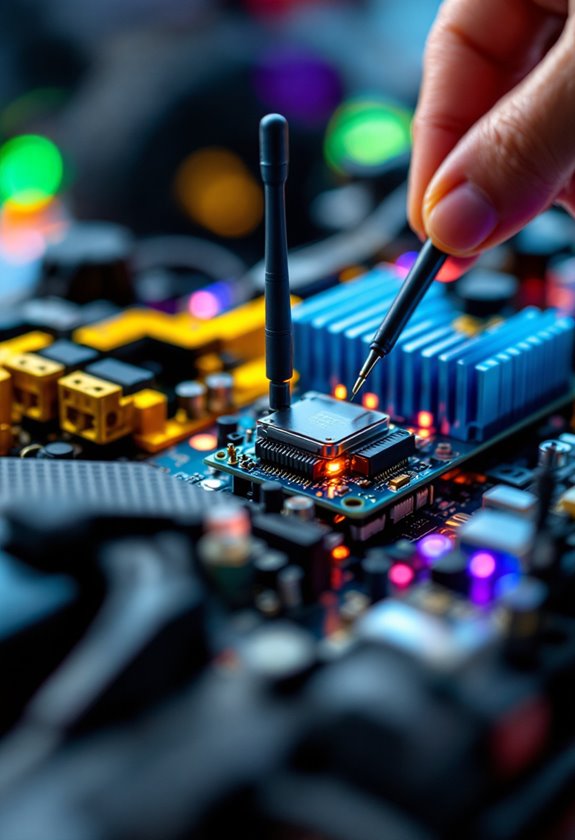
Configuring electronic components can be an exciting part of setting up your RC car, as it directly influences how well your vehicle performs on the track. First, we connect the Electronic Speed Controller (ESC) to channel two of the receiver. Ensuring the correct polarity is essential for protecting our components. Then we install the servo on channel one, lining up the negative wire with the receiver’s marked negative. As we manage power distribution, remember that an adequate Battery Eliminator Circuit (BEC) is crucial to avoid voltage issues. This circuit helps maintain signal integrity while powering the receiver and servos. Additionally, it’s important to choose an ESC with low voltage protection to safeguard against battery damage. Finally, we must balance high current demands to keep our system running smoothly and enhance overall performance during races.
Recommended Products

HOBBYWING EZRUN MAX5 HV G2-56118SD G2 COMBO | Lipo Cells:6-12S Lipo |

【High Power ESC】Supports 6-12S LiPo batteries,Adjustable BEC output (6V/7.4V/8.4V),current up to 25A.The ESC supports 400A continuous current and a maximum instantaneous current of 800A,Turbo timing adjustable is available from 0°to 26°

High-Performance: Features a 60A brushless ESC, 3300KV brushless motor, and compatibility with 2S-3S Li-po batteries. The ESC is designed for both sensorless and sensored brushless motors and boasts a fully waterproof design, ensuring operation in all weather conditions, complemented by an independent cooling fan. The internal switch-mode Battery Eliminator Circuit (BEC) provides a selectable voltage of 6V/7.4V. It can manage an instantaneous current of up to 15A. Protection features such as motor lock-up, low-voltage cutoff, thermal, overload protection, and fail-safe mechanisms.
Managing Channels and Controls
Managing the channels and controls for our RC car might feel a bit overwhelming at first, but with a clear understanding, it can actually be quite thrilling! First, we need to focus on channel assignment; channel one is typically for steering, and channel two takes care of throttle management. If we add a third channel, we can control accessories like lights.
Channel calibration is essential to guarantee our control inputs match the intended servo operation. As we explore advanced features, model storage on our transmitter lets us save settings for each vehicle. Understanding these signal pathways enhances our driving experience, making adjustments simpler and more efficient. Additionally, selecting an ESC with high current ratings ensures optimal performance for our setup. With everything in place, we’re ready to hit the track!
Recommended Products

4x4 1/16 HG RC Off-road Vehicles Electric Crawler Car FJ40

🆕【𝗟𝗶𝗴𝗵𝘁𝘄𝗲𝗶𝗴𝗵𝘁 𝗮𝗻𝗱 𝗣𝗼𝗿𝘁𝗮𝗯𝗹𝗲】Autel EVO Lite 6K Enterprise is lightweight and compact, weigh only 𝟴𝟲𝟲 𝗴𝗿𝗮𝗺𝘀 which 10% less than that of the Mavic 3 E and have folded dimensions of just 210*123*95mm, making them easy to carry in a backpack. It's perfect for taking on hikes, road trips, and other adventures, allowing you to capture stunning aerial moments from above wherever you go. 📣For ass.istance with packaging, accessories, usage, firmware updates, or any other issues, please rea.ch our te.ch su.pport team at 💌autelofficial @ outlook . com💌

Bundle Includes: Alpine ILX-F511 Halo11 Multimedia Receiver w/ 11" Touchscreen Display, SWI-RC Steering Wheel Control Interface, Creative Audio Coozy, 4-piece set of Plastic Pry Tools
Troubleshooting Common Setup Issues
Setting up an RC car can be a fantastic experience, but encountering setup issues can throw a wrench in the fun. First off, let’s tackle battery diagnostics. Always check the charge levels in your transmitter and receiver; low power can lead to failed connections. Inspect battery connectors for looseness or discoloration that can cause power cycling failures. Next, let’s address signal interference. Verify the receiver antenna is vertical and away from metal components for clearer signals. Damage from kinks or cuts can severely impact performance. If you’re near Wi-Fi hotspots or other electronic devices, moving the setup can enhance connectivity. Additionally, using high-capacity LiPo options can significantly improve performance and minimize the chances of power-related issues. With these checks, we can easily overcome some common issues and enjoy our RC adventures!
Verifying System Setup and Testing
When it comes to verifying our RC car system setup, we can’t overlook the importance of thorough testing. First, we’ll conduct HIL validation using a Hardware-in-the-Loop platform. This allows us to simulate real-world conditions, guaranteeing our electronic control units and communication protocols are functioning correctly. We’ll stress-test the system, exploring component failure scenarios, especially focusing on the Body Control Module.
Next, we’ll verify our multi-channel authentication systems using both Line-of-Sight and Non-Line-of-Sight phases to secure our communication. We’ll monitor real-time responses, guaranteeing everything synchronizes properly. Running automated integration tests will help streamline our systems, reducing human errors. Additionally, ensuring proper current ratings for our ESCs will help prevent overheating and enhance reliability. By following these steps, we’ll guarantee our RC car networking is robust and reliable for our adventurous driving needs!
Frequently Asked Questions
How Do I Choose the Right Transmitter for My RC Car?
When choosing the right transmitter for our RC car, we should consider that 2.4GHz systems reduce interference. We’ll focus on transmitter compatibility and features, ensuring they meet our needs for ideal performance and control.
Can I Use Different Brands of Receivers With My Transmitter?
No, we can’t mix different brands of receivers with our transmitter. Receiver compatibility depends on matching the transmitter brand, as each brand uses unique protocols that prevent cross-compatibility. Let’s stick to the same brand for reliability.
What Type of Battery Is Best for My RC Car Setup?
Choosing a battery’s like picking the right fuel for a race car. For our RC cars, lithium polymer packs a punch with power, while nickel metal is reliable for casual drives. Let’s weigh our options wisely!
How Can I Extend the Range of My RC Car’s Signal?
To extend our RC car’s signal range, we should install signal boosters and make proper antenna modifications. By ensuring vertical positioning and using upgraded equipment, we can achieve ideal connectivity and enjoy longer runs.
Are There Any Legal Regulations for Operating RC Cars Outdoors?
Yes, there’re specific RC car regulations for outdoor operation, including adherence to safety standards, verified measurements, and proper equipment. We should always prioritize outdoor safety and comply with local rules for a smooth racing experience.