As an Amazon Associate, we earn from qualifying purchases. Some links on this site are affiliate links at no extra cost to you. Our recommendations are based on thorough research and editorial judgment.


How To Choose Storage Solution?

To choose the right storage solution, we should evaluate key factors like performance, cost, and security. First, consider speed metrics like IOPS and transfer speeds, which impact system efficiency. Next, analyze various storage types such as SSDs, HDDs, or cloud options based on your specific needs. Don’t forget to factor in scalability for future growth and strong security features like encryption. By focusing on these components, we’ll find the best fit for our requirements while learning even more valuable insights along the way!
Key Takeaways
- Assess the specific performance needs, focusing on IOPS, latency, and transfer speeds based on your workload requirements.
- Evaluate cost efficiency, considering initial pricing, hidden fees, and the total cost of ownership over time.
- Determine the scalability of the storage solution to accommodate future data growth without performance degradation.
- Consider security features such as data encryption, user authentication, and access controls to protect sensitive information.
- Analyze different storage types—DAS, NAS, object storage, and hybrid solutions—to identify the best fit for your organizational needs.
Understanding Performance and Technical Specifications
You may be interested



When we talk about storage solutions, it’s crucial to understand performance and technical specifications, especially if we want our systems to run smoothly. Performance benchmarking helps us measure the input/output operations per second (IOPS), which is essential for applications that handle high transaction volumes. Moreover, latency analysis lets us determine how quickly our systems respond, especially for time-sensitive tasks. Products like Dell PowerScale offer industry-leading NVMe all-flash performance, ensuring we meet the needs of data-intensive workloads. We need to be aware that performance bottlenecks can greatly impact productivity, underscoring the importance of choosing the right specifications for our storage environments. By making informed decisions, we can maximize efficiency and maintain a seamless user experience. Additionally, understanding organizational features in storage solutions can significantly enhance usability during operation.
Comparing Cost Considerations and Pricing Models

How do we find the best storage solution without breaking the bank? When it comes to cost efficiency, understanding the pricing models of each provider is essential. For example, Azure offers the best pricing in the Northern Virginia region at just $212.99 for 10TB. In contrast, AWS is the priciest at $235.52. Each provider has unique tiers, like Azure’s Hot Access or GCP’s Standard Storage, meant for different needs. We must also consider hidden fees, such as retrieval costs, especially for cooler storage types. Having pricing transparency is critical, as it helps us avoid surprise bills. By comparing these factors, we can make an informed choice that aligns with our budget. Let’s take advantage of smart storage solutions!
Exploring Different Storage Types and Architectures

Exploring different storage types and architectures is essential for finding the right solution for our needs. Direct-Attached Storage (DAS) offers low latency, but its limitations make it less ideal for scalable enterprise environments. In contrast, Network-Attached Storage (NAS) presents numerous benefits, such as user-friendly interfaces and easy setup, allowing multiple users to collaborate efficiently. For businesses needing flexibility, Object storage systems support modern workloads and compliance requirements with scalable architectures. We can also consider hybrid solutions that combine Drive technologies like SSDs and HDDs to balance performance metrics and costs. Each option brings unique strengths, so understanding these storage types will guide us in making informed decisions tailored to our specific needs. Additionally, it’s crucial to assess tool compatibility when selecting the right storage solution for your RC car maintenance tools.
Recommended Products

Personal & Home Private Storage: Yxk Zero1 2-Bay NAS is your gateway to stress-free private storage. Built for beginners who crave simplicity, it brings your scattered photos, videos, and files together into one secure home hub — no tech skills needed. Say goodbye to the chaos of multiple drives and cloud subscriptions, and hello to effortless access wherever you are. This entry-level 2-bay NAS is perfect for personal entertainment, photo backup, and worry-free data protection — now with Docker support for those ready to explore more.

Entry-level NAS Personal Storage:UGREEN NAS DH2300 is your first and best NAS made easy. It is designed for beginners who want a simple, private way to store videos, photos and personal files, which is intuitive for users moving from cloud storage or external drives and move away from scattered date across devices. This entry-level NAS 2-bay perfect for personal entertainment, photo storage, and easy data backup (doesn't support Docker or virtual machines).

High-Performance NAS with Powerful Procesor: DXP4800 Plus is ideal for small offices, & More. You can enjoy smooth performance and seamless collaboration, while making use of advanced features like Docker and virtual machines. It works semalessly across every device inluding Windows, macOS, Linux, iOS, Android or Google services and so on.
Evaluating Scalability and Volume Requirements

Evaluating scalability and volume requirements is an important next step after understanding the different storage types available. We need to focus on how well our chosen solution can manage growing data demands without affecting performance. Through a thorough scalability assessment, we can determine if our system meets future needs, especially during peak usage.
Key metrics like IOPS and throughput will help us gauge performance optimization. It’s crucial to choose a solution that can handle increased loads efficiently. We should consider both vertical and horizontal scaling strategies, ensuring they align with our expected growth. Additionally, proactive capacity planning allows us to anticipate potential bottlenecks before they become serious issues—keeping our operations smooth and efficient is essential!
Assessing Security and Access Control Features

When it comes to choosing a storage solution, what security features can we trust to keep our data safe? First, we should focus on data encryption—look for services offering AES-256 encryption and client-side encryption. These features make certain only we control our data, even during secure sharing. Multi-device access is vital too; we want to manage our data across all our devices easily.
We should prioritize user authentication, especially two-factor authentication (2FA), for added protection. Monitoring tools and real-time threat detection are essential to catch any unauthorized access attempts swiftly. Additionally, access permissions let us control who can see or edit our files. Finally, robust recovery protocols guarantee we can retrieve our data if needed. Let’s make informed choices! A solid toolkit enhances hobbyist experience by providing the necessary security measures for data management.
Use Case Alignment for Your Storage Needs
Do you ever wonder how different storage solutions match up with your specific needs? Conducting a use case analysis is essential for aligning storage requirements with your operations. First, we should evaluate peak demand as well as average speed needs. This helps us determine the right intelligent storage solutions, like automated systems that enhance picking accuracy. Next, we need to take into account product dimensions, as analyzing height and size can optimize storage density. Smart slotting based on item characteristics reduces picking times, improving overall efficiency. Finally, we can’t overlook technology integration, as seamless systems guarantee smooth operations. By aligning our use case with the right storage solutions, we can work smarter, ship faster, and make the most out of our space! Additionally, understanding advanced brushless motors can help in selecting solutions that maximize performance efficiency in various applications.
Choosing Between Public, Private, and Hybrid Cloud Solutions
How do we choose the right cloud solution for our needs? When we’re looking at a Cloud Service Comparison, we should consider public, private, and hybrid options. Public clouds are cost-effective and perfect for collaboration, offering robust infrastructure without hefty upfront costs. Private clouds, on the other hand, provide complete data control and security, ideal for sensitive information but usually require substantial investments. Hybrid clouds blend the best of both worlds, giving us flexibility while maintaining some private resources. Each deployment strategy has its pros and cons, so it really boils down to our organization’s unique requirements and budget. Let’s explore which option aligns best with our specific storage needs and compliance standards! Additionally, evaluating size and dimensions is crucial when selecting the appropriate storage solution to ensure optimal fit and organization.
Recommended Products


【Hybrid 2-Bay Storage: NAS & Mini PC in One】Beelink ME Pro features two 3.5"/2.5" SATA HDD slots and three M.2 PCIe3.0 SSD slots (pre-installed with a 1TB system drive) supporting a massive 72TB expansion. it’s the ultimate solution for building a massive private cloud, automated backups, or a centralized media library

Plan, Digitize, Erase, Re-Plan: Write to-do lists, notes, and goals on reusable paper with the Pilot Frixion Pen. Digitize plans using the Rocketbook app and organize in the cloud. When done, simply wipe the pages clean with a damp cloth and reuse.
Identifying the Right Storage for Small vs. Large Businesses
Choosing the right storage solution for our business can feel overwhelming, especially when balancing the unique needs of small versus large organizations. For small businesses, affordable options like Microsoft OneDrive or Google Drive offer plans starting at just $5 or $6 per user. These provide sufficient storage—usually between 30GB and 1TB—ideal for growing teams. On the other hand, large businesses may need more scalable solutions. Their storage needs often exceed 5TB, making tools like Dropbox Business or Box advantageous due to their advanced features. For small business storage, ease of use and real-time collaboration are essential, while large business storage requires robust integrations and automation capabilities. Knowing these differences helps us choose the right storage solution for our needs. Additionally, having a comprehensive screw kit can be vital for maintaining efficiency in managing physical assets and repairs.
Recommended Products

GET ORGANIZED-Get organized with this 11 compartment sorter. Ideal for sorting files, memos and more

🗂️ Dimension: 9.25" L x 8.78" W x 7.28" H

【18 Tier Large Capacity】This wall file holder measures 14.12”L x 5.27”W x 40.12”H, with 17 individual slanted slots for files, papers, magazines, books, and a flat tray at the bottom for sticky notes, staples, etc., which helps us to better categorize our files and improve work efficiency
Analyzing Data Transfer Speeds and IOPS Rates
When we’re diving into the world of data transfer speeds and IOPS rates, what really matters most to us? First, we need to understand transfer speeds, which are measured in bits or bytes per second. Whether we’re dealing with SSDs or cloud storage, knowing the difference—like how one gigabit equals roughly 0.116 gibibytes—helps clarify expectations. Additionally, IOPS rates tell us how many input/output operations our storage can perform per second. Flash arrays and NVMe SSDs typically provide superior performance compared to traditional spinning drives. It’s also vital to take into account how network conditions can affect our cloud storage transfer speed. By grasping these concepts, we can make better decisions for our storage solutions!
Implementing Effective Access Controls and Security Measures
In today’s digital landscape, implementing effective access controls and security measures is essential for protecting our valuable data. We need to use user authentication practices like multi-factor authentication to keep sensitive data safe from attackers. Role management guarantees that employees only have the permissions they need, following the principle of least privilege. With strong encryption standards, we can safeguard data both at rest and in transit. Regular security audits and access reviews help us stay compliant with requirements while enhancing our incident response strategies. By employing threat modeling techniques, we can proactively track potential vulnerabilities. This commitment to data integrity not only protects our information but also strengthens customer trust. Let’s take these steps together for a secure environment!
Planning for Future Growth and Scalability
As we enhance our security measures, it’s important to also think ahead about growth and scalability in our storage solutions. With the storage market projected to reach $774 billion by 2032, we’ve got to contemplate scalability strategies that support our needs. Utilizing scale-out storage can effectively enable horizontal expansion, allowing us to add nodes as demand increases, which is far more efficient than upgrading existing hardware.
We should also look into hybrid deployment models, balancing cost and performance. Investing in future-proofing solutions like software-defined storage is crucial. This guarantees we’re prepared for the surge in data creation, driven by AI and other technologies. By planning for growth now, we can confidently meet our storage challenges tomorrow.
Understanding the Importance of Data Backup and Recovery
The security and reliability of our data storage hinge on one essential aspect: data backup and recovery. If we don’t prioritize backup strategies, we risk significant data loss. It’s alarming that only 10% of IT users back up daily, while a staggering 41% rarely or never back up their data. Without effective backups, we’re vulnerable to outages and breaches. In fact, 35% of companies have faced irrecoverable data loss recently. Implementing a solid backup strategy can drastically improve our recovery success rates. Firms with disaster recovery solutions can restore operations quickly, while those without struggle. By embracing regular backups, we can protect our valuable data and guarantee business continuity even during unexpected problems. Let’s commit to safeguarding our information!
Recommended Products
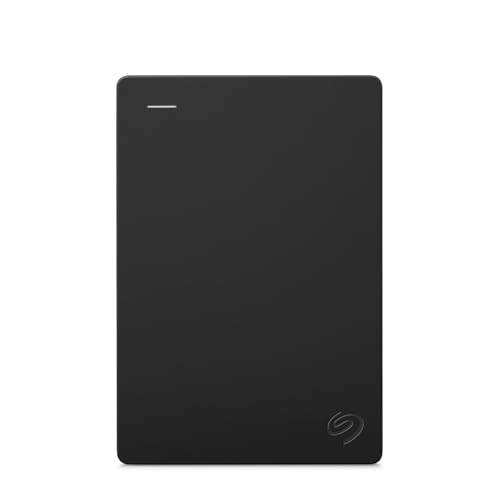
Easily store and access 2TB to content on the go with the Seagate Portable Drive, a USB external hard drive
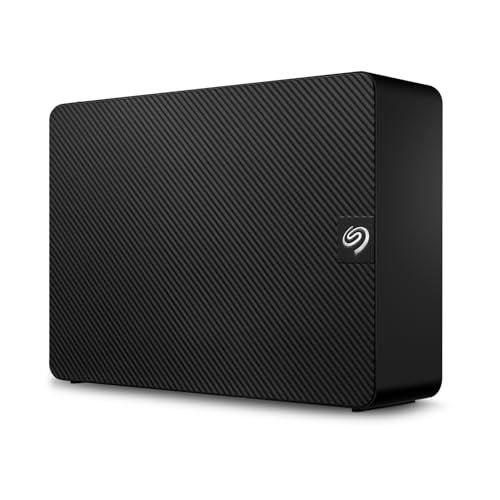
Easy-to-use desktop hard drive — simply plug in the power adapter and USB cable.Specific uses: Business, personal
Your Rescue Plan documents will be delivered to you via email only to the address associated with your Amazon.com account and can be found in your account message center within the Buyer/Seller Messages.
What Factors Impact Storage Solution Decision Beyond Technical Specifications?
Did you know 93% of businesses experiencing data loss close within a year? We must consider user experience and scalability options when choosing storage solutions, ensuring seamless integration to support our growth and operational needs.
How Do Maintenance and Support Influence Storage Solution Costs?
Maintenance and support greatly influence storage solution costs through cost analysis and service agreements. By understanding these expenses, we can make informed decisions to balance long-term savings with necessary operational and maintenance requirements.
Can Storage Solutions Integrate With Existing IT Infrastructure Seamlessly?
Yes, our storage solutions can seamlessly integrate with existing IT infrastructure. Effective data migration strategies guarantee system compatibility, allowing us to enhance our capabilities without disrupting current operations. Let’s optimize our storage together!
What Environmental Considerations Affect Storage Solution Choice and Deployment?
When we consider storage solutions, we can prioritize sustainability practices and energy efficiency. Utilizing tiered and tape storage options helps minimize our carbon footprint and supports a more environmentally responsible approach to data management.
How Do Storage Solutions Address Compliance and Regulatory Requirements?
Our storage solutions guarantee data security by adhering to regulatory frameworks, supporting WORM compliance, and enforcing access controls. This approach minimizes risks and maintains the integrity of sensitive information for audits and regulatory scrutiny.