


When we’re choosing the best RC car motors, it’s essential to take into account brushless and brushed options. Brushless motors, like the Hobbywing Xerun, offer higher speeds and last longer, while brushed motors, such as the Traxxas Titan, provide reliable torque for crawlers. Don’t forget about motor types like outrunner or inrunner, which affect performance too! By understanding these details, you can maximize your RC experience, and there’s much more to explore on how to pick the perfect motor.
Key Takeaways
- Brushless motors are preferred for high-performance racing due to their higher efficiency and power output compared to brushed motors.
- Brushed motors offer simplicity and ease of maintenance, making them ideal for beginners or less demanding applications.
- Select motors with appropriate KV ratings based on your intended use: high KV for speed and low KV for torque-heavy applications.
- Outrunner motors provide greater torque density and quieter operation, making them suitable for applications requiring strong acceleration.
- Regular maintenance, such as cleaning and brush replacement for brushed motors, is essential for prolonging motor lifespan and performance.
Understanding Brushless and Brushed Motors
When discussing RC car motors, we can’t help but notice the exciting differences between brushed and brushless motors. Brushed motors use carbon brushes and a commutator to create motion, resulting in lower motor efficiency and more friction. These components wear down over time, requiring regular maintenance. On the other hand, brushless motors utilize electronic commutation, providing higher power output and longer lifespans without mechanical wear. They incorporate advanced technology, like permanent magnets and optimized cooling systems, which enhance performance. Because of these features, brushless motors often excel in high-performance situations, while brushed motors work well for simpler applications. Knowing these differences helps us choose the right motor based on our specific RC needs! Additionally, brushless motors generally offer higher efficiency and longer life compared to their brushed counterparts.
Performance and Efficiency of RC Motors
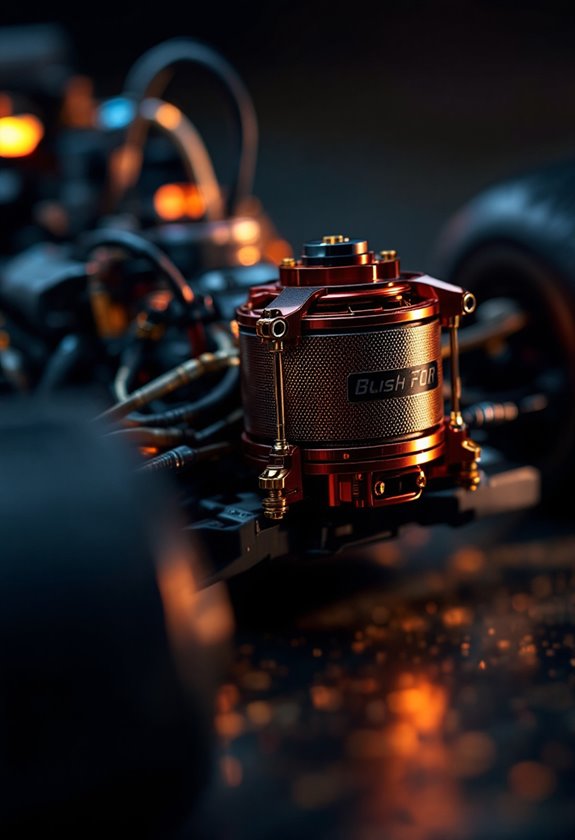
Performance and efficiency are vital when selecting motors for our RC cars, especially considering the significant advantages of brushless motors. These motors achieve an impressive efficiency rating of 70-90%, easily outperforming brushed motors, which range from 70-85%. With brushless motors, we get double the power output, allowing our cars to accelerate quicker.
It’s important to understand how motor load and torque characteristics influence performance. Motors perform best near their rated load capacity, so choosing the right power setup will maximize efficiency. For our racing setups, high RPMs from advanced controllers increase speed. Additionally, ideal torque arises when the rotor’s magnetic field is at a 90° angle to the current. This balance guarantees we enjoy the thrill of RC car racing to the fullest! Moreover, compatibility with ESCs is crucial to ensure optimal performance and safety when upgrading our motors.
Popular RC Motor Brands and Models
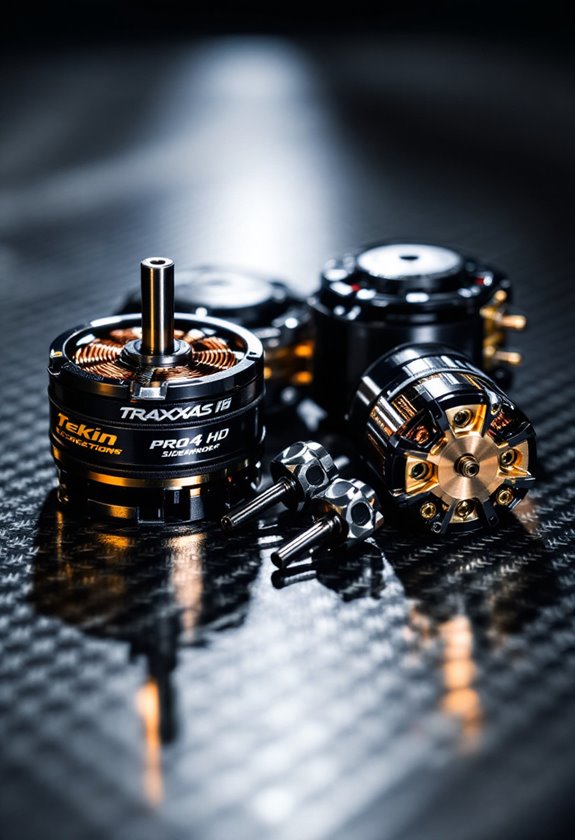
Exploring the world of RC motors opens up a thrilling array of options designed to elevate your racing experience. Some of the most popular RC manufacturers include Hobby Wing, known for its efficient 50A brushless speed control systems. For monster trucks, 2500kv motors provide that perfect power-to-weight ratio, making them ideal for competitive racing. We’re also seeing trending motor technologies that emphasize sensor vs sensorless configurations, affecting startup smoothness. For entry-level enthusiasts, 550-size brushed motors offer reliability, while the 27-turn motors give extended runtime. If you’re into more serious racing, look for modified class motors with minimal turn counts, which deliver maximum RPM capability. These brands and models cater to every racer, enhancing performance in diverse terrains. Additionally, motors like the INJORA 540 offer high torque and durability, making them a favorite among crawler enthusiasts.
Motor Construction Types: Outrunner Vs Inrunner
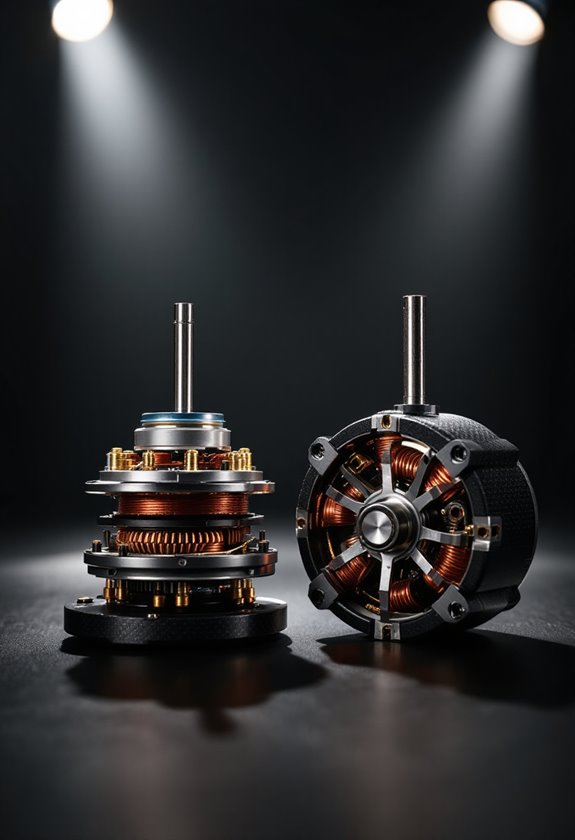
Understanding the differences between outrunner and inrunner motors can really enhance your RC experience. Outrunner motors have permanent magnets on the rotor, spinning on the outside, while inrunners place their magnets at the center. This leads to some key outrunner advantages, like higher torque density and quieter operation due to lower RPM. However, inrunner motors generate higher RPM per volt and offer better efficiency, especially under no-load conditions. The inrunner disadvantages come into play with lower torque output, making them less ideal for applications needing strong acceleration. For quiet, powerful performance in various RC applications, knowing these differences helps you choose the right type for your needs. It’s all about balancing torque and speed!
Selecting Motors for Specific Applications
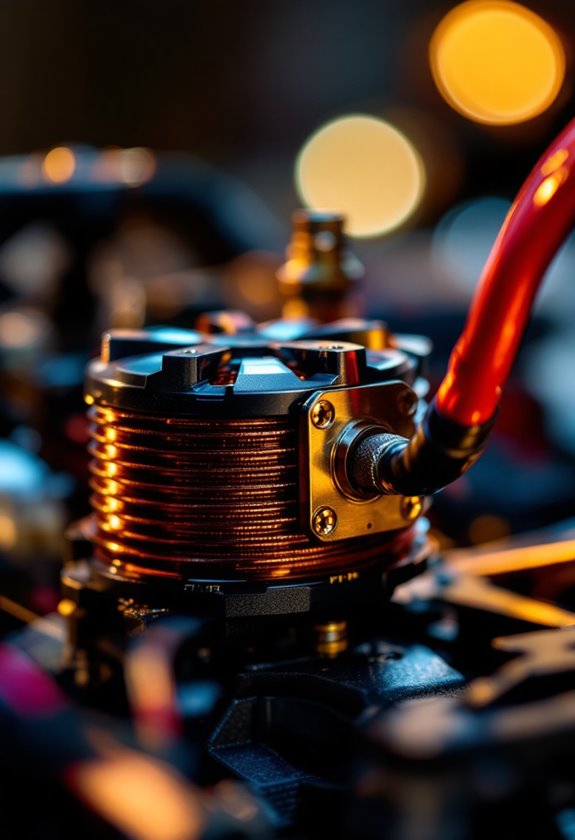
When choosing the right motor for your RC vehicle, it’s important to align specific applications with motor capabilities. For racing, we need high KV motors for maximum speed, while off-road buggies require high torque motors to tackle rough terrains. Drifters should seek a balance between torque and speed, guaranteeing power delivery stays consistent. If you’re into crawling, don’t forget that brushless motors provide the durability and torque necessary to conquer steep inclines. We must also consider motor compatibility with our vehicle scale: 1:10, 1:8, or 1:5 have different power needs. Remember, evaluating torque requirements and compatibility with your setup guarantees that you get the most out of your RC experience. Additionally, selecting motors with thermal resistance can enhance performance and longevity in competitive environments. Let’s power up our racing adventure!
Key Technical Specifications to Consider
Choosing the right RC car motor involves a closer look at key technical specifications that can markedly impact performance. First, consider the KV rating, which indicates the motor’s speed per volt; higher KV means faster speeds. Next, check the turn counts; fewer turns yield more speed but less torque. Additionally, pole configurations, ranging from 2 to 8 poles, influence torque and smoothness. Motor size and physical dimensions are essential, particularly for 1/10 scale vehicles. Don’t overlook power output and efficiency ratings, as these determine performance and heat loss. Finally, gear ratios affect torque characteristics, further influencing your RC car’s performance. By understanding these specs, we can make more informed decisions about the best motor for our needs! Furthermore, it’s essential to consider current ratings when selecting motors to ensure they meet the demands of your ESC and prevent overheating.
Advantages of Brushless Motors
Brushless motors stand out as the preferred choice for many RC enthusiasts, thanks to their remarkable speed and performance benefits. Their performance optimization means they can easily achieve speeds exceeding 100mph, delivering double the power of brushed motors. You’ll notice a significant improvement in both speed and torque, making your RC car more thrilling to drive. With up to 1.5 times greater efficiency, brushless motors also make battery life last longer, allowing for extended sessions without frequent changes. Plus, the absence of brushes results in less wear, leading to enhanced motor longevity. These factors combined with reduced maintenance needs make brushless motors an excellent investment for anyone looking to elevate their RC experience. Furthermore, the integration of robust protection mechanisms ensures safe and reliable operation under various conditions.
Advantages of Brushed Motors
While brushless motors have gained popularity for their high-speed thrills, brushed motors still hold their own as a fantastic option for many RC enthusiasts. Their affordability benefits make them an attractive choice, especially for newcomers. Compared to brushless systems, brushed motors come with a lower initial purchase price, which is perfect if we’re on a budget. Plus, they don’t require expensive brushless-compatible ESCs, reducing overall costs.
When it comes to reliability factors, brushed motors have stood the test of time. Their straightforward design guarantees consistent performance in various conditions, making them dependable for steady power delivery. With widespread availability and easy maintenance, brushed motors remain a practical and inviting choice for all, especially those just starting their RC journey.
How Motor KV Rating Impacts Performance
How does a motor’s KV rating impact its performance? The KV rating indicates how many RPMs a motor will spin per volt applied. For instance, a 3000KV motor hits 30,000 RPM at 10 volts! Higher KV values mean faster speeds, but they can lead to some efficiency loss. While high KV motors can increase power output and speed, they often need more current, resulting in increased heat generation. This heat can affect battery life and overall efficiency. In contrast, lower KV motors provide more torque and are better suited for heavy loads or demanding conditions. Understanding how these factors work together helps us choose the right motor for our specific RC applications, maximizing performance while managing efficiency.
Optimizing Motor Selection for Your RC Vehicle
When it comes to optimizing motor selection for your RC vehicle, understanding the various types of motors available can greatly enhance your driving experience. For crawlers, we should choose brushed motors for excellent low-speed torque control. If we’re into racing, brushless motors offer superior speed and power, perfect for high-performance setups.
It’s essential to take into account motor compatibility with your electronic speed controller (ESC) too. Brushed and brushless motors require matching ESC types to function efficiently. Additionally, we need to guarantee motors meet the torque requirements for our specific vehicles, aligning power needs with weight and intended use. With the right motor, we’ll enjoy improved performance, whether we’re crawling steep inclines or racing at top speeds!
Maintenance and Care for RC Motors
Keeping your RC motors in prime condition is crucial for peak performance and longevity. We should clean our motors after each run, using compressed air or a stiff bristle brush to blow away dirt and dust. Regularly inspect the motor housing and wiring for any signs of wear.
For brushless motors, occasional motor cleaning is important. Disassemble the motor carefully and use proper cleaners on the rotor. Don’t forget to apply bearing lubrication after the bearings have dried!
If using brushed motors, cleaning the commutator and replacing worn brushes guarantees peak performance. Finally, always tighten screws and check wiring to avoid issues. Taking these steps will keep your motors running smoothly and extend their lifespan.
Frequently Asked Questions
How Do I Choose the Right ESC for My Motor?
Did you know that using an incompatible ESC can lead to severe performance drops? To choose the right one, we’ll consider ESC compatibility factors and perform a motor types comparison carefully for ideal pairing.
What Battery Types Are Compatible With RC Motors?
When choosing battery types for our RC motors, we need to take into account battery capacity and cell voltage. NiMH batteries offer moderate power, while LiPo packs can deliver higher performance for advanced applications. We’ve got options!
How Can I Improve My Motor’s Cooling?
Let’s face it, no one wants a sizzling motor! To improve cooling, we can embrace cooling techniques like enhancing airflow, using thermal management gadgets, adjusting gear ratios, and opting for heat sinks. Our motors will thrive!
Are There Beginner-Friendly Motor Kits Available?
Yes, there’re plenty of budget motor options for beginner setups! Brands like Traxxas and Castle Creations offer excellent beginner-friendly kits that help us jump into the hobby without breaking the bank or complicating our experience.
How Do I Know When to Replace My Motor?
We should look for motor performance indicators like excessive heat, reduced power output, and inconsistent operation. If we notice these symptoms, it’s time for troubleshooting motor issues and considering a replacement to maintain peak performance.