As an Amazon Associate, we earn from qualifying purchases. Some links on this site are affiliate links at no extra cost to you. Our recommendations are based on thorough research and editorial judgment.

How To Choose Diff Type?

To choose the right differential pressure sensor, we need to understand the specific application and its requirements. First, consider the pressure range and accuracy needed. We should also check environmental conditions and output interfaces for compatibility. Sensor construction is essential for durability, so look for quality materials. Additionally, focus on industry-specific needs, like those in HVAC or aerospace. If you want to dive deeper into these factors, there’s much more to explore!
Key Takeaways
- Assess accuracy and precision requirements based on your specific application to ensure the right sensor type is selected.
- Consider environmental conditions, such as temperature and humidity, to ensure functionality and reliability in your chosen setting.
- Evaluate the measurement range needed for your application, opting for sensors rated higher than your maximum expected pressure.
- Review the output interfaces and communication protocols required for compatibility with existing systems and ease of integration.
- Focus on the material quality and durability of the sensor to ensure long-term performance and maintenance efficiency.
Understanding Differential Pressure Sensors
You may be interested



When we talk about differential pressure sensors, they’re really fascinating devices that measure the pressure difference between two points—P1 and P2. These sensors operate on solid sensor principles, where two pressures applied to a single diaphragm create a deflection that indicates pressure differences. This happens through a flexible membrane that tilts toward the lower pressure side. You’ll find technology variations like piezoresistive sensors, which are common, and capacitive sensors, which offer alternatives. Plus, MEMS-based options provide miniaturized designs. Each of these types has unique features, like integrated temperature compensation, ensuring accurate readings. By understanding these concepts, we can make better choices in selecting the right differential pressure sensor for various applications. Additionally, considering advanced features such as real-time telemetry can enhance the functionality of your measurement systems.
Application Requirements for Sensor Selection

What should we consider when selecting sensors for specific applications? First, we need to assess the sensor capabilities and how they align with our accuracy and precision requirements. Sensors must detect minute changes accurately, which is crucial for applications like quality control and medical devices. Next, let’s review environmental conditions; sensors need to withstand temperature and humidity levels relevant to their intended use. Additionally, we should confirm application compatibility with existing systems, considering output signals and communication protocols. Finally, we can’t overlook physical constraints like size and mounting options that could impact sensor placement. By considering these factors, we can select the right sensor to meet our specific application needs effectively. Moreover, ensuring material quality in sensor construction can significantly influence durability and performance in various environments.
Recommended Products

Wellness Indicator: This humidity meter with humidity level icon indicates air conditions - DRY/COMFORT/WET, allowing this humidity sensor to ensure you’re always aware of changes to your home/household with just a quick glance

Face Icon Comfort Indicator: Humidity temperature gauge features face icons to indicate DRY/COMFORT/WET air conditions, quickly informs you how to adjust your humidifier or dehumidifier to achieve optimal comfort

Face Icon Comfort Indicator: Humidity temperature gauge features face icons to indicate DRY/COMFORT/WET air conditions, quickly informs you how to adjust your humidifier or dehumidifier to achieve optimal comfort.
Technical Specifications to Consider

Selecting the right sensors requires an in-depth exploration of their technical specifications, and that’s where the magic happens! First, we should look at pressure range and accuracy. Specifications can range from ±30 Pa for low-pressure needs to ±500 Pa for standard applications—accuracy matters! Don’t forget about sensor calibration; staying within ±0.6% to ±3% is key.
Next, consider output interfaces. Analog outputs typically offer DC voltage from 0 to 10 V, integrating easily with various control systems. If you prefer digital, wireless transmission is available through Sub-GHz ISM bands. High-resolution capabilities, from 0.02 Pa for precision to temperature res as fine as 0.1°C, guarantee reliability and performance. Additionally, understanding battery health monitoring is crucial for optimizing your sensor’s functionality in applications like drones. We’re confident these technical details will guide you well!
Recommended Products

[ SENSOR] Utilizing advanced micromachining and thin-film metallization technology, the MPXV7002DP offers reliable and accurate pressure readings.

Adopt precision compensation technology and sensitive components, stable and

Air and non-combustible, compatible gases.
Construction and Configuration Options
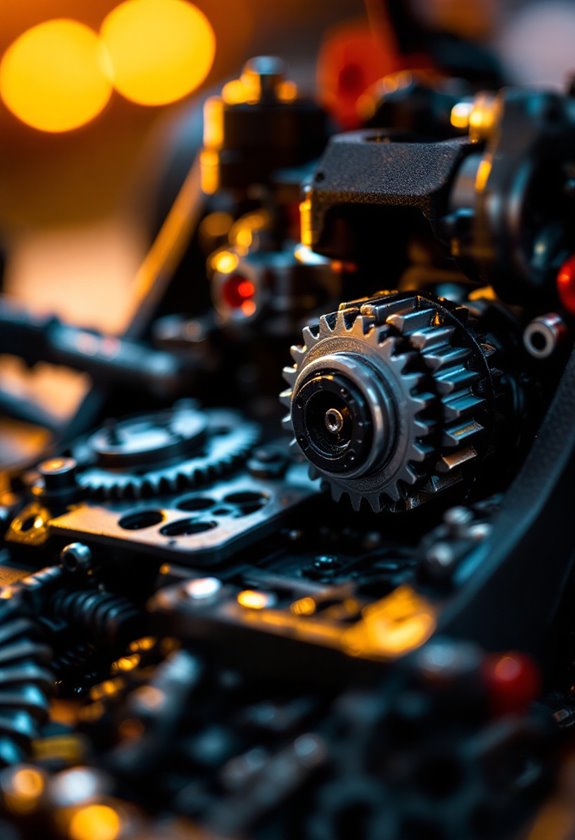
Exploring the different construction and configuration options available for vehicle differentials enhances our understanding of how they function. Each differential type has unique gear configurations that affect how power is distributed to the wheels. For instance, the ring-and-pinion designs change the axis of rotation, offering both gear ratio reduction and direction change. The spur-gear differential features pairs of gears that allow for equal rotation, while epicyclic differentials enable compact designs perfect for all-wheel drives. We’ve got options like limited slip or locking differentials, enhancing either traction or wheel independence. In addition, we can swap standard open carriers for something more advanced, meaning there’s a configuration to fit our specific driving needs. These choices shape our vehicle’s performance on the road. Understanding gear ratios is essential in selecting the right differential type to optimize power distribution based on your driving style.
Recommended Products
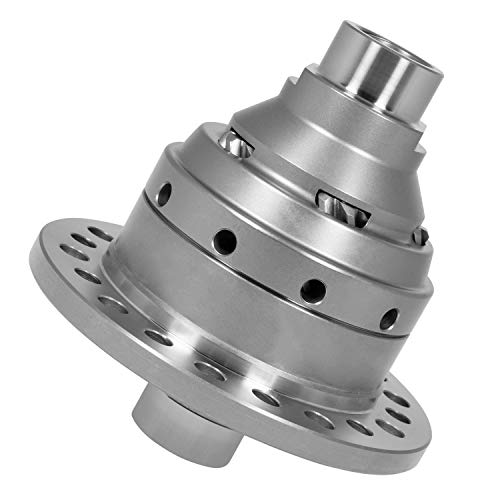
FITMENT: Dana 30 Front 27 Spline, 3.73+ Ratio

Positraction additive

Precise Purpose: Designed to provide smooth yet aggressive traction, enhancing truck or car handling and stability in demanding conditions with composite clutches, giving optimal torque distribution
Industry-Specific Needs
When it comes to meeting the unique demands of various industries, understanding specific needs is key to optimizing performance and safety. Different industrial applications require tailored solutions, whether we’re monitoring airflow in HVAC systems or guaranteeing the safe operation of oil and gas pipelines. Each sector relies on equipment that offers sensor compatibility with their specific processes. In medical settings, precision airflow control can save lives, while in aerospace, cabin pressure monitoring guarantees passenger comfort and safety. By focusing on the unique requirements of your industry, we can choose the right equipment that not only meets these needs but enhances operational efficiency. Let’s explore how smart selections can lead to better outcomes across diverse environments! Additionally, understanding terrain capabilities can also play a crucial role in selecting the appropriate equipment for outdoor applications.
Recommended Products

【Multifunction Pro Anemometer】Wind Speed, Wind Temperature, Wind Chill, Low battery indicator on bright backlit LCD screen. BT-100 is a portable wind speed guages can accurately measure air speed in 5 units: m/s, km/h, ft/min, knots, mph. Wind Temp in ℃/℉(Degree Celsius/Fahrenheit)

【Multifunction Pro Anemometer】 Wind Speed, Temperature, Wind Chill and Battery Power in one LCD display. Digital Anemometer Handheld measure wind speed in 5 units: m/s, km/h, ft/min, knots, mph. Temperature measure in ℃,℉

💖【Split Type Windspeed Gauge】KE-846A Industrial wind speed measuring device check air flow speed 0.3~45m/s, test wind temperature 32℉~113℉(degree Celsius & Fahrenheit switchable) , measure air volume 0-999900 ft3/min(CFM CMM switchable) .
Measurement Range Considerations
Understanding measurement ranges is essential if we want to choose the right pressure transducers for our applications. When it comes to range selection, a general guideline suggests we select transducers with 40% to 50% more capacity than our maximum rated pressure. For instance, if our application maxes out at 1000 psi, we should look for transducers that can measure up to 1500 psi. This practice not only enhances the precision measurement capabilities but also guarantees we avoid pushing our sensors to their limits constantly. Additionally, many models offer configurable ranges, which means we can adapt a single sensor for various applications, streamlining our processes. Let’s keep these range considerations at the forefront to achieve peak performance!
Recommended Products

[0 80PSI GAUGE RANGE] Built to measure 0 to 80PSI pressure with stable analog feedback making it a practical gauge pressure sensor choice for monitoring water gas oil and tank systems.

【High Precision】: ±2%FS small output error, full temperature range, high sensitivity and accuracy

100% brand new with high quality metal case (not plastic) and water sealed quick disconnect wiring connector. Mating connector and wire harness (pigtail) is included.
Accuracy and Performance Metrics
Accuracy and performance metrics play an essential role in guaranteeing we select the right pressure transducers for our needs. First, we need to focus on typical accuracy ranges, which often vary from 0.25% FS to 1% FS for standard applications. If we aim for high accuracy, we should consider sensors with a C3 grade, boasting an error range within ±0.020%. To achieve ultra-high precision—like 0.002% FS—special calibration methods and error analysis are crucial. We must also be aware of temperature effects and potential error sources like non-linearity and hysteresis. By understanding these factors, we can make informed decisions about which pressure transducers to choose and guarantee reliable performance in our specific applications. Additionally, material quality is vital when assessing the durability and effectiveness of components used in pressure transducers.
Environmental Considerations and Standards
In today’s world, ensuring our pressure transducers meet the required environmental standards is essential for both safety and compliance. We must prioritize regulatory compliance to minimize the environmental impact on our industries. For instance, in pharmaceutical facilities, adhering to EU and FDA standards is critical for maintaining air quality and managing pressure differentials. Cleanroom environments also demand strict pressure monitoring to avoid contamination. Our sensors need to be reliable, especially in healthcare and food production, where precise airflow control is important. By utilizing modern technology, we can achieve accurate pressure measurements while complying with ISO guidelines. This proactive approach not only safeguards product quality but also prevents costly penalties during audits, ensuring our operations remain efficient and compliant.
What Is the Lifespan of Different Types of Differential Pressure Sensors?
Differential pressure sensors typically last 10+ years, depending on sensor durability and application compatibility. Ceramic sensors generally outlast metal ones, but understanding specific conditions can enhance overall lifespan and performance. We’ve found this essential in our selections.
How Do Environmental Conditions Affect Sensor Performance?
Like chameleons adjusting to their surroundings, we see environmental conditions greatly affect sensor performance. Temperature effects alter sensitivity, while humidity impacts calibration, compelling us to recalibrate often for reliable readings in fluctuating environments.
Can Differential Pressure Sensors Be Easily Calibrated or Adjusted?
Yes, we can easily calibrate differential pressure sensors using various adjustment methods like deadweight testers and digital calibrators. Ensuring proper setup and following steps helps maintain accuracy throughout the sensor’s operational life.
What Is the Impact of Installation Location on Sensor Accuracy?
Sensor placement greatly impacts accuracy. By following installation guidelines, we guarantee correct alignment and minimize errors from height differences, ambient conditions, and mechanical stresses, ultimately enhancing the reliability and performance of our measurement systems.
Are There Specific Maintenance Requirements for Different Sensor Types?
We’ve discovered that different sensor types require tailored maintenance; capacitive sensors need annual calibrations, while thermal ones demand quarterly cleaning. Failing to follow these protocols could lead to malfunctions, leaving us vulnerable to costly failures.