As an Amazon Associate, we earn from qualifying purchases. Some links on this site are affiliate links at no extra cost to you. Our recommendations are based on thorough research and editorial judgment.


How To Choose Data Logger?

Choosing a data logger is exciting! First, we need to contemplate the type, like standalone or wireless loggers, depending on how we want to collect data. Next, think about parameters to monitor, such as temperature and humidity. Connectivity options, including USB or cloud access, are also essential. Don’t forget the sampling rate and accuracy! Finally, evaluate costs and power management. Ready to explore specifics that match your needs even better? Let’s plunge into it!
Key Takeaways
- Identify the type of data logger needed (standalone, wireless, or specialty) based on your specific measurement requirements and application environment.
- Evaluate the essential parameters like temperature range, sampling rates, and measurement accuracy to ensure compliance with industry standards.
- Consider connectivity options such as USB, wireless, or IoT capabilities for ease of data access and remote monitoring.
- Assess alarm functions and instant alerts to ensure reliable monitoring and timely notifications of critical events.
- Factor in the total cost, including initial investment, calibration, ongoing maintenance, and power management needs for long-term usage.
Understanding Different Types of Data Loggers
You may be interested



When we’re diving into the world of data loggers, it’s exciting to discover the different types available for our specific needs. There are standalone loggers, easy to carry and perfect for on-site measurements, while wireless loggers offer real-time data access through apps and the cloud. If we need immediate insights, computer-based loggers connect directly to our PCs. Then we have web-based loggers, allowing us to retrieve data remotely via the Internet. Each of these logger types impacts our data accuracy in unique ways. For instance, temperature loggers specialize in thermal measurements, while mixed signal loggers capture multiple parameters. Exploring these options helps us choose the right tool for precise monitoring in various applications! Additionally, understanding the role of quality materials in data logger construction can significantly influence performance and reliability.
Recommended Products

🌡️ ACCURATE AND AUTOMATIC - Made with premium Swiss components, this wireless temperature and humidity monitor is extremely accurate. It automatically records a new temperature and humidity reading every minute of the day and syncs to your phone
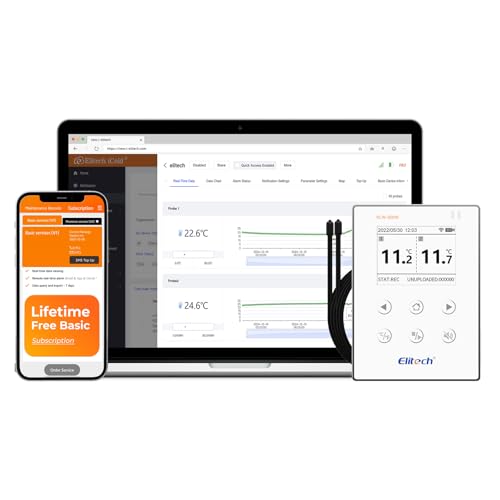
High precision probe - Accurately sense small changes in temperature. With a measurement range temperature -40℉ ~176℉(-40℃~80℃)

【Easy Bluetooth Connection】Features advanced auto-connection technology, effortlessly pairing your smart device with this bluetooth temperature monitor; Simply put batteries in(included), download our app, and you're ready to go - perfect for users of all ages and tech levels
Key Parameters to Monitor
Understanding the key parameters to monitor is essential for selecting the right data logger for your needs. We should consider several critical factors, like sensor integration, which allows data loggers to connect to various sensors for precise readings. Depending on your application, temperature, humidity, and pressure are crucial parameters to monitor. Models can measure temperatures from -80°C to 300°C, and advanced loggers may offer multi-point temperature profiling for accurate thermal mapping. Additionally, it’s important to look at the sampling rates; models can range from 1 Hz to 100,000 Hz, greatly impacting data visualization. Finally, ensuring measurement accuracy and resolution supports reliable data collection, essential for compliance with standards like FDA and HACCP.
Connectivity and Data Access Options
Connectivity and data access options play an essential role in how we collect and analyze our environmental data. When choosing a data logger, we should consider methods like USB access or wireless efficiency. USB loggers require a physical connection for data retrieval, making them less convenient. In contrast, wireless loggers, like those using Bluetooth or WiFi, allow us to access data remotely, supporting efficient monitoring without site visits. IoT data loggers take this a step further by sending data directly to the cloud, enhancing remote accessibility. Overall, opting for a wireless data logger can simplify our processes and streamline data collection, helping us manage our environmental monitoring more effectively.
Recommended Products

🌡️ ACCURATE AND AUTOMATIC - Made with premium Swiss components, this wireless temperature and humidity monitor is extremely accurate. It automatically records a new temperature and humidity reading every minute of the day and syncs to your phone

🌡️ ACCURATE AND AUTOMATIC - Made with premium Swiss components, this wireless temperature and humidity monitor is extremely accurate. It automatically records a new temperature and humidity reading every minute of the day and syncs to your phone

𝗣𝗥𝗘𝗖𝗜𝗦𝗜𝗢𝗡 𝗬𝗢𝗨 𝗖𝗔𝗡 𝗧𝗥𝗨𝗦𝗧 – Monitor temperature, humidity and dew point with a lab-grade calibrated sensor, ensuring stable, accurate readings that monitors your valuables, health and indoor comfort. Ideal if you are looking for digital room thermometer indoor - outdoor or room temperature monitor.
Technical Specifications to Consider
As we explore the world of data loggers, it’s vital to pay attention to their technical specifications to guarantee we choose the right model for our needs. First, let’s consider the data logger accuracy. We want our logger to meet or exceed the required precision for reliable measurements. Next, the sampling rate selection is important; a higher sampling rate is necessary for fast-changing environments, while lower rates can be sufficient for slower processes. Along with that, think about channel capacity; loggers can have anywhere from single to over 100 channels. Make sure the logger can handle the anticipated measurement range, giving us confidence in its performance for our specific applications. These specifications are key to making an informed choice! Additionally, comprehensive screw kits can also enhance the efficiency of maintaining equipment that utilizes data loggers.
Application-Specific Requirements
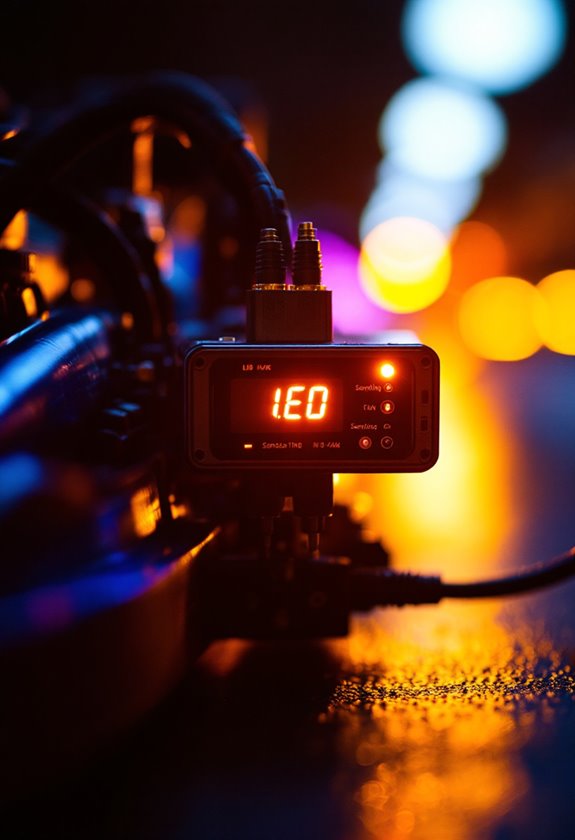
When selecting a data logger, it’s essential to take into account the specific requirements based on the intended application. Each application scope comes with unique demands. For instance, environmental monitoring loggers need to resist dust and moisture, ensuring consistent temperature and humidity levels are maintained. In industrial settings, high-precision sensors are imperative for monitoring pressure and energy consumption. For cold chain applications, compact monitors require fast measurement intervals to prevent product damage. Additionally, space-constrained projects often depend on small, versatile loggers with limited functionalities. Understanding these user environments helps us choose the right data logger that fits seamlessly into our operations, providing reliable and accurate data while facing unique challenges in each domain. Furthermore, considering safety mechanisms helps ensure that data loggers operate without risking damage to the equipment or the data integrity. Let’s make informed choices together!
Recommended Products

Temperature and humidity logger

Regulatory Compliance: Designed to meet CDC/VFC requirements and FDA 21 CFR Part 11 compliance for pharmaceutical and vaccine storage monitoring

Measures -20° C to 70° C with accuracy of ±0.21° C in standard conditions
Choosing Between Standalone and Connected Loggers
Though we often face a choice between standalone and connected data loggers, understanding their unique features can simplify our decision-making process. Standalone loggers have distinct advantages; they’re portable and budget-friendly, with USB ports for easy data retrieval. They’re perfect for small-scale applications where access isn’t frequent or where conditions are tough. On the other hand, connected loggers offer incredible flexibility. They use wireless technology for real-time monitoring and instant alerts, keeping us informed via SMS or email. With cloud capabilities, we can access data from multiple locations at once. Additionally, selecting the right wire gauge for your applications can significantly impact the performance of your data logger system. So, think about your specific needs; if real-time access and monitoring are essential for you, connected loggers might be the way to go!
Recommended Products

All things done: built-in a Global LTE 4G SIM Card. Real time temperature data logger RCW-360Pro series can monitor temperature/ultra-low temperature, humidity, CO2. On App and web dashboard, access your Data at any point in real-time from Anywhere via the Internet. Elitech icold sends alarms to cloud platform/SMS/email/App,and device built-in sound and light alarm. You can take actions timely.

Multi-use temperature data logger, 32,000 recording points, with wide measuring range -30℃~70℃ / -22℉~158℉. Up to 6 months battery life, replaceable battery, low power consumption.
Importance of Multi-Channel Capability
Multi-channel capability is vital for anyone looking to streamline their data collection process. By choosing a multi-channel data logger, we can increase our multi-channel efficiency. This feature allows us to monitor multiple measurement points simultaneously, which is important for projects like temperature mapping across large areas. With simultaneous monitoring, we can compare conditions in real-time, improving our ability to validate uniformity in storage or production environments. This efficiency not only saves us from buying multiple devices but also reduces maintenance costs. In addition, fewer units mean less need for accessories and licenses, making it a smart financial decision for tight budgets. Ultimately, investing in multi-channel capability enhances our data collection experience and boosts accuracy. Furthermore, ensuring exceptional seal quality in data loggers can minimize the risk of leaks, comparable to the importance of durability in RC fuel tanks.
Temperature Range Compatibility
Understanding temperature range compatibility is crucial for choosing the right data logger for your needs. Our first step is to evaluate the operational range. Standard loggers function well between -35°C to +80°C, making them great for general monitoring. For those of you needing to capture seasonal variations or temperature extremes, specialized options extend to -90°C for laboratory settings or even -200°C with Teflon probes for industrial use. It’s important to match the logger’s range to your specific environment. For example, monitoring food storage requires -35°C to +80°C. Remember, maintaining accuracy diminishes at the edges of a logger’s range. Selecting the right temperature range guarantees effective monitoring, helping you gather reliable data throughout your applications. Additionally, ensuring high accuracy is essential for collecting trustworthy data during your monitoring processes.
Alarm Functions and Instant Alerts
When it comes to monitoring environments, having reliable alarm functions and instant alerts is essential for keeping everything running smoothly. We want to guarantee you can address potential issues quickly and effectively. With various alarm notification methods available, such as SMS text messages, email alerts, and even phone calls, you’re always in the loop. Customizable alert response strategies let you set thresholds, so you know exactly when to take action. Local alarms, like buzzers and LED indicators, give immediate awareness on-site, while cloud-based systems notify you remotely. This combination means you won’t miss critical events, no matter where you are. With the right features, you can keep your operations safe and efficient!
Cost Considerations
Cost considerations play an essential role when choosing the right data logger for our needs. We need to stay mindful of our budget constraints, especially since new data loggers range from $200 to $5,000, depending on their features. While used loggers can be more budget-friendly, priced between $100 and $3,000, they’re often a practical option if we find reliable brands. We should also think about the initial investments beyond just purchasing equipment, such as calibration costs and software licenses. As we consider our future, remember that maintenance and data storage costs can add up, too. By evaluating these factors, we can make informed decisions that fit our budget while still meeting our data monitoring needs effectively.
Recommended Products

SD card interface works with FAT16 or FAT32 formatted cards. 3.3v level shifter circuitry prevents damage to your SD card

Multi-use temperature data logger, 32,000 recording points, with wide measuring range -30℃~70℃ / -22℉~158℉. Up to 6 months battery life, replaceable battery, low power consumption.

REUSABLE TEMPERATURE DATA LOGGER. Wide temperature measuring range -22℉~158℉(-30°C ~+70°C), records up to 32,000 temperature points.
Assessing Power Backup and Memory Management
Evaluating power backup and memory management is essential for ensuring our data loggers operate effectively in various conditions. We must consider the device’s battery power systems and longevity. Data loggers usually run on AA or AAA batteries, lasting from 227 days to 2 years based on sampling frequency. Dual power options, like battery backup with AC adapters, provide continuous operation during outages. For storage management, the internal memory can accommodate anywhere from 43,344 to 256,000 readings. Advanced models even support multi-channel data storage. By optimizing the sampling rate and utilizing sleep mode, we enhance power efficiency, resulting in longer deployment times. With these features, we can trust our data loggers to perform reliably in the field while managing both power and memory efficiently.
What Is the Lifespan of a Typical Data Logger?
Data logger durability varies, but most models typically boast a lifespan of 2-3 years. With specific conditions, high-end options can last up to 10 years, ensuring reliability for our long-term monitoring needs.
How Do I Calibrate a Data Logger?
To calibrate a data logger effectively, we’ll implement various calibrating techniques like two-point calibration. Remember, calibration frequency is essential; we should regularly calibrate to guarantee ongoing accuracy and reliable performance of our devices.
Can Data Loggers Be Used Outdoors?
You bet data loggers can be used outdoors! With proper outdoor durability and environmental protection features like IP65 ratings, they’re perfect for harsh conditions, ensuring accurate measurements no matter the weather—we can count on them!
What Certifications Should I Look for in Data Loggers?
When selecting data loggers, we should prioritize certification types like ATEX and IECEx for safety, alongside compliance standards such as ISO/IEC 17025 and FDA 510K, ensuring our equipment meets industry requirements for accuracy and safety.
How Often Should I Replace My Data Loggers?
When it’s time for a thoughtful tune-up, we should consider that data logger maintenance is essential. Typically, logger replacement frequency should be annually, especially under demanding conditions or if we notice accuracy drift.