As an Amazon Associate, we earn from qualifying purchases. Some links on this site are affiliate links at no extra cost to you. Our recommendations are based on thorough research and editorial judgment.


How To Setup Organization Method?

To set up an organization method, we first focus on an initial assessment to identify issues and engage our stakeholders. Next, we categorize and sort items efficiently, purging what we no longer need. Strategic placement enhances accessibility, while a solid labeling system keeps things organized. We also guarantee safety measures are in place and adapt to any changing needs. By following these steps, you’ll create a well-structured environment that boosts productivity and efficiency, and there’s more to unpack!
Key Takeaways
- Identify critical problems and engage stakeholders to gather insights and establish a collaborative environment.
- Implement essentialist and cognitive classification to categorize items and simplify complex data for better organization.
- Sort items into Keep, Toss, Maybe, and Other piles while focusing on their purpose and significance.
- Arrange items efficiently based on usage, accessibility, and establish versatile storage solutions for operational flexibility.
- Foster a culture of continuous learning and open communication to facilitate smooth transitions and adaptability during organizational changes.
Initial Assessment & Planning Phase
You may be interested



In order to successfully set up an effective organization method, we first need to immerse ourselves in the Initial Assessment & Planning Phase. This phase involves critical problem identification where we analyze issues that might be impacting our organization, like customer complaints or declining profits. By recognizing these problems early, we can engage stakeholders effectively, ensuring everyone’s voice is heard. We’ll establish collaborative relationships among leaders and managers, sharing initial assessments to determine the scope of our projects. This groundwork sets the stage for a deeper exploration of our organization’s strengths and weaknesses while laying the foundation for positive change. Together, we’re creating a roadmap for success that aligns everyone’s efforts towards common goals. Furthermore, it’s essential to consider tool compatibility and versatility to ensure that the selected strategies will effectively address the diverse needs within the organization.
Categorization and Sorting Systems

When we talk about categorization and sorting systems, we’re diving into the heart of how we organize information efficiently. We can start with essentialist classification, which helps define sectors like public and private. Cognitive classification simplifies complex data by grouping similar items together. Next, empirical approaches, such as decision tree classifiers, help sort data effectively. Multi-label classification allows objects to fit into multiple categories simultaneously, ideal for intricate setups. Taxonomy development creates a robust structure that directs our organizational efforts. We should also consider user-generated tags, which reflect current language trends, enhancing our system’s relatability. Finally, automated systems leverage algorithms for quick, efficient classification, streamlining our organization process. Together, these methods set a solid foundation for effective categorization! Additionally, understanding the durability features of various items can improve how we prioritize items in our categorization systems.
Recommended Products

【Package】Package contains 60 pack 1.2" x 4.3" clear label pockets and 60 pieces blank 0.8" x 3.9" labels that can be used together, enough quantity to meet your needs.

【Instant Size Organization】These clothing rack size dividers provide immediate sorting capability with pre-labeled markers covering standard sizes from XXS to XXXL, allowing for rapid categorization of garments without time-consuming searches.

Professional Shelf Label Holder:They are professhioally designed for variouse shelves,mailboxes,cubbies,lockers,bookshelves,cupboards,wine racks and more.This label holder FITS shelves with board thicknesses of 5/8 Inch To 3/4 Inch,whether they are metal, plastic or wood shelves
Purging and Editing Process

Organizing isn’t just about sorting items; it’s also about making smart decisions on what to keep and what to let go. We can adopt various purging techniques to streamline our process. First, we’ll remove everything from our designated space and sort items into four piles: Keep, Toss, Maybe, and Other. By assigning clear categories, we use effective editing strategies to evaluate each item’s importance. Remember to focus on items that truly serve a purpose or bring joy to our lives. Additionally, consider investing in comprehensive screw kits to ensure you have all essential components for your RC vehicles. Let’s tackle manageable areas first and set specific time limits to stay motivated. With each decision, we’ll visualize our space transforming, opening doors to clarity and efficiency. It’s time to let go of the unnecessary!
Recommended Products

RC screws compatible with Traxxas / Axial / Arrma / Redcat / RC4WD / HSP / Exceed RC / Losi / HPI / Himoto / Tamiya, for mostly brands 1/8 1/10 1/12 1/16 Scale RC Crawler Car Truck Buggy Accessories.

RC stand Compatible with Mostly Brands 1/8 1/10 1/12 1/16 Scale Models, Such as Traxxas / Arrma / Redcat Racing / SCX10 / HSP / HPI / Axial / RC4WD / WLtoys / Kyosho / Himoto / Losi / Exceed / Tamiya RC Crawler Car Truck Buggy Vehicle Scale Accessories.

✔500pcs in total,Various Size,A must have for your RC Vehicles Trucks Buggy, Short Course,Crawlers, On-Road,Off Road,etc.
Strategic Placement and Storage

Strategically placing and storing items often makes our spaces more efficient and easier to navigate. We can enhance spatial efficiency by thoughtfully arranging items based on their use and accessibility. For instance, grouping frequently used products together reduces retrieval time. This strategic alignment optimizes our warehouse layout, enabling us to utilize every inch of space effectively.
Employing modular designs allows for easy adjustments as our inventory changes, such as introducing new SKUs. We should also consider vertical space for storage, maximizing the cubic footage available. By minimizing aisle widths and using adaptable storage systems, we create a more streamlined workflow that meets our evolving organizational needs. This approach not only boosts productivity but also supports future growth and operational flexibility. Additionally, utilizing multi-pocket designs can help keep tools and accessories organized and accessible.
Recommended Products

Large Capacity: This stackable storage bins features a 4-tier design, with each tray measuring 13.8"D x 11.8"W x 2.4"H. Fully assembled, it measures 13.8"D x 11.8"W x 28.3"H and supports up to 26 lbs. The front opening design allows easy visibility and quick access to stored items
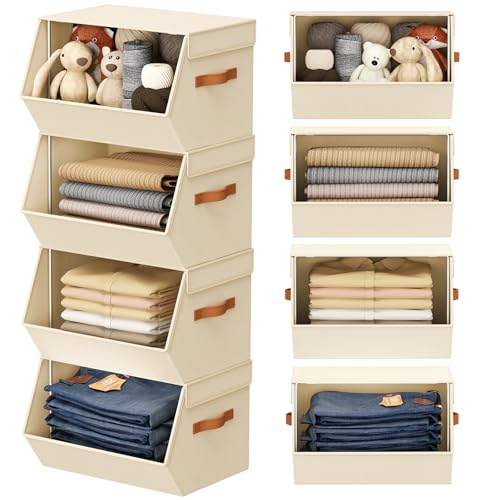
[Stackable & Modular Storage System] Maximize vertical space with multiple closet storage bins that stack securely. Perfect for closets, laundry rooms, wardrobes, storage spaces, and bedrooms — mix and match freely to meet your household needs and flexibly expand storage capacity

Large Capacity Storage: Cubby storage organizer (36"L* 11.6"W * 24"H) features 6 spacious compartments (11.5"W *11"H * 11.5"D each), providing ample storage for books, toys, office supplies, and more. This space-saving shelf keeps your essentials neatly stored and within reach
Containment and Labeling Infrastructure

Establishing an effective containment and labeling infrastructure is essential for maintaining organization in any space we manage. We need to identify specific label categories, like floor, rack, and bin labels, to guarantee everything is easy to find. Choosing materials with label durability is key; they should withstand moisture and extreme temperatures. A uniform labeling approach helps everyone understand the system easily. Color coding can be a game-changer, allowing us to visually differentiate items and storage areas. We can assign specific colors to seasonal items, enhancing quick recognition. Using clear, bold fonts with strong contrasts guarantees visibility from a distance. Finally, consistent placement of these labels enhances our operational efficiency while keeping our organization seamless and effective! Additionally, incorporating adjustability and customization features in your storage solutions can further streamline organization and accessibility.
Recommended Products

Compatibility: Wire shelf label holders compatible with Metro and other 1-1/4" wire shelves, improve efficiency by making sure everything has a place.
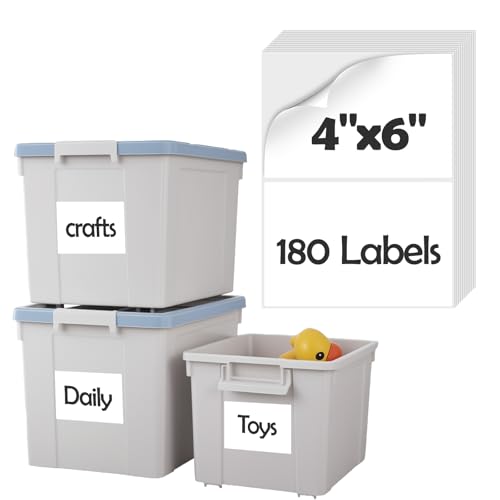
LARGE REMOVABLE LABELS –– 180 4"x6" White Matte Removable Labels provide ample space to write down the necessary information. 90 sheets, 2 labels per sheet

SNAP LOCK DESIGN: Basket label holders are designed with easy tight snap lock, ensure that can fix on the basket or wire shelf firmly and not easy to fall off, provide you lots of conveniences to organize and identify your personal objects.
Maintenance and System Sustainability
When it comes to the sustainability of our maintenance systems, balancing preventive and reactive maintenance is essential. We should aim for a planned maintenance percentage of 85% or higher. This preventive strategy guarantees our operational efficiency and helps keep maintenance costs manageable. Remember, organizations with advanced reliability practices dedicate about 70-85% of technician hours to preventive tasks—which tells us it’s effective! We can also track maintenance metrics to gauge our effectiveness; for instance, keeping reactive maintenance below 20% indicates a solid preventive approach. By committing to better systems, we save costs; unplanned work could be five times more expensive than planned work. Ultimately, focusing on preventive maintenance sets us up for greater sustainability and efficiency. Incorporating high-quality materials in our maintenance tools can significantly enhance the longevity and performance of our systems.
Evaluating Frequency of Use
Evaluating the frequency of use in our data allows us to uncover valuable insights that can guide our decision-making. By creating a frequency breakdown, we can see how often certain categories appear, helping us understand usage patterns clearly. This process involves organizing data into frequency tables, showcasing both absolute and relative frequencies. Absolute frequencies give us raw counts, while relative frequencies help us see proportions. With this structured analysis, we can easily identify trends and assess distribution across various categories. By grouping data in manageable ways, we simplify complex datasets, making it easier to spot similarities and differences. Ultimately, this evaluation helps inform our strategies and improve our overall outcomes. Let’s explore the details!
Implementing Safety Considerations
Implementing safety considerations is essential for creating a secure workplace where everyone feels protected and valued. First, we need extensive safety training, ensuring all employees understand protocols and emergency responses. This training should include fire drills and active assailant drills, keeping in line with OSHA guidelines.
Next, conducting thorough hazard assessments is important. We must identify potential risks, such as hazardous materials and unsafe practices. Regular inspections and employee feedback play a significant role in spotting operational hazards.
Developing clear protocols helps prevent workplace accidents by outlining safe machinery use and chemical handling. Regular safety meetings and refresher courses will reinforce our commitment to safety, making it an integral part of our workplace culture. Let’s prioritize safety together!
Adapting to Changing Needs
Adapting to changing needs is essential for any organization attempting to stay relevant and competitive. With nearly 96% of us undergoing transformation, we must embrace change as a constant. To do this effectively, we should focus on building our employees’ engagement and change resilience. By fostering a culture of continuous learning, we can enhance our capabilities and support teams in maneuvering new challenges. It’s vital to communicate openly, so everyone feels involved in the shift process. This two-way communication makes employees feel valued, ultimately leading to a more positive response to change. Let’s also invest in training programs to develop flexibility, ensuring we’re prepared to tackle market competition and evolving customer needs head-on.
What if My Space Is Too Small for Effective Organization?
If our space feels too small for organization, we can embrace space optimization and explore creative storage solutions. Utilizing vertical areas, multifunctional furniture, and clear containers helps maximize our limited space effectively.
How Do I Tackle Sentimental Items During the Purging Process?
As we tackle sentimental items like sorting a cherished old album, we’ll apply memory preservation techniques and emotional attachment strategies, focusing on key pieces that truly represent our feelings while letting go of the excess.
Can I Use Multi-Purpose Items in My Organization Setup?
Absolutely, we can use multi-purpose storage and versatile containers in our organization setup! They help maximize space, keep clutter at bay, and combine functionality with style, truly enhancing our living areas.
How Often Should I Reassess My Organizational Systems?
We should reassess our organizational systems regularly, ideally every 90 days. This reassessment frequency helps us identify vulnerabilities and adapt strategies, ensuring we maximize organization benefits and maintain relevance in a dynamic environment.
What Organizational Tools Are Best for Specific Types of Items?
For organizing specific items, we find shelf organizers, drawer dividers, and storage bins essential. Implementing effective labeling systems and utilizing digital tools alongside well-planned closet systems makes a significant difference in our overall organization.