As an Amazon Associate, we earn from qualifying purchases. Some links on this site are affiliate links at no extra cost to you. Our recommendations are based on thorough research and editorial judgment.


How To Choose RC Car Innovation?

To choose an innovative RC car, we should first understand our driving preferences, whether that’s off-roading, racing, or drifting. Evaluating the latest tech features, like smart connectivity and onboard cameras, helps enhance the driving experience. We also need to assess battery life, considering options like LiPo for better performance. Customization and maintenance options play vital roles, too. By considering these details, we’ll make informed choices that suit our needs and interests, plus there’s more to explore ahead!
Key Takeaways
- Evaluate your driving style and terrain preferences to select an RC car that complements your intended use, like off-road or on-road models.
- Look for smart connectivity features, such as Bluetooth and Wi-Fi, for enhanced control and user experience through your smartphone.
- Consider battery technology and capacity, as higher mAh and efficient chemistries like LiPo significantly influence performance and runtime.
- Explore customizable options and aftermarket parts that allow for performance upgrades and personalized aesthetics tailored to your interests.
- Prioritize brands known for durability and performance, and check user reviews for insights on reliability and common issues with the models you consider.
Understanding Your Needs and Preferences
You may be interested



What do you want from your RC car experience? We’re all on different journeys, so understanding priorities is key. If you dream of conquering rugged trails, off-road RC cars are your ticket, offering versatility and durability. For speed lovers on smooth roads, consider on-road models that excel in precision. We’re in a niche domain of drifting? Then specialized drift cars could align with your interests perfectly. Budget matters too, with ready-to-run options making entry easier. Remember, choosing wisely means your vehicle fits your skill level and future aspirations. That way, we can enjoy our time and grow our passion without frustration. So, let’s make informed choices that match our preferences and enhance our RC adventures together! Additionally, consider battery life as a crucial factor in ensuring extended playtime during your adventures.
Evaluating the Latest Technological Innovations
Isn’t it exciting to explore the latest technological innovations in RC cars? With smart connectivity features like Bluetooth and Wi-Fi, we can control our cars using smartphones, enhancing user satisfaction. Imagine experiencing immersive remote-person views through onboard cameras, streaming live video straight to our devices. AI advancements are making our cars smarter too, with obstacle avoidance capabilities enhancing safety and performance. Plus, a focus on powertrain efficiency guarantees battery longevity while delivering thrilling speed. The modular design trend simplifies maintenance, making customization easier for everyone, from beginners to enthusiasts. By staying updated with these innovations, we can choose the right RC car that fits our needs and maximizes our fun! Additionally, considering protection mechanisms when selecting components like ESCs can significantly enhance the safety and reliability of your RC car.
Recommended Products

Real-Time HD Video & Live Streaming:Equipped with 720P wide-angle camera and ultra-responsive WiFi module, this 1:64 mini camera car delivers crystal-clear, near-zero latency video directly to your smartphone. Perfect for capturing action shots, VR exploration, or stable footage even at 3km/h speeds

📱 DUAL CONTROL & POCKET-SIZE FUN: This 1/64 mini RC car features a stable 2.4GHz connection and supports both the integrated LCD screen remote and phone APP control. Compact at just 3.70 × 2.28 × 2.48 in, this mini remote control car fits easily in a pocket or backpack for fun at home, on road trips, or wherever playtime takes you.
Assessing Battery Life and Performance
When we plunge into the world of RC cars, one of the most exciting aspects is evaluating battery life and performance. Understanding battery capacity, measured in mAh, directly influences your runtime, with higher values leading to longer playtime. We should also consider C rating impact; a higher C rating enables faster acceleration and power bursts. Different battery chemistries, like LiPo and NiMH, come with unique characteristics, affecting lifespan and performance metrics. Following charging best practices is vital, especially for LiPo batteries, which require care due to their sensitivity. To maximize discharge cycles, we must adopt efficient driving techniques and maintain batteries by checking their health regularly. Safety precautions are paramount, ensuring responsible usage and storage for safe, efficient performance. Additionally, proper charging techniques for different battery types can enhance performance and longevity.
Recommended Products

[DUAL BATTERY CHARGER]: This Dual Battery Charger can charge two different batteries by two channels at the same time(please don't charge two different batteries on the same channel simultaneously). AC input max power 150W(CH1+CH2=150W), 100-240V; DC input max power 240W(CH1+CH2=240W), 11-18V; charge current: 0.1-10A*2; discharge power: 10W; discharge current: 0.1-2A*2.

【15W+15W Dual Channel】: Charge two LiPo batteries simultaneously with dual 15W channels, each supporting a charging current of 1.2A. Designed for LiPo batteries ranging from 1S to 3S, allowing for independent and efficient charging.
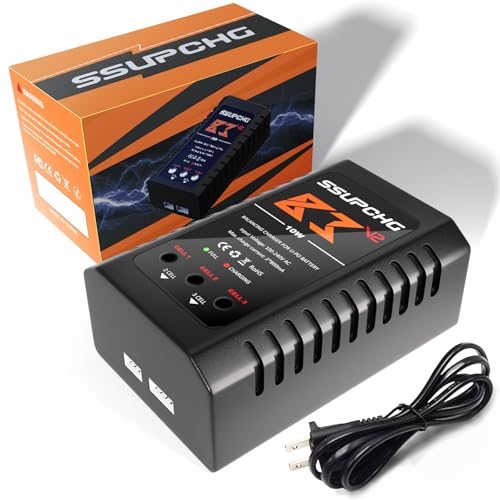
[Balance Charger with Smart Chip] Features a Smart Chip that ensures safe and optimal charging for every cell, extending battery lifespan and runtime while enhancing charging safety.
Exploring Different Types of RC Cars

Have you ever wondered just how many types of RC cars there are and what makes each one unique? We can explore various racing types, from high-speed on-road cars to rugged off-road trucks. Each model has its own control frequencies, impacting how far and how many vehicles you can operate at once. Terrain compatibility is essential—while drift cars excel on smooth tracks, buggies and truggies offer versatility for mixed surfaces. Scale models can replicate real-life vehicles, adding to the fun. Plus, different driving styles, like drifting or casual cruising, enhance our experience. Whether you prefer toy-grade for beginners or hobby-grade for enthusiasts, there’s an RC car suited just for you!
Recommended Products

【Purchase Notes】The 1/8 rc on road tires and wheels are not pre glued on rims, please clean the joint surface of the rim and tire before gluing.Gluing the tires is also a way for players to experience the fun of rc

Made of high-quality rubber with foam insert

High-Quality Materials: The 1/10 wheel hubs are made of premium aluminum alloy, offering high strength and durability.
Importance of Customization Options

Customizing RC cars opens up a whole new world of creativity and personalization, making our racing experiences even more exciting. The customization benefits are immense, allowing us to modify speed, control, and aesthetics to suit our unique tastes and racing styles. With a wide range of aftermarket parts available online, we can easily upgrade components to enhance performance or tailor the vehicle’s look to match our aesthetic preferences. Modular designs make these upgrades simple, so we don’t always need to replace entire systems. Plus, emerging technologies like augmented reality add a fun interactive layer to customization. As we dive deeper into this enchanting hobby, the opportunities to express our individuality while improving our cars become endless.
Analyzing Material Durability and Design
How do the materials we choose affect the durability and design of our RC cars? Understanding material strength is essential for selecting the right components. For instance, aluminum chassis offer excellent flatness stability and durability, perfect for rugged use. In contrast, lightweight plastics like nylon absorb shocks but have medium durability and aren’t ideal for extreme conditions.
Weight distribution also plays a significant role. Heavier materials can enhance strength but may slow down our cars, while carbon fiber guarantees a lightweight design for racing without sacrificing stability. By combining the right materials, we can achieve a balance between speed, durability, and performance, making certain our RC cars are ready for any adventure we set out on together. Additionally, investing in quality aluminum parts can significantly improve longevity and performance on various terrains.
Investigating Remote Control Systems
When diving into the world of remote control systems for our RC cars, we find a fascinating array of options to enhance our driving experience. Transmitter types like pistol grip and stick transmitters cater to different preferences and control needs. Pistol grips are intuitive but may have limited channel capabilities, while stick transmitters offer advanced features and programmable mixing techniques. We should also consider control protocols; modern systems typically operate on 2.4 GHz for excellent signal stability. Receivers come with various features, from basic 2-channel setups to advanced ones with onboard functionality like stabilization. Understanding these elements helps us guarantee that our RC cars perform at their best, making our adventures even more enjoyable! Additionally, many transmitters support multi-vehicle compatibility, allowing users to control several RC vehicles effortlessly.
Recommended Products

Flysky fly sky fs-gt3b rc radio transmitter and receiver fs-gr3e for rc car, rc truck, rc crawlers, and rc boat.

4 Buttons Controlling - Forward, Backword, Leftward, Rightward

Highly Sensitive: Smooth and highly sensitive to control inputs and stable at distances from 200-300m.
Considering AI and Smart Features
What can be more exciting than watching an RC car navigate a course all on its own? With advanced AI features, we can experience thrilling autonomous navigation. These cars use deep learning algorithms for real-time steering and throttle control, making them capable of avoiding obstacles effortlessly. Smart connectivity allows us to control our cars via mobile apps, enhancing our driving experience with customization interfaces. Driving assistance technology optimizes performance while analyzing our driving patterns, helping us improve. Additionally, obstacle detection systems guarantee safety by dynamically adjusting trajectories. With real-time telemetry data, we can monitor speed and battery status, making informed adjustments. AI truly transforms our RC car experience, blending fun with cutting-edge tech for endless possibilities. Furthermore, incorporating adjustable shocks can enhance stability and control during autonomous maneuvers.
Comparing Price Ranges and Value
After exploring the incredible advancements in AI and smart features, it’s time to contemplate how price influences our decision when choosing an RC car. We see that entry-level models range from $50 to $200, perfect for beginners. As we move up, intermediate cars priced between $200 and $500 offer great performance and features. High-performance options exceeding $1,000 provide exceptional value for serious enthusiasts. Market trends show price elasticity in how features like brushless motors and oil-filled shocks effectively boost performance. While budget models may save us money initially, durability often declines, leading to higher maintenance costs. Ultimately, considering our needs and the value of components helps us make an informed decision that aligns with our budget and expectations.
Recommended Products
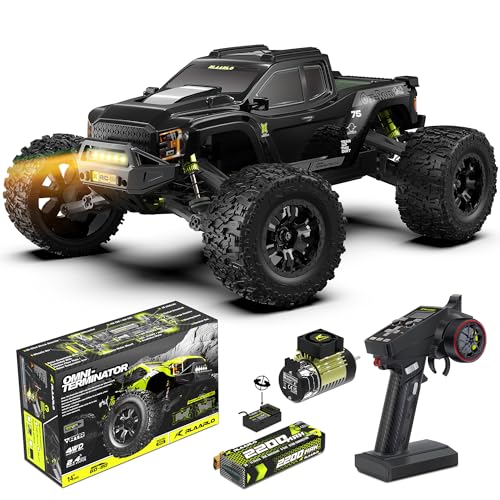
Feel the Rush of 50+ MPH — This 1/10 brushless RC monster truck pairs a 3650 2650KV motor with a 60A ESC, metal heat sink and cooling fan for strong acceleration, exciting top speed and serious off-road fun

Perfect for all hobby uses

All‑Metal Durability, Terrain‑Conquering Power - The RC cars for adults feature an all‑metal drivetrain – including a metal differential, metal transmission gears, medium‑carbon steel CVD, and metal universal joints – capable of handling 3S power while minimizing gear damage. Paired with a rugged aluminum chassis, they provide impact resistance, rapid heat dissipation, and high precision, boosting overall durability by 50% and handling response by 30%. Ready to conquer any terrain.
Researching Brand Reputation and Community Feedback
How do we decide which RC car brand to trust? First, we need to look at brand reputation. Companies like Tekno RC and Losi receive high praise for durability and performance. Likewise, community sentiments play a crucial role. RC forums and YouTube reviews showcase real user experiences, helping us gauge reliability and support. Brands that win championships, like Tekno RC, build trust through their competitive edge. Checking online retailer reviews also uncovers common issues and advantages, helping us make informed decisions. Furthermore, engagement through social media groups can reveal immediate feedback. Peer recommendations and influencer insights enhance brand influence, guiding us toward the best choice for our next RC car adventure.
Identifying Suitable Terrain and Usage Scenarios
When exploring the world of RC cars, do we consider the terrain and usage scenarios before making our choice? Identifying suitable terrain is essential for our selection. Off-road cars shine on rugged trails with tough suspension for absorbing shocks, while on-road vehicles excel on smooth surfaces, emphasizing speed and maneuverability. If we’re into casual driving, monster trucks or buggies offer great usage versatility, performing well on both roads and light off-road. Crawlers specialize in technical trails, delivering precision over obstacles. Understanding each model’s terrain adaptability helps us make informed decisions. By matching our RC car to our intended environment, we can fully enjoy our driving experience, whether it’s racing on asphalt or traversing rocky landscapes.
Reviewing Maintenance and Support Services
Maintaining your RC car can seem intimidating at first, but it’s actually quite manageable and rewarding once you get the hang of it. To guarantee our vehicles run well, we need to access reliable repair services and understand warranty coverage. Many specialty stores offer free limited warranties, covering defects within a specified period. If something goes wrong, experienced technicians can troubleshoot and replace parts, making certain our RC cars remain in top shape. It’s essential to clean our vehicles regularly and tighten screws to prevent issues. Plus, maintaining good communication with retailers helps us quickly address any errors in part selection. Being proactive with maintenance enhances our car’s performance and keeps our warranty valid, extending the joy of our hobby!
Exploring Trends in Sustainability and Eco-friendliness
In what ways are RC cars becoming more sustainable and eco-friendly? We’re excited to see a rise in using sustainable materials, like recycled plastics and biodegradable composites, which help lessen environmental impact. Manufacturers are also exploring plant-based resins to replace petroleum-based products. Eco-friendly designs, such as modular setups, let us easily repair and upgrade our cars, extending their lifespans.
Additionally, brushless electric motors and efficient LiPo batteries are shaping energy-efficient powertrains, which means longer run times with fewer charges. Leading brands emphasize transparency about their sustainability efforts, helping us make informed choices. As consumers, we’re drawn to RC cars that highlight eco-conscious practices and materials, making our passion more responsible and impactful!
Engaging With Hobbyist Communities and Events
As we embrace the shift toward sustainability in RC cars, connecting with fellow hobbyists can greatly enhance our experience and knowledge. By participating in community platforms like Reddit and Facebook Groups, we stay updated on the latest trends, tips, and reviews from experienced users. These interactions can provide valuable insights into current innovations and help inform our choices.
Attending events and competitions also adds a personal touch to our hobby. Through event networking, we get hands-on opportunities to test new models and learn directly from experts. Workshops often feature practical sessions where we can build, upgrade, and enhance our skills. By engaging with both online and in-person communities, we deepen our understanding and enjoyment of this exciting hobby.
Future-Proofing Your Choice With Upcoming Innovations
How can we guarantee our RC car choices stay relevant in a fast-evolving hobby? To future-proof our selections, we should consider emerging technologies that promise to enhance performance and user experience. AI integration, for instance, is set to improve diagnostics and enable real-time sensor analysis for seamless operation. We must also pay attention to innovations in battery technology, like modular systems and eco-friendly solutions that extend run times. User feedback plays a crucial role here; it drives the development of features to enhance durability, such as military-grade materials and designs that simplify customization. By prioritizing these advancements, we’ll guarantee our RC cars remain at the cutting edge, delivering thrilling experiences for years to come.
What Are the Essential Safety Features to Look for in RC Cars?
Who needs safety features when we can just embrace chaos, right? But seriously, we should prioritize strong remote control systems, effective brakes, and solid bumpers to keep our RC cars—and our sanity—intact during wild rides!
How Do I Choose the Right Scale for My RC Car?
When choosing the right scale for our RC car, we should consider scale types that match our desired car performance, purpose, and available space. Larger scales excel in speed and power, while smaller scales offer versatility.
What Maintenance Tasks Are Necessary for Optimal Performance?
To keep our RC car zipping through tracks, we must regularly check battery care and tire maintenance. Visualize glistening wheels and charged batteries, ensuring every race feels as smooth as a freshly paved road.
Are There Specific Brands Known for Durability and Reliability?
Yes, there are brands renowned for durability and reliability. In our performance reviews, Tekno RC stands out for innovation, while Traxxas and Armor shine for robust designs. Their brand comparisons highlight long-lasting options for serious hobbyists like us.
How Can I Stay Updated on the Latest RC Car Trends?
To stay updated on RC car trends, we should immerse ourselves in social media and online forums, where fellow enthusiasts share insights, innovations, and experiences, much like uncovering hidden treasures in a vast digital landscape.