
An RC car timing system is an essential tool for racing that automatically records lap times and key performance data. These systems use timing transponders attached to your car, which communicate with track sensors to guarantee accurate timing. You’ll find features like automatic lap counting and real-time data updates, eliminating human error. These systems make races fair and exciting! Stick around to discover how these components come together for an incredible racing experience.
Key Takeaways
- RC car timing systems automatically record lap times and essential data to ensure fair racing competitions across multiple cars.
- They consist of components like timing transponders, detection loops, and receiver units for accurate lap time measurement.
- Advanced sensor synchronization techniques minimize human error, allowing for precise timing as low as milliseconds.
- The systems also support data logging, facilitating performance tracking and skill development for racers.
- Future trends include AI integration for optimization, mobile app analytics, and improvements in sensor technology for enhanced usability.
Definition and Purpose of RC Car Timing Systems
Imagine a world where remote-controlled car races run smoothly, with every lap timed perfectly. This is where RC car timing systems come into play! These electronic setups automatically record lap times and essential race data. By using transponders attached to each car, they emit signals that allow subtle timing accuracy when cars cross sensors. This technology guarantees race fairness by objectively measuring everyone’s performance, reducing human error in timing. With systems like these, we can manage multi-car races effortlessly, distinguishing each car’s contribution in real-time. As racers, spectators, and enthusiasts, we’re able to enjoy enhanced organization and live updates, making every event a thrilling spectacle. Moreover, features like data logging enhance performance tracking and optimization opportunities, elevating our racing experience even further. Let’s appreciate how these systems elevate our racing experience together!
Key Components of an RC Car Timing System
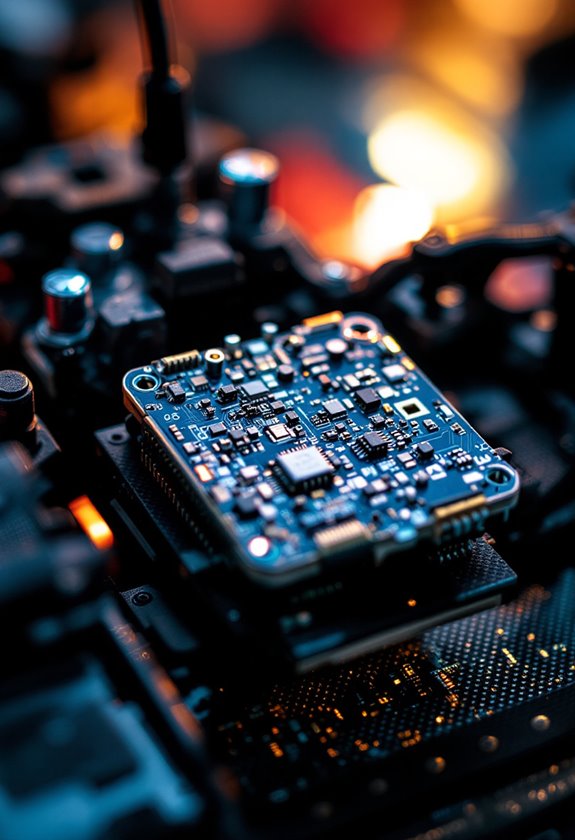
When diving into the exciting world of RC car timing systems, it’s essential to recognize the key components that make these setups function flawlessly. First, we have the lap timer base unit, which acts as a gate controller, managing our start and finish lines. Next, there are timing transponders installed on each car to capture lap timing with incredible precision. These devices transmit unique ID signals to accurately identify our vehicles. Then, detection loops and antennas are embedded at key points to register transponder signals, ensuring race accuracy. Finally, timing receiver units in our cars work with the base unit to report lap data back to us. Each element plays a significant role in making our racing experiences thrilling and competitive! Additionally, the use of advanced technology such as infrared sensors enhances the accuracy of lap counting systems significantly.
Types of Timing Technologies Used in RC Racing
In the world of RC racing, we’ve got an array of timing technologies that bring excitement and precision to every race. First up, we have infrared sensors that track cars using light beams from overhead setups. Then there’s RFID technology, which employs tags and readers to efficiently recognize and time cars as they race past specific points. Magnetic induction systems are also popular; they detect cars via buried sensors and are unaffected by lighting conditions. We shouldn’t overlook transponder models, which provide high accuracy and can integrate with timing software for real-time race analytics. Plus, personal timing devices allow for individual lap tracking, making them perfect for practice races. Each tech has its unique advantages, enhancing our racing experience! Additionally, timing accuracy is essential for competitive analysis, ensuring that lap times are measured precisely for every vehicle on the track.
How RC Car Timing Systems Work
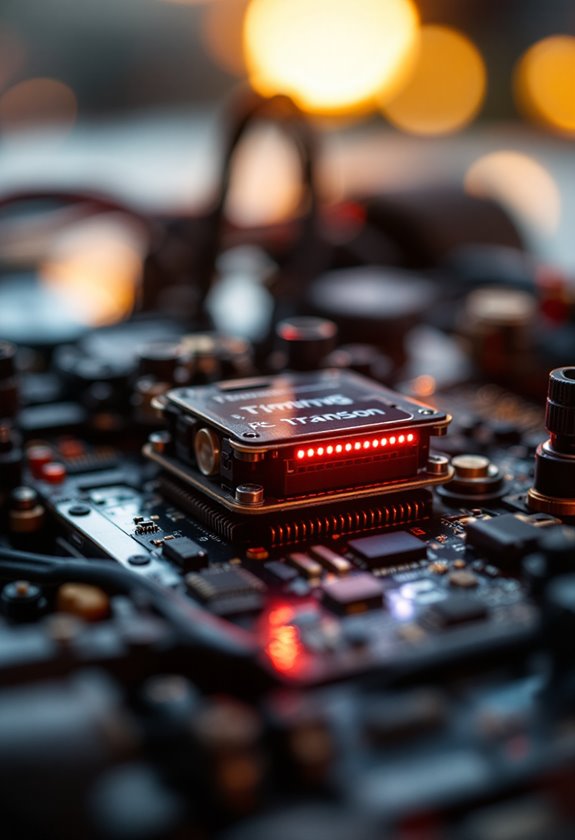
RC car timing systems operate with incredible precision, ensuring that every racer knows how they’re performing on the track. These systems use advanced sensor synchronization to detect when a car crosses the start and finish lines, automatically recording lap times. Break beam sensors and Hall effect sensors are two popular types used in timing systems. When a car passes through a sensor line, timing controllers process the signals and log lap data for each vehicle. Each car has a unique identifier, enabling simultaneous timing for multiple racers. With features like automatic lap counting and wireless data transmission, these systems provide accurate updates, making them essential for a fair and exciting racing experience. Additionally, understanding vehicle regulations is crucial for participants to ensure compliance with competition guidelines.
Transponders: The Heart of Timing Systems
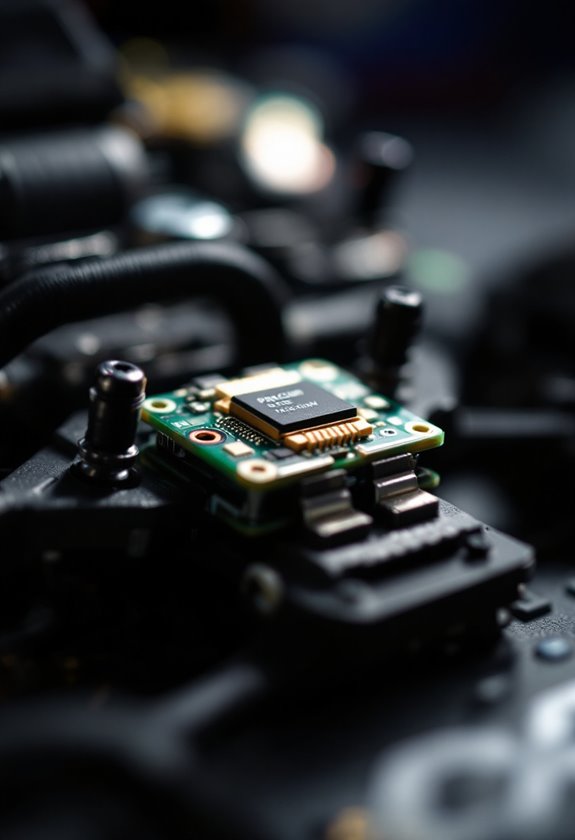
Transponders are truly the heart of timing systems for RC racing, and they play an essential role in tracking a car’s performance on the track. These small devices, leveraging advanced transponder technology, emit unique signals for lap time accuracy, ensuring races are recorded with precision. We need to pay attention to installation guidelines, as poor setups can lead to compatibility issues, impacting signal reliability and overall race performance. Different transponder sizes and models, like the compact RC4 Pro, fit seamlessly into all types of RC cars. By using these transponders, we can easily analyze performance, allowing for improvements in our driving skills, and ultimately, making our racing experience more enjoyable and competitive. Additionally, the unique ID support provided by these transponders enables tracking multiple vehicles efficiently during competitive races.
Receivers and Decoders: Capturing Race Data
Capturing race data effectively relies on the seamless collaboration between receivers and decoders, making them essential components of RC timing systems. Receivers capture electromagnetic waves from the car’s transponder, converting these signals into electrical data. This precise data is then processed by advanced decoders, which identify each transponder’s ID and lap information. However, signal interference can pose challenges; thus, using sensitive receivers and optimized decoders reduces the chance of errors. A well-installed wire loop beneath the track helps enhance detection accuracy, making sure every car is registered correctly. Together, receivers and decoders create a reliable system that allows us to enjoy the thrilling nature of racing, knowing all data is captured accurately and efficiently. Moreover, the use of Dynamic Stability Control (DSC) in RC cars can significantly improve handling and performance during races.
The Role of Timing Software in Race Management
When we think about the thrilling world of RC racing, we can’t overlook the essential role that timing software plays in race management. This software integration centralizes data from transponders and sensors, automating race tracking seamlessly. By synchronizing real-time data, we can update race statuses instantly across multiple devices. The advanced features allow smooth shifts between heats and accurate final rankings, while live leaderboards display lap counts and positions, enhancing the experience for everyone involved. With race analytics, we access vital performance metrics, tracking racers’ consistency and fastest lap times. These tools not only improve race organization but also foster community engagement, making every event more exciting for racers and fans alike!
Antennas: Ensuring Reliable Signal Communication
In the exciting domain of RC racing, efficient signal communication is key to seamless competition, and that’s where antennas become essential. We utilize various types of antennas to enhance detection and minimize signal interference. For instance, mat antennas lie flat at start/finish lines, while panel antennas stand upright on the sides for precise signal detection. Overhead antennas create a radio “curtain,” ensuring reliable reads even in high-speed races. By focusing detection zones, custom gate-shaped antennas prevent issues from adjacent channels, maximizing antenna efficiency. Additionally, matching polarization with transmitter types plays a significant role. Together, these design considerations help us capture every racer’s performance and provide seamless communication throughout the event, making racing more exciting for everyone involved.
Features of Modern Timing Systems
Modern timing systems revolutionize the way we experience RC racing, building on the solid foundation established by reliable communication tools like antennas. These systems offer incredible lap timing precision down to the millisecond, which is essential for competitive racing. With scalability options, we can support up to 16 pilots, while diverse vehicle types like cars and drones keep everyone engaged. The user interface is impressive; Bluetooth connectivity allows real-time data streaming to our smartphones, enhancing accessibility. Thanks to installation simplicity, even novices can set up compact timing gates without errors. Plus, performance analytics help us review detailed race data, optimizing our strategies for future races. Embrace the technology—it truly enhances our racing experiences!
Benefits of Using a Timing System in RC Racing
Utilizing a timing system in RC racing can dramatically enhance your overall racing experience. These systems provide incredible accuracy, tracking lap times to the thousandth of a second, which means you can trust the results. By using transponder technology, we eliminate human error and guarantee fair competition with unique IDs for each racer. The real-time data not only helps officials manage races efficiently but also boosts racer engagement. We can share live results and performance tracking data, making races more exciting for everyone involved. Plus, detailed feedback lets us identify strengths and weaknesses, paving the way for skill development. Overall, a timing system transforms our races into a more organized and enjoyable event.
Applications of RC Car Timing Systems
When we think about the exciting world of RC racing, the application of timing systems stands out as a game-changer. These systems provide essential training benefits, allowing us to monitor lap times and track performance trends during practice sessions. With precise lap analysis, we can identify areas for improvement and develop our skills more effectively. In competitions, timing systems enhance competition fairness by minimizing manual timing errors and supporting simultaneous tracking of multiple cars. This means that everyone races on equal ground, making events more thrilling. Plus, the instant result compilation and detailed statistics help us reflect on our performance, ensuring we’re always improving in our driving abilities and overall racing strategies.
The Future of Timing Technology in RC Racing
The future of timing technology in RC racing promises some exciting advancements that can transform the way we experience competition. We’ll see AI integration revolutionizing performance optimization, with adaptive systems adjusting motor timing and braking for different terrains. Imagine real-time analytics delivered through user-friendly mobile apps, allowing us to tweak settings instantly. Enhanced sensor fusion will provide detailed telemetry, ensuring our cars navigate obstacles with precision. Wireless connectivity will make programming easier, reducing the need for manual setups. Battery innovations, coupled with adaptive power management, will extend run times, keeping us on the track longer. With these advancements, we’ll enhance our racing strategies, and step into a more thrilling, responsive RC racing future together!
Frequently Asked Questions
How Do I Choose the Right Transponder for My RC Car?
When choosing a transponder for our RC car, let’s check transponder compatibility with our timing system and consider battery requirements. Balancing performance with our budget will lead us to the right choice for racing success.
Can I Use a Timing System for Non-Competitive RC Racing?
Yes, we can definitely use a timing system for leisure racing. It enhances our hobby use by providing accurate lap times, making our practice sessions more engaging and allowing us to track our progress effortlessly.
What Is the Average Cost of an RC Car Timing System?
Did you know entry-level RC car timing systems start around $150? Affordable options can provide basic system features, while mid-range choices offer improved accuracy for $300 to $700, catering to various enthusiasts’ needs and budgets.
How Do Weather Conditions Affect Timing System Accuracy?
Weather conditions greatly impact timing reliability. We’ve seen how moisture and temperature fluctuations can affect sensor performance. By understanding these effects, we can better prepare our systems for consistent accuracy during varying weather conditions.
Are There Any Maintenance Tips for Timing System Components?
Like a well-tuned orchestra, our timing system deserves concerted care. Let’s guarantee transponder care is excellent and system calibration is precise, performing regular inspections, cleanings, and lubrications to keep everything harmoniously running smoothly.