
RC car turnbuckles are adjustable metal rods that connect your wheels to the vehicle’s body, helping us enhance handling and eliminate slack. These components come in materials like steel, aluminum, and titanium—each with unique benefits. With precision threading, we can easily modify their length to fine-tune settings like toe angles for better performance. By mastering turnbuckles, we can improve our car’s responsiveness and overall stability. Stick around to discover more tips on optimizing your RC car!
Key Takeaways
- Turnbuckles are adjustable metal rods used in RC cars to connect wheels to the vehicle body, improving handling and performance.
- They feature threaded ends, allowing length adjustments—clockwise to shorten and counterclockwise to lengthen.
- Made from materials like steel, aluminum, and titanium, turnbuckles accommodate various performance needs and preferences.
- Proper adjustment of turnbuckles ensures accurate wheel alignment, enhancing tire contact, stability, and responsiveness during driving.
- Regular maintenance of turnbuckles is vital for consistent performance and adaptability in competitive racing conditions.
Definition and Basic Function of Turnbuckles
When we think about the essential components of an RC car, turnbuckles often don’t get the attention they deserve. These adjustable metal rods, also called tie rods, play a critical role by connecting the wheels to the vehicle body. Made from durable turnbuckle materials, they allow us to make precise adjustments, eliminating slack in our connections. With threaded ends on both sides, we can rotate the turnbuckles clockwise to increase their length or counterclockwise to shorten them. This means we can easily fine-tune the steering and suspension for peak performance, particularly at the track. Whether we’re setting up for a race or just experimenting, understanding turnbuckle adjustments considerably enhances our RC car’s handling capabilities. Additionally, investing in quality materials like CNC machined aluminum can further improve the overall performance of the components involved.
Construction and Design Components
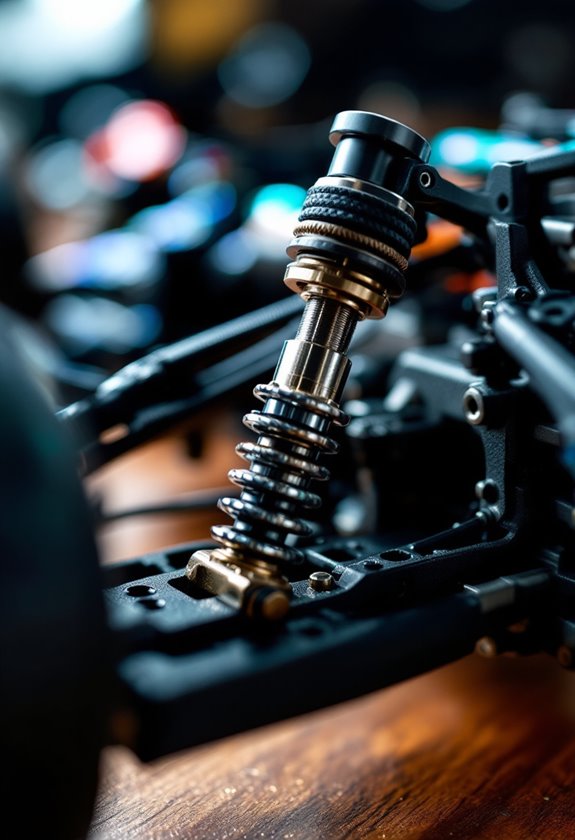
Understanding the construction and design of turnbuckles is essential if we want to fully appreciate their impact on our RC cars. These components are made from various construction materials like steel, aluminum, and even titanium, each chosen for its unique benefits. Steel offers durability, while aluminum is lightweight, making it perfect for many applications. Titanium is a premium choice for competition-grade vehicles.
Turnbuckles also feature precision threading for easy adjustments. You’ll find both coarse and fine thread options, allowing quick or micro-adjustments as needed. The design features include ball end fittings that enhance suspension geometry, ensuring a secure attachment. Additionally, surface treatments like anodizing protect aluminum while improving the visual appeal. These careful design choices greatly influence our RC car performance, especially when considering the material durability and strength required for optimal handling.
Adjustment Mechanisms and Techniques
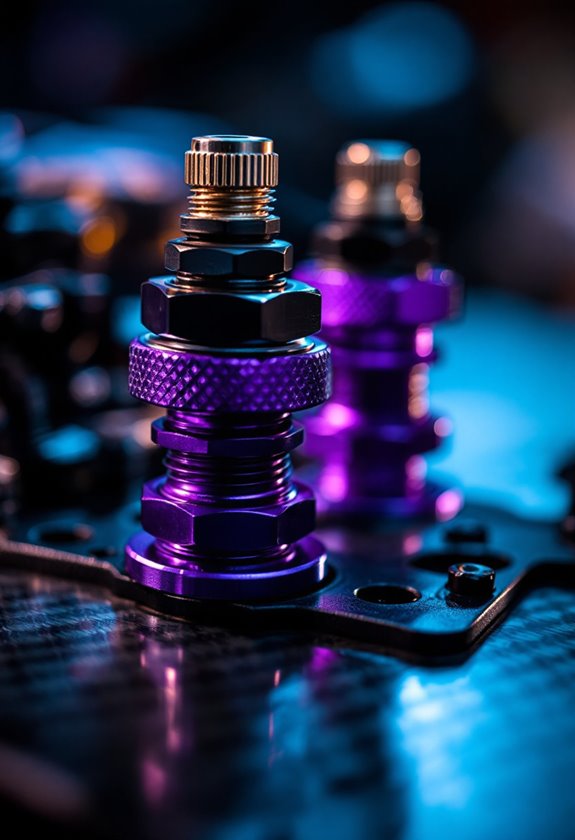
To get the most out of our RC cars, we need to master the adjustment mechanisms that turnbuckles provide. By rotating the turnbuckle clockwise, we shorten its length, which adjusts the wheel toe to a toe-out configuration. Conversely, turning it counter-clockwise lengthens the turnbuckle, setting the wheels to toe-in. Using standard pliers for basic adjustments is helpful, but specialized turnbuckle wrenches offer tuning precision for more intricate changes. Maintaining consistency in turnbuckle orientation helps avoid confusion during adjustments, ensuring we have predictable results. With effective adjustment strategies, we can optimize our vehicles for performance, enhancing steering response and overall handling. Additionally, understanding the benefits of adjustable turnbuckles can lead to a more personalized tuning experience. So, let’s explore these techniques and fine-tune our RC experience!
Types and Variations in RC Applications
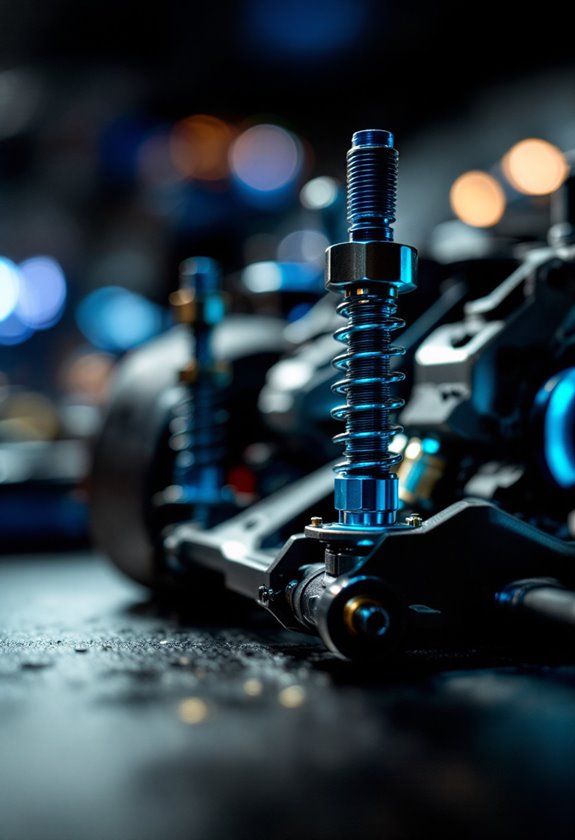
Exploring the different types and variations of RC car turnbuckles can greatly enhance our understanding of how they affect our vehicles’ performance! There’s an exciting range of turnbuckle materials available, including lightweight aluminum, durable titanium, and heavy-duty steel. Each material brings unique racing advantages to our setups. For example, titanium offers premium durability, while aluminum adds customization with color options. We can also find specialized designs like plastic rod ends that act as breakaway components during crashes, protecting our more expensive parts. Plus, manufacturers like Lunsford and Traxxas offer options tailored for specific models and applications. Understanding these variations helps us choose the best turnbuckles for maximizing our RC cars’ performance on the track! Additionally, selecting parts made from titanium alloy can further improve the durability and performance of your RC vehicle.
Installation and Setup Procedures
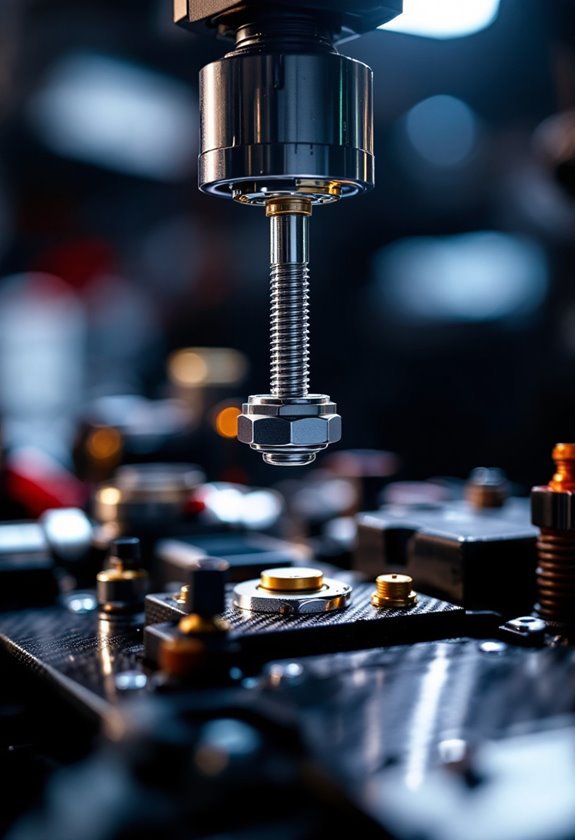
When setting up your RC car, getting turnbuckles installed correctly is vital for peak performance on the track. First, let’s apply black grease inside the ball cups to promote smooth operation. When assembling, use a paper towel to grip the plastic cup and prevent stretching of the mounting holes. Remember not to insert tools through the ball cup holes, as this can cause lasting damage. It’s essential to lightly ream the turnbuckle ends to guarantee a proper fit. Utilize the multi-purpose wrench from your kit for adjustments, and align components using the marks for correct orientation. With these assembly techniques and installation tips, we’ll be on our way to an exhilarating racing experience in no time! Additionally, keeping tools clean before and after use ensures optimal performance and enhances their longevity.
Applications and Performance Benefits
Turnbuckles aren’t just small components; they’re essential game changers in the performance of RC cars. These lightweight titanium turnbuckles greatly reduce our vehicle’s mass, enhancing acceleration and maneuverability. With better responsiveness during jumps and bumps, we can handle various terrains with ease. Plus, their durability means fewer repairs, giving us more time on the track.
Moreover, the precision adjustment capabilities they offer are nothing short of remarkable. We can fine-tune camber and toe-in settings with incredible accuracy, optimizing our vehicle for different driving conditions. This means we get incredible tuning options that lead to noticeable performance upgrades. In every race, these turnbuckles help us release the full potential of our RC cars.
Importance of Proper Wheel Alignment
Achieving the perfect wheel alignment is essential for maximizing the performance of our RC cars. The right camber, toe, and caster angles greatly affect our handling performance. For instance, a slight negative camber can help maintain tire contact during cornering, while a toe-in setting can enhance straight-line stability. Too much toe-in, however, can throttle our steering response, making handling sluggish. On the other hand, toe-out can give us heightened responsiveness during tight turns. We should regularly check our wheel alignment to guarantee consistent performance. With careful adjustments using turnbuckles, we can optimize our setups for various track conditions, making sure that our RC cars handle beautifully on every run. Additionally, maintaining proper suspension components is crucial to ensure that the alignment adjustments have the desired effect. Let’s plunge into alignment together—it pays off on the track!
Upgrading to Turnbuckles in Ready-to-Run Vehicles
Upgrading to turnbuckles in our ready-to-run (RTR) vehicles can truly enhance our overall performance. By choosing high-quality turnbuckle materials like titanium, we considerably reduce weight while improving strength. This weight reduction leads to better acceleration and responsiveness, especially when maneuvering jumps and rough terrain. Plus, durable titanium offers excellent corrosion resistance, ensuring our components last longer without bending or loosening.
Another advantage is the precision engineering of these turnbuckles. They allow for fine-tuning adjustments of toe and camber settings, making it easier to adapt to different racing conditions. With enhanced steering response and improved suspension geometry, we can tackle tight corners more effectively. Embracing turnbuckles means revealing our RTR vehicles’ true potential!
Frequently Asked Questions
How Do I Know When to Adjust My Turnbuckles?
We’ll know it’s time for turnbuckle adjustments when we notice uneven tire wear, unstable handling, or the vehicle pulling to one side. Regular performance tuning keeps our RC car balanced and responsive on the track.
Are Turnbuckles Compatible With All RC Car Models?
No, turnbuckles aren’t compatible with all RC car models. We must consider thread sizes and turnbuckle types to guarantee proper fitment. Always verify specifications for ideal RC car compatibility before making any adjustments.
What Tools Are Necessary for Turnbuckle Adjustments?
For turnbuckle adjustments, we need specialized wrenches tailored to various turnbuckle types. Mastering adjustment techniques with the right tools streamlines our maintenance, ensuring precise tuning without damaging delicate threads or components.
Can Turnbuckles Improve Durability During Crashes?
Absolutely, turnbuckles can considerably enhance crash resilience. Their design aids in impact absorption, reducing damage to our vehicle during crashes. By maintaining stable connections, they help us recover quickly and minimize costly repairs.
What Maintenance Do Turnbuckles Require for Longevity?
Timely turnbuckle cleaning and lubrication keeps our gear going! Regularly inspect for wear, apply grease on threads, and guarantee smooth operation. With proper maintenance, we’ll enjoy longer-lasting performance and fewer pesky problems down the track.