

When we transport our RC cars, battery safety is key; always store LiPo batteries at about 50% charge in fireproof containers. We should also wrap the car’s body shell in bubble wrap and use original boxes for the chassis. Before heading out, we conduct thorough inspections of all electronic components to prevent damage. Additionally, monitoring temperature and humidity in the moving truck is important. There’s more to learn about packing techniques and ensuring safe conditions during transport!
Key Takeaways
- Remove and store batteries in fireproof containers at 40-60% charge to prevent hazards during transport.
- Use bubble wrap to cushion the body shell and pack the chassis securely in its original box.
- Conduct a thorough inspection of the vehicle, securing all electronic connections to prevent damage from vibrations.
- Keep LiPo batteries in carry-on luggage, ensuring compliance with airline regulations regarding watt-hour limits.
- Create a checklist for packing, including securing items and organizing tools and spare parts systematically.
Battery Safety During Transport
When we’re transporting RC car batteries, especially lithium types, it’s crucial to keep safety at the forefront. We must be aware of battery hazards during transport and follow specific transport guidelines. Lithium batteries are regulated as hazardous materials, which means we can’t overlook their potential risks. Always make sure the terminals are protected from contact with other objects, and avoid placing batteries on car seats or carpets. Keep them stored at a temperature between 50°F and 77°F to prevent overheating or damage. Additionally, let’s remember to store batteries at 3.8V per cell for extended transport. Following these guidelines not only protects us but helps guarantee that our batteries arrive safely at their destination without incident. It’s also important to use NiMH-specific chargers to ensure battery safety during use and transport.
Physical Protection and Packing Methods
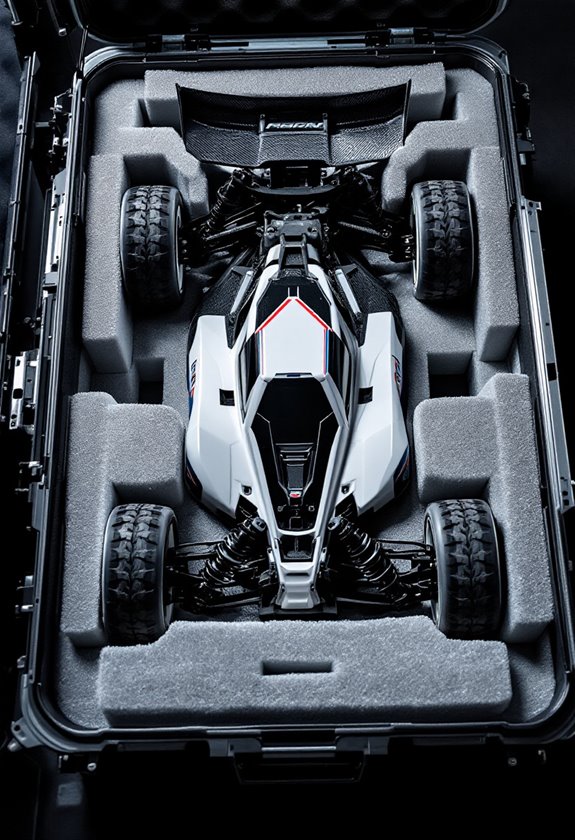
To guarantee our RC cars arrive in perfect condition, we need to focus on proper packing techniques that protect each component effectively. First, let’s remove the body shell from the chassis to avoid stress damage. We should wrap the shell in bubble wrap, adding cushioning materials inside to prevent compression. Next, we want to use original boxes for the chassis, ensuring we wrap it carefully to guard against sharp edges. Packing remotes separately is essential, standing them upright in reinforced boxes with crumpled packing paper around them. Finally, we must choose several small boxes instead of one large box to minimize movement. By using the right packing materials and cushioning techniques, our cars will be well-protected during transport! Additionally, considering the size and portability of your RC car tool kits can enhance your overall transport strategy by ensuring easy access when repairs are needed on the go.
Air Travel Considerations
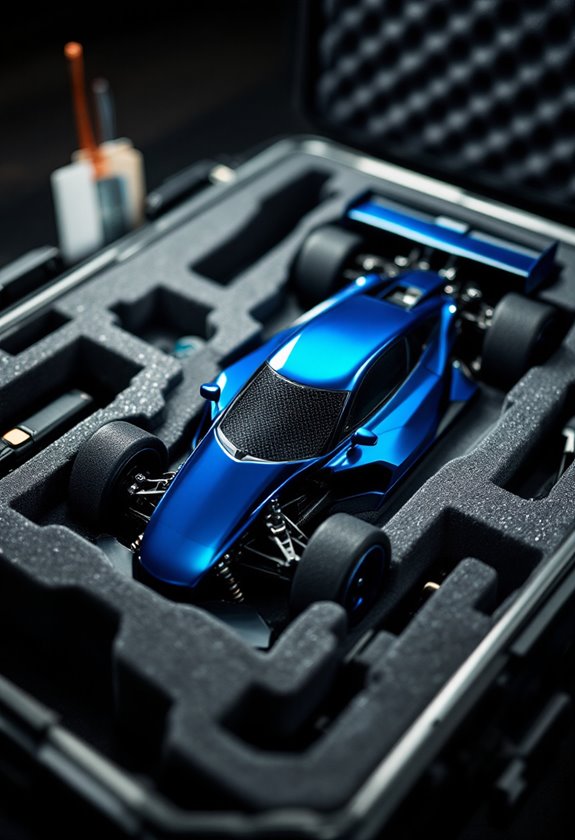
Air travel can be a thrilling adventure, especially when we’re bringing our beloved RC cars along for the ride. However, we need to keep airline regulations in mind. For instance, LiPo batteries must always stay in our carry-on luggage; they can’t go in checked bags. If our RC models have permanently installed batteries, we may check them, but we must guarantee they meet watt-hour limits. Tighten battery terminals to avoid short circuits. Tools longer than seven inches must be checked, and liquids like glue are best left at home. Remember, international compliance varies, so we should research customs rules for our destination. Additionally, ensuring that our batteries match RC model specifications can help prevent issues during travel. Air travel can be smooth if we’re prepared and informed about the necessary regulations!
Pre-Transport Preparation
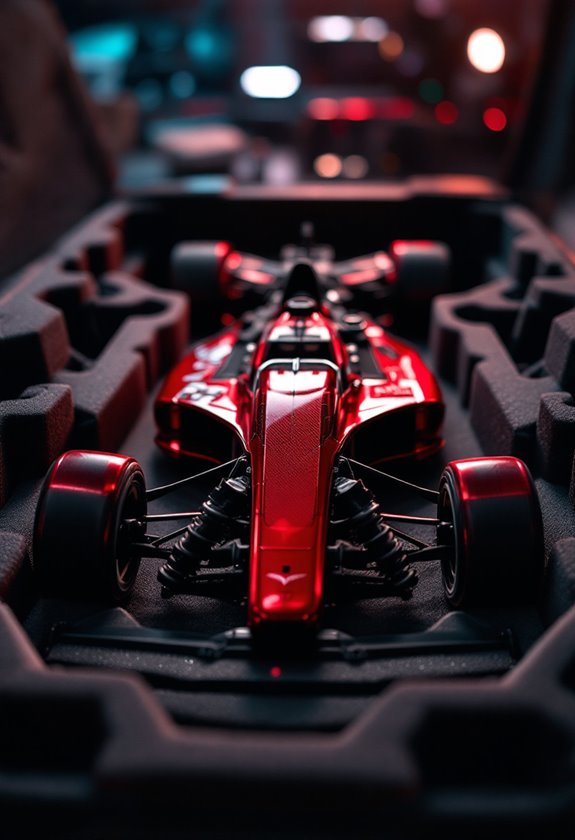
Before we hit the road or the air with our RC cars, thorough pre-transport preparation is key to keeping our vehicles in top shape. First, let’s start with a vehicle inspection; we should thoroughly examine the chassis for cracks, loose screws, or damaged components. Next, we’ll check that all electronic connections are secure to prevent issues from vibration during transport.
Now, onto tool organization. We’ll pack hex drivers and spanners specific to our chassis, along with portable soldering equipment for quick repairs. It’s also wise to include our ride height gauge and pack spare parts like suspension arms and connectors. Additionally, we should ensure our battery securement features are adequate to protect against any movement during transit. With our vehicle ready and tools organized, we can guarantee a smooth ride to our next racing adventure!
Temperature and Environmental Controls
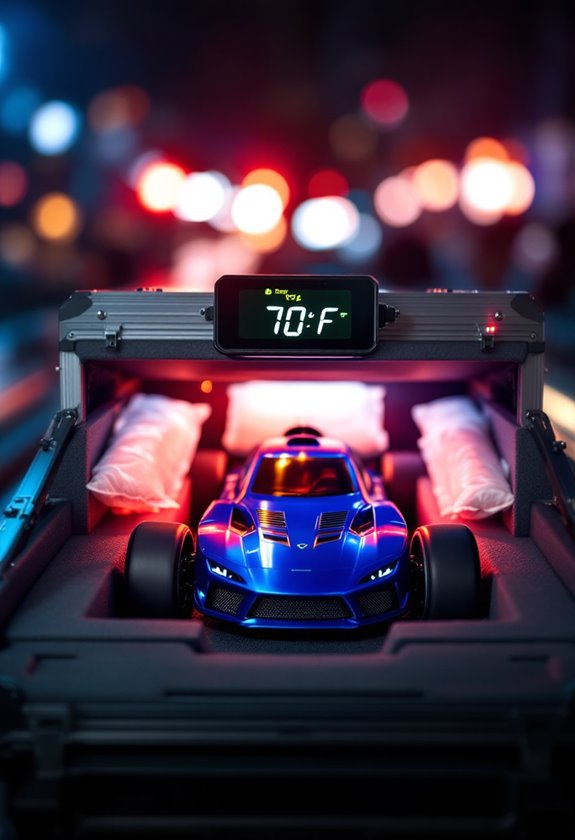
Keeping our RC cars safe during transport involves more than just packing them in a sturdy box; temperature and environmental controls are vital. We need to maintain temperature stability to protect our batteries and components. It’s best to store batteries in a range between 50°F and 77°F, keeping LiPo batteries at about 50% charge. High temperatures can make motors and electronic speed controllers overheat, so we should guarantee proper ventilation during transport. Plus, humidity control is essential; dry conditions help prevent moisture damage to our electronics. If possible, using climate-controlled locations will further safeguard our cars. Let’s monitor our batteries regularly and check their charge levels every few months to keep everything running smoothly! Additionally, utilizing chargers with safety mechanisms can help protect our batteries during charging and transport.
Loading and Timing Strategies
When planning for a day at the track, we’ve got to get our loading and timing strategies just right to guarantee a smooth transport experience. First, let’s separate our equipment into dedicated storage containers, which not only prevents mixing but also reduces setup time. Next, we should load our cars first, keeping them bottom-heavy for stability. Sequentially layering from heaviest to lightest maximizes our space. We can use strap-down systems to secure vehicles before adding loose components. Additionally, let’s pack our toolkits with specific scale requirements to enhance timing efficiency. By organizing our hauler with flip-up compartments and zipper sections, we’ll have quick access to essential items during our race day. For optimal organization, consider using multi-pocket designs that keep tools and batteries organized. Happy racing!
Guidelines for LiPo Battery Management
Getting our RC cars to the track is just the beginning; we also need to guarantee our LiPo batteries are managed safely and efficiently. First, we should charge using LiPo-compatible balance chargers, carefully observing the process without leaving them unattended. By charging at a 1C rate—like 5A for a 5000mAh battery—we’ll enhance battery lifespan.
It’s essential to monitor individual cell voltages, keeping them between 3.0V and 4.20V during use. When it comes to storage, a 40-50% charge is ideal. We need to keep our batteries away from direct sunlight and extreme temperatures, ensuring they remain safe and functional. Finally, regular inspections help us catch any damage or swelling, so our batteries perform at their best.
Packing Techniques for RC Vehicles
Packing our RC vehicles properly is essential for guaranteeing they arrive at the track in perfect condition. First, let’s choose the right packing materials. Reinforced boxes or Pelican Air cases offer incredible protection during transport. We can wrap fragile components in clothing for extra cushioning. Then, let’s compartmentalize our vehicles with organizational systems like multi-drawer hauler systems or zip-closure compartments for smaller accessories. This way, we can prevent rattling and damage. Remember to use secured latching systems to maintain our cases’ integrity. If we’re flying, carry on our essentials to keep them accessible. With effective transport organization, we’ll guarantee our favorite RC vehicles arrive safe and ready to race!
Managing Electronic Components During Transport
Managing our electronic components during transport is essential to guaranteeing everything arrives in stellar condition. First, let’s start with component cataloging; we should list each part with its specifications and part numbers. This way, we maintain a clear overview of what we’re transporting. When packing, remove batteries from vehicles and store them in fireproof containers, keeping their charge between 40-60%. For our ESCs and receivers, we’ll disconnect and wrap them in anti-static foam for protection. It’s also crucial to secure all loose wires and use compartmentalized storage boxes to keep components organized. With proper safe storage practices, we can minimize risks and guarantee our electronic components remain intact and ready to perform when we reach our destination.
Ensuring Safe Conditions in Moving Trucks
Guaranteeing safe conditions for our RC vehicles during transport is a critical step that can make or break our racing plans. To start, we need to take into account temperature and humidity control. Excessive heat can damage our LiPo batteries and electronics, so we should avoid leaving cases in direct sunlight or cold drafts. Next, focusing on case stability is essential. We must position our cases against stable surfaces in the moving truck, using padding to prevent movement. Custom-cut foam that fits our vehicles perfectly will keep everything secure. Let’s not forget about shock protection! Placing cases on folded blankets can help absorb vibrations and minimize damage. By following these transport precautions, we guarantee our RC vehicles arrive safely and ready to race!
Checklist for Transporting RC Collections
Transporting our beloved RC collections requires careful planning and attention to detail! To guarantee a smooth journey, we should create transport checklists. First, let’s remove batteries from our vehicles to avoid damage. Cleaning each car prevents dirt from scratching surfaces. Testing all electronics, like transmitters and servos, before departure is vital, too.
Next, we must select proper containers. Hard cases, like Pelican Air 1637, or foam-padded boxes provide protection. Organizing our items is critical; heavier tools go at the bottom, with lighter accessories piled on top. Finally, don’t forget a basic tool kit, a battery charger, and spare parts for any repairs needed on the road. Following this guide makes vehicle organization easy and fun!
Frequently Asked Questions
Can I Transport RC Cars in Regular Cardboard Boxes?
We can’t recommend using regular cardboard boxes for transporting RC cars. They lack durability and proper packing materials, which can lead to damage during transit. Instead, let’s consider more secure options that fit various box sizes.
Are There Specific Regulations for Transporting RC Cars Across State Lines?
Transporting RC cars across state lines is like maneuvering through a maze; we need to check state transport regulations. And while it’s not usually required, having RC car insurance can offer extra peace of mind on our journey.
How Can I Secure My RC Cars to Prevent Movement During Transit?
To secure our RC cars during transit, we can use tie down straps and foam padding. This combo guarantees stability and protection, preventing movement and damage, so our vehicles arrive intact and ready to race.
Is It Safe to Transport RC Cars in Extreme Weather Conditions?
Yes, it’s safe to transport RC cars in extreme weather conditions, but we must take necessary weather precautions. Ensuring proper sealing and using suitable lubricants helps maintain transportation safety and protect our cars from damage.
What Should I Do if My RC Car Gets Damaged During Transport?
If our RC car gets damaged during transport, we should first assess the extent of damage. Exploring repair options promptly can help, but let’s prioritize damage prevention next time to keep our beloved vehicles safe.