


To choose the right team sponsorship, we should first understand the different types of sponsors available, like financial or resource-based ones. Next, let’s explore the mutual benefits, such as increased visibility for sponsors and better equipment for teams. We can research potential sponsors by analyzing their audience alignment with our goals. Crafting an engaging proposal is vital, and building a strategic relationship guarantees compatibility. If we keep going, we’ll uncover even more strategies for success!
Key Takeaways
- Assess your team’s target audience and evaluate alignment with potential sponsors to ensure mutual benefits.
- Research the values and goals of potential sponsors to find a good cultural fit for your team.
- Create compelling sponsorship proposals that clearly outline benefits, attendance, and demographics to attract interest.
- Define tiered sponsorship packages to provide options that align with different sponsor goals and budgets.
- Foster long-term relationships by prioritizing communication and evaluating partnership compatibility regularly.
Understanding Different Types of Sponsors
When we think about team sponsorship, it’s important to recognize that there are various types, each offering unique benefits and support. Financial sponsors are often the most straightforward, providing direct monetary assistance to support our events or projects. Then, we have resource-based sponsorships. These sponsors supply valuable goods or services like equipment or expertise, reducing our operating costs considerably. Media sponsorships play an essential role too. They offer free or discounted advertising that helps promote our events across multiple platforms. Finally, promotional partnerships involve influencers or celebrities who can elevate our visibility through their following. Each type of sponsor can enhance our team’s experience, depending on what we need and the connections we pursue. Additionally, understanding the factors to consider when selecting sponsors will help ensure a mutually beneficial relationship.
Defining Mutual Benefits in Sponsorship

Mutual benefits are the backbone of successful sponsorships, creating a win-win situation for both teams and sponsors. When we talk about sponsorship alignment, we’re aiming for shared goals that drive success. For teams, financial support means better equipment and marketing materials, which can greatly reduce operational costs. Sponsors enjoy increased brand visibility through logo placements on uniforms and promotional materials, tapping into a loyal fanbase. In addition, community engagement builds trust, demonstrating a commitment to local development. By establishing long-term partnerships, both parties can benefit from enhanced credibility and potential revenue streams. Ultimately, successful sponsorships are about collaboration that meets our organizational goals and fosters lasting relationships in the community. Moreover, having a well-organized workspace for tools can enhance overall efficiency, mirroring the collaborative spirit of effective sponsorships.
Researching Potential Sponsors

Researching potential sponsors is fundamental for securing the best partnerships for our team. To begin, we need to understand our target audience and how it aligns with potential brands. We should evaluate brand-sport matching; studies show that a strong alignment can lead to up to 63% purchase rates. Next, we’ll analyze audience demographics, as high-involvement sports fans are critical. Mismatched brands often underperform, so it’s essential to identify sponsors that resonate with our fans. Additionally, digital tools can help us track social media sentiment and brand visibility during events. By focusing on sponsorship alignment, we guarantee both our team and the sponsor benefit. Furthermore, understanding high-current capacities in sponsorships can enhance the overall performance of our partnerships. Let’s dig deep into researching and securing effective partnerships!
Crafting Compelling Sponsorship Proposals
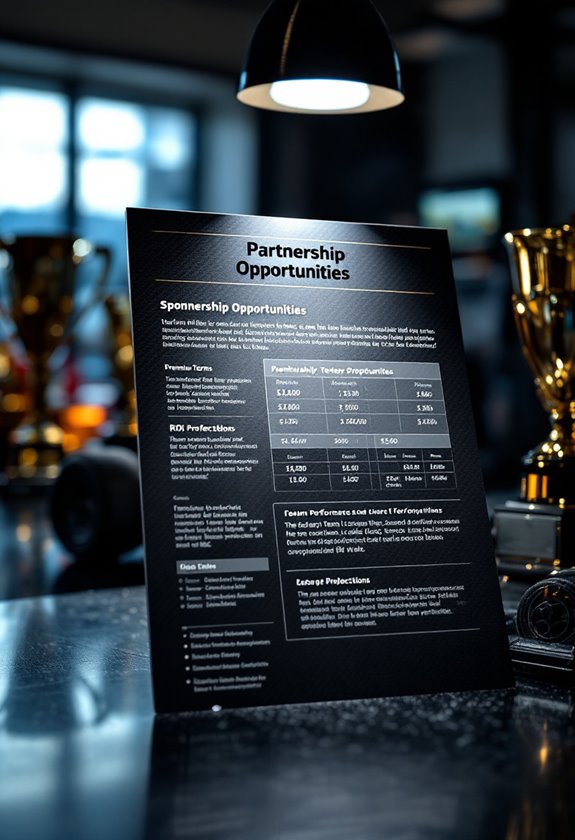
Crafting an engaging sponsorship proposal can be a game-changer for our team, especially if we keep our audience and potential sponsors in mind. First, we need an enchanting cover page that includes our organization’s name, the potential sponsor’s name, and the date. Next, let’s develop a compelling narrative in the initiative overview, painting a vivid picture that resonates with sponsors. A professional tone and personalized greeting will help build a connection. To gain their interest, we’ll present essential event details, including attendance figures and demographic breakdowns. By clearly defining our tiered sponsorship packages with unique opportunities, we align our proposal with sponsor goals. A strong call-to-action will encourage them to reach out and engage with us further. Additionally, providing insights into customer feedback can strengthen our proposal by showcasing the potential impact of their support on our team’s success.
Building Strategic Relationships

Building strategic relationships with sponsors is essential for our team’s success, especially as we aim for long-term growth. To achieve this, we need strategic alignment with potential sponsors that mirrors their corporate goals. Regular, ongoing communication keeps us connected, ensuring sponsors feel valued beyond financial contributions.
We can create a proactive communication framework—providing updates with data, metrics, and success stories—to demonstrate our impact. By sharing results throughout the year, we prevent interactions from becoming just transactional. Engaging sponsors through quarterly volunteer days or networking events fosters deeper connections. When we actively collaborate and align our missions, we not only meet our objectives but also enhance our sponsors’ visions, creating mutual benefits for everyone involved.
Assessing Partnership Compatibility
When we’re considering partnerships, it’s important to evaluate compatibility between our team and potential sponsors, making sure we’re on the same path toward success. A values evaluation is significant, as shared core values build a strong foundation for our collaboration. We should review cultural fit by examining decision-making styles, risk tolerance, and innovation mindsets.
Next, let’s analyze communication styles. Aligning our methods enhances teamwork and minimizes conflicts. Another key part is evaluating financial and operational alignment, as it guarantees we’re working from a place of stability. Additionally, ensuring our partnership emphasizes quality tools supports effective collaboration and enhances our overall performance.
Finally, by aligning our strategic goals and visions, we create compelling value for our audiences. This thorough approach helps us find a partnership that truly supports our objectives and fosters long-term success.
Frequently Asked Questions
How Much Financial Support Should We Seek From Sponsors?
We should seek financial support based on our sponsorship levels, ensuring we’ve considered our budget. Balancing the needs of our team with potential sponsors’ capabilities will help us meet our goals effectively.
What Is the Ideal Duration for a Sponsorship Agreement?
Choosing sponsorship duration’s like picking a perfect fruit—too short or too long won’t satisfy. We should consider short-term agreements for immediate needs, while long-term commitments build lasting brand presence. Let’s find the right balance together!
How Can We Measure the Success of Our Sponsorship?
To measure our sponsorship’s success, we’ll use various sponsorship metrics and evaluation methods. By analyzing ROI, ROO, and customer engagement, we can gauge financial performance and brand impact effectively, ensuring informed decisions moving forward.
What Should We Offer Sponsors in Return for Their Support?
Did you know that 70% of fans associate sponsors with their favorite teams? To offer sponsors visibility opportunities, we’ll provide logo placements, promotional events, and social media mentions, enhancing their brand’s connection to our passionate audience.
When Is the Best Time to Approach Potential Sponsors?
The best time for sponsor outreach is September through mid-December. We can implement timing strategies that align with corporate budgeting cycles, maximizing our chances for impactful proposals and successful partnerships in the upcoming season.