As an Amazon Associate, we earn from qualifying purchases. Some links on this site are affiliate links at no extra cost to you. Our recommendations are based on thorough research and editorial judgment.


How To Choose RC Car Tire Compound?

Choosing the right RC car tire compound is vital for peak performance on varied tracks. First, consider the material: foam offers great grip and lightweight benefits, while natural and synthetic rubber provide durability and traction, respectively. Pay attention to compound hardness, as softer options give better grip but wear quickly. For wet conditions, medium compounds work best. The right tire support and pressure enhance stability. Stick with us to uncover more tips on enhancing your racing experience!
Key Takeaways
- Assess track conditions to determine whether to use foam, natural rubber, or synthetic rubber tires for optimal performance and grip.
- Consider the hardness rating (Shore hardness 32-45) and select softer compounds for better grip, and harder compounds for longevity.
- Choose ultra-soft compounds for cooler temperatures (<10°C) to maximize traction, but avoid them in warmer conditions as they wear out quickly.
- For indoor racing, opt for clay compound tires on treated surfaces, while for outdoor tracks, select tread patterns suited for asphalt or dirt.
- Ensure proper tire support and pressure for enhanced traction and vehicle stability, crucial for high-speed performance and handling.
Understanding RC Tire Materials
You may be interested



When we explore the world of RC tires, understanding the materials they’re made of is essential for performance. The three primary materials are foam, natural rubber, and synthetic rubber, each with unique characteristics. Foam tire benefits include being lightweight and providing great grip, making them ideal for various surfaces. However, they can suffer from “chunking,” which affects durability. Natural rubber is the hardest option, offering the longest lifespan but less traction, while synthetic rubber provides a softer, more grippy feel, though it wears out quickly. Knowing these rubber wear characteristics helps us choose the right tires for our RC vehicles, ensuring we can tackle any track conditions with confidence and control. Additionally, the shore hardness ratings of foam tires significantly influence their performance on different surfaces. Let’s gear up for our next race!
Advantages of Foam Tires
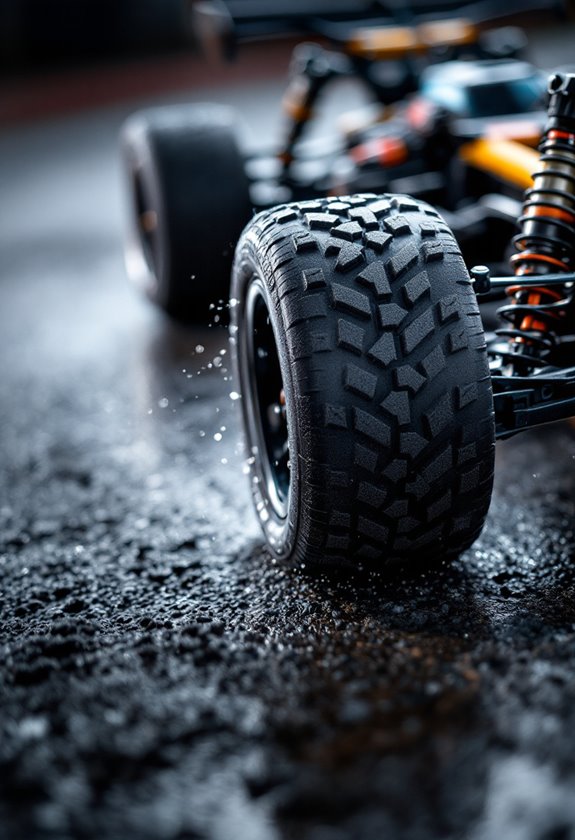
Foam tires offer a range of advantages that can greatly enhance your RC racing experience. One of the key foam benefits is their lighter weight, which improves acceleration and handling performance in racing applications. With lower rotational mass, you’ll notice better responsiveness when changing directions and cornering.
Additionally, foam material conforms to uneven surfaces, providing superior traction on both smooth and rough terrains. This means increased grip and ideal contact patches during races.
Foam tires also require less maintenance, eliminating issues like tire ballooning and chunking, making them a cost-effective choice for long-term use. Finally, with various hardness options available, you can customize your tires for specific track conditions, ensuring the best performance every time you race.
Synthetic Rubber vs. Natural Rubber
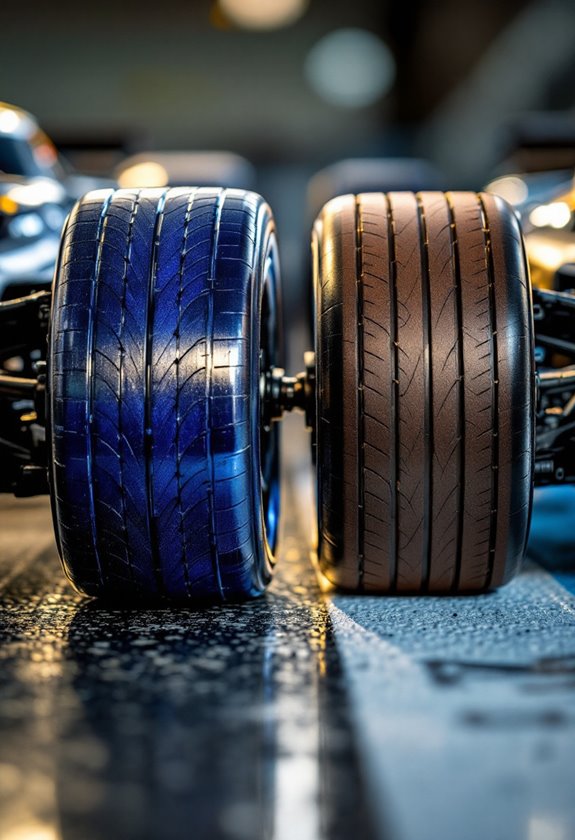
Choosing between synthetic rubber and natural rubber for your RC car tires is essential for optimizing your racing performance. Synthetic rubber offers impressive tire elasticity, allowing for greater adaptability in compound modifications during manufacturing. This results in high traction capabilities, perfect for those demanding racing conditions. However, it can wear out quickly under extended use. On the other hand, natural rubber provides a rigid composition, giving it durability and longevity, though it offers less grip. This makes it ideal for long-duration events. For various surfaces, we need to weigh the benefits of synthetic rubber’s flexibility against the dependable performance of natural rubber. Understanding these differences helps us make informed decisions based on our racing needs. Additionally, considering tire compounds and pressure can further enhance your overall racing strategy.
Identifying Compound Hardness Levels
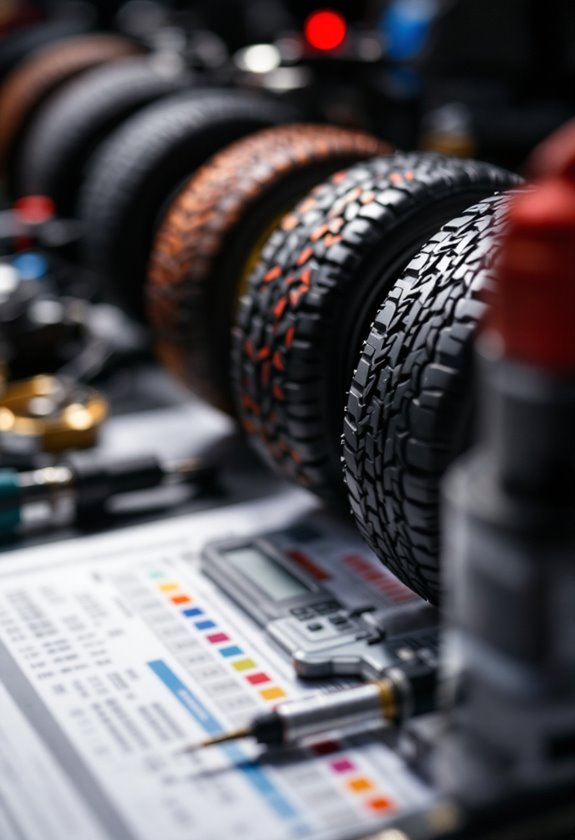
Understanding tire compound hardness levels can really impact our racing experience. When we look at compound hardness, we typically see shore numbers ranging from 32 to 45. A higher shore number indicates a firmer tire that offers better tire longevity, making it ideal for longer events. Conversely, soft compounds with lower shore numbers provide excellent grip but wear out quickly, requiring frequent replacements. Different manufacturers have distinct classification systems, like Pro-Line’s alphanumeric codes or Schumacher’s R-series. It’s essential to match our tire selection with track conditions—hard compounds shine in warmer weather, while soft tires excel in cooler climates. By grasping these hardness levels, we can optimize both performance and durability on the track.
Performance of Ultra Soft Compounds

When it comes to racing, ultra soft compounds are a game-changer for performance, especially in cooler conditions. We can’t stress enough how ultra soft performance maximizes grip when temperatures dip below 10°C. In those chilly, damp mornings, these tires shine, offering excellent traction advantages on dry-looking tracks. However, keep in mind that they wear out quickly compared to harder options, so having a spare set on hand is wise. When the surface is well-packed, ultra soft tires truly excel, delivering superior grip without excessive flexing. Just remember, these compounds aren’t ideal for hot weather; they wear faster and lose effectiveness. Understanding these aspects can help us make smarter tire choices for racing success! Additionally, the rubber compound utilized in tire manufacturing plays a significant role in optimizing performance across different racing conditions.
Super Soft and Their Trade-offs
Super soft compounds are a fantastic option for racers looking to maximize grip on the track. These tires, made from synthetic rubber, provide exceptional traction, especially in low-temperature or wet conditions. However, we must consider the trade-offs. Super soft tires tend to wear out faster compared to harder compounds, which can greatly reduce tire lifespan. The aggressive driving style often needed to take full advantage of their grip may lead to quicker degradation. It’s essential to incorporate these tires into our racing strategies wisely, evaluating track conditions and preparing spare sets for those rapid replacements. While their performance can be enchanting in ideal conditions, we need to balance that with maintenance efforts and overall durability on abrasive surfaces.
The Balance of Medium Compounds
Medium compounds strike a remarkable balance between grip and durability, making them a staple choice for many racers. These tires excel on loose dirt and variable surfaces, adapting well to changing grip levels throughout the race. They deliver adequate traction without the excessive tire wear seen in softer compounds, allowing us to maintain competitive lap times while preserving tire integrity.
Additionally, medium compounds perform reliably across moderate temperature variations, avoiding the pitfalls of more specialized options. This consistency minimizes the need for frequent tire changes, making them ideal for longer races. Whether we’re practicing or racing, their versatile nature lets us tackle different surfaces confidently. Overall, they’re a smart choice for balancing performance and cost-effectiveness in our RC racing adventures.
Benefits of Hard Compounds
Hard compound tires bring a wealth of advantages that every RC enthusiast can appreciate. First and foremost, they offer extended tire life and durability. With a durability analysis revealing that hard compounds last longer than softer ones, we can race with confidence, knowing we won’t need frequent replacements. The natural rubber construction maximizes heat resistance, making these tires ideal even in scorching conditions. Plus, their reduced wear means fewer tire changes during long races, allowing us to focus on our driving. Economically, these tires decrease overall maintenance costs, as we can spend more time on the track, rather than running out for new tires. Ultimately, hard compound tires deliver consistent, stable performance, making them a smart choice for serious racers.
Matching Tire Compounds to Track Surfaces
Matching the right tire compound to the track surface is a game-changer for any RC racer. When we’re on blue groove tracks, we need white compound tires to grip the rubber laid down. This tire excels in these conditions, letting us maintain consistent lap times. For hard-packed or slick surfaces, soft compounds with small pins help us gain maximum grip. It’s crucial to keep the tire pressure in check, as it affects how our tread patterns perform on different surfaces. Meanwhile, yellow compounds offer great versatility and balance, performing well across varied track types. Ultimately, understanding these specifics lets us make more informed decisions while racing, leading to better performance and increased confidence. Additionally, considering track surface compatibility is essential to maximize traction and handling during races.
Impact of Temperature on Tire Selection
When we think about choosing the right tires for our RC cars, temperature can’t be overlooked. The temperature effects on tire performance can greatly influence our compound selection. For instance, soft compounds can become overly grippy in high heat, compromising control during drifts. Plus, elevated temperatures can increase wear rates and lead to quick degradation, particularly for soft compounds. Established patterns show that high temperatures can escalate tire wear and further amplify heat, causing potential thermal shutdown in our vehicles. In contrast, cold conditions require compounds that maintain flexibility and performance. By understanding these temperature impacts, we can make informed choices to optimize our RC car’s handling, ensuring a thrilling and competitive experience no matter the weather. Additionally, using products like SXT 3.0 can help mitigate some of these temperature-related issues by restoring old tires to like-new performance.
Choosing Between Indoor and Outdoor Tires
Choosing the right tires for indoor and outdoor RC racing isn’t just about picking a style; it’s about matching your tire choice to the unique characteristics of each track. For indoor racing, we often go with clay compound tires, especially on sealed tracks like Beach RC Thunder Alley. These slick tires perform superbly on treated surfaces. Conversely, outdoor tires require different tread patterns and compounds, particularly for asphalt surfaces, where the temperature affects our selection; for instance, the 32R compound works best in warmer conditions. It’s essential that we comprehend the specific needs of our racing environment. By choosing the right indoor or outdoor tires, we’ll enhance performance and enjoy a better racing experience!
Key Features of Yellow, Blue, and Green Compounds
Understanding the unique features of yellow, blue, and green tire compounds can greatly enhance our RC racing experience.
- Yellow Compounds: Known for high tire grip, these are typically the softest, offering incredible traction on smooth surfaces, but they wear out faster.
- Blue Compounds: These strike a balance between softness and durability, providing solid tire grip with decent compound flexibility, making them ideal for mixed conditions.
- Green Compounds: Designed for long-lasting performance, green compounds are harder, offering lower tire grip but greater durability for more aggressive driving.
Choosing the right compound means considering our specific racing environment and how each color caters to tire grip and compound flexibility. By matching these features with track conditions, we can greatly improve our racing performance!
Preparing for Wet Conditions
Preparing for wet conditions can feel like a different ball game. Choosing the right tire compound is vital for grip enhancement on those slippery surfaces. Medium compound tires work best when tracks are moderately wet and loose. Wet compounds shine at the start of race days, but for clay surfaces, a harder compound might be the key to maintaining traction. Don’t forget about tire prep—using specialized additives can greatly improve performance on wet days. It’s also essential to adjust foam inserts; denser foams help softer compounds perform better under wet conditions. With the right preparation and tire choices, we’ll tackle those wet tracks with confidence and style!
Performance Trade-offs in Tire Selection
When we plunge into the world of RC car tires, we quickly realize that performance trade-offs are a major consideration. Soft compounds offer maximum traction, but they wear out quickly, which might not align with our performance expectations during intense racing sessions. On the other hand, hard compounds last longer and provide durability, but they sacrifice grip, requiring advanced driving skills to control our cars effectively.
We can’t forget synthetic rubber compounds, which deliver high traction but wear faster than natural alternatives. Green compounds can make our cars aggressive but lead to quicker tire wear. So, as we explore compound comparisons among different options, it’s essential to balance grip and durability while ensuring our chosen tires match our specific racing conditions!
The Importance of Proper Tire Support
To achieve peak performance on the track, we can’t overlook the essential role of proper tire support. Quality tires considerably impact our traction levels, ensuring we maintain control even during high-speed turns. When we select the right tire compound for our needs, we’re not just choosing a design; we’re enhancing our vehicle’s handling and stability. Proper tire pressure plays a pivotal part in this, as it affects grip and responsiveness. If we neglect tire support, we risk skidding and unpredictable behavior, which ultimately diminishes our racing experience. Remember, well-supported tires allow us to brake efficiently and accelerate confidently, maximizing our chances of success on competitive tracks. Additionally, the choice of tire materials can significantly influence durability and performance on different surfaces. So, let’s invest in the right tire setup for those thrilling finishes!
Frequently Asked Questions
How Do Tire Compounds Affect Handling Characteristics?
Tire compounds greatly impact our vehicle’s handling characteristics. Soft compounds boost grip levels but reduce tire longevity, while hard compounds offer consistent performance and durability, balancing control and wear. Choosing wisely maximizes our racing experience.
Can Mismatched Compounds Cause Instability in RC Cars?
Yes, mismatched compounds can cause instability in RC cars. The differing tire stability and compound differences create uneven grip, leading to unpredictable handling and reduced performance, ultimately affecting our racing experience on various surfaces.
What Tools Are Necessary for Tire Compound Selection?
What tools can we use for effective tire compound selection? We’ll need tire testing gear and compound comparison charts to guide our choices, ensuring we optimize our performance based on varied track conditions and vehicle setups.
How Often Should I Change My RC Car Tires?
We should change our RC car tires regularly, especially soft compounds, to prevent tire wear that impacts performance. Keeping an eye on tread and overall condition guarantees we maintain ideal handling and traction on the track.
Are There Universal Compounds Suitable for All Racing Conditions?
While universal tire options offer some compound versatility, they often fall short in specific conditions. We should remember that tailored compounds typically outperform them, especially on varied surfaces or extreme temperatures. Performance matters when racing!