As an Amazon Associate, we earn from qualifying purchases. Some links on this site are affiliate links at no extra cost to you. Our recommendations are based on thorough research and editorial judgment.


What Are The Best RC Springs?

When picking the best RC springs, we want to take into account spring rates, materials, and specific uses. Softer springs boost traction, ideal for crawling, while stiffer ones enhance stability for drag racing. Brands like Traxxas and Hot Racing have options for durability and tuning, while Losi offers precise performance adjustments. Remember to match spring rates with shock oil viscosity for the best setup. Want to learn about tuning techniques and user feedback to refine your choice? Stick with us!
Key Takeaways
- Traxxas springs are known for their durability and competitive rates, making them ideal for general use in RC vehicles.
- Hot Racing offers various stiffness options but may lack standardization, requiring careful selection for specific applications.
- Losi springs provide precise tuning options for tailored performance, particularly beneficial in racing scenarios.
- For drag racing, opt for stiffer rear springs to enhance traction and stability during launches.
- Softer springs are recommended for crawling to improve bump absorption and overall traction on uneven surfaces.
Understanding Spring Rates and Their Importance
You may be interested

When we immerse ourselves in the world of RC cars, understanding spring rates becomes essential for enhancing performance. Spring rate dynamics describe the force needed to compress a spring by a specific distance, typically measured in pounds per inch or Newtons per millimeter. In our RC setups, spring rates control effective compression, directly influencing how our vehicles handle various terrains. Softer springs offer better traction, especially on uneven surfaces, while firmer springs provide support for high-speed stability. We must consider factors like vehicle weight and shock mounting angles to select the right spring rate. By fine-tuning the spring rates on our RC cars, we can achieve the perfect balance between comfort, control, and speed, making every run thrilling. Additionally, choosing the right spring stiffness for your specific driving style can significantly impact your vehicle’s overall performance.
Comparing Different Brands of RC Springs
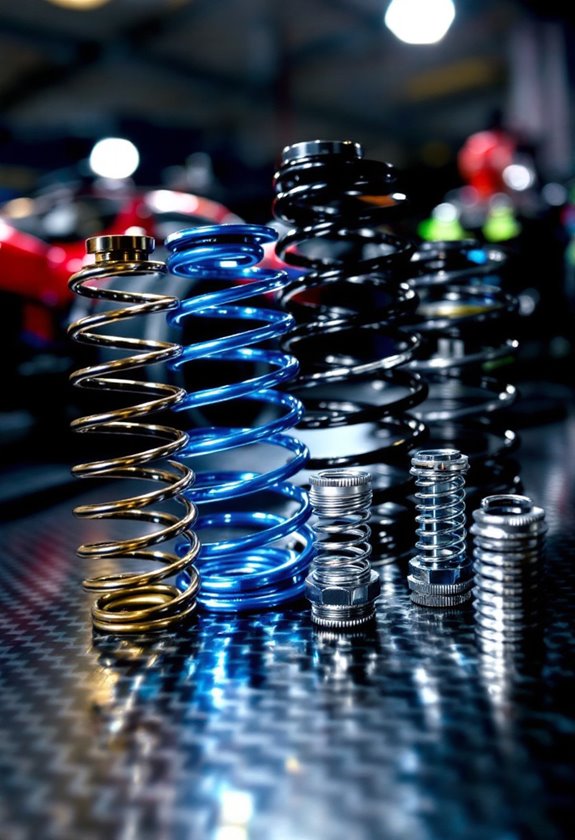
While traversing the world of RC springs, it’s exciting to compare different brands and find the perfect match for our vehicles. Traxxas springs show excellent durability with competitive rates, making them great for general use. In contrast, Hot Racing springs provide multiple options for stiffness, though standardization issues may cause confusion when comparing rates to Traxxas. Losi springs offer a wide range of precise tuning options, perfect for refining performance according to our driving styles. Meanwhile, Arrma springs are specifically designed for their vehicles, ensuring optimized handling. As we explore specialty and aftermarket springs, we discover unique coil designs suited for various disciplines, making frequency adjustments more accessible for different terrains. Each brand brings its own strengths to the table, and choosing the right one can significantly influence shock absorption capabilities.
Recommended Products
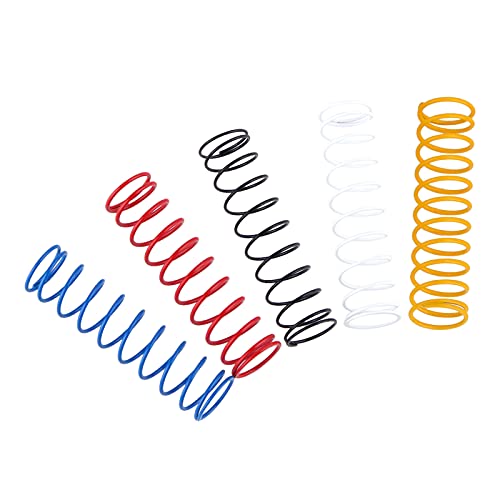
Made of high quality metal

Part name: RC Shock Absorber--120mm

Aluminum shock absorbers designed for compatible 1/10 RC car suspension systems. A practical replacement or upgrade option for hobbyists maintaining or customizing their RC vehicles.
Application-Specific Spring Recommendations

After exploring the various brands of RC springs, we can focus on application-specific recommendations that will enhance our RC vehicle’s performance. For drag racing, we need stiffer rear springs to boost traction, control weight transfer, and improve launch stability—these spring stiffness effects keep us from spinning out. In crawling, opting for softer springs allows better bump absorption while ensuring we avoid excessive squatting on climbs. For on-road cars, balancing spring stiffness is key; stiffer springs reduce body roll but might make things feel rough. Using precision tuning strategies, we can improve traction and handling across different terrains. Remember, matching spring rates with shock oil viscosity amplifies our vehicle’s capabilities, resulting in a smoother, more responsive ride! It’s also essential to consider spring dimensions and stiffness, as they play a crucial role in determining the overall handling performance of your RC vehicle.
Recommended Products

Made by Hot Racing; Hot Racing is a United States based company; parts are sourced from Chinese producers

Made by Hot Racing; Hot Racing is a United States based company; parts are sourced from Chinese producers

Made by Hot Racing; Hot Racing is a United States based company; parts are sourced from Chinese producers
Performance Characteristics of Various Spring Rates
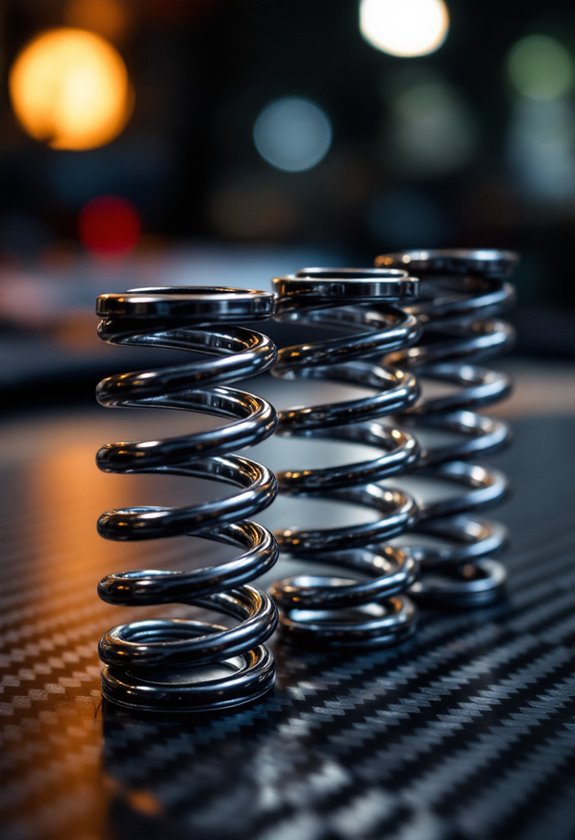
The world of RC springs is a fascinating blend of science and art, with varying spring rates dramatically influencing your vehicle’s performance. When we look at spring rate effects, we see how softer springs allow greater suspension travel, enhancing traction over uneven terrains. Conversely, stiffer springs improve handling on smooth tracks by minimizing chassis roll. This balance is key—front and rear spring rates must work together for ideal suspension dynamics. Stiffer rear springs enhance launch stability, while softer front springs might improve steering response. Quick rebound from stiff springs boosts stability during directional changes, but too much softness can compromise handling precision. Tailoring these characteristics to suit your racing needs can transform how your RC car performs and feels on the track. Additionally, understanding droop travel is essential for maintaining tire contact with the ground on uneven terrain.
Recommended Products

Material: Steel Metal. Super durable steel leaf springs
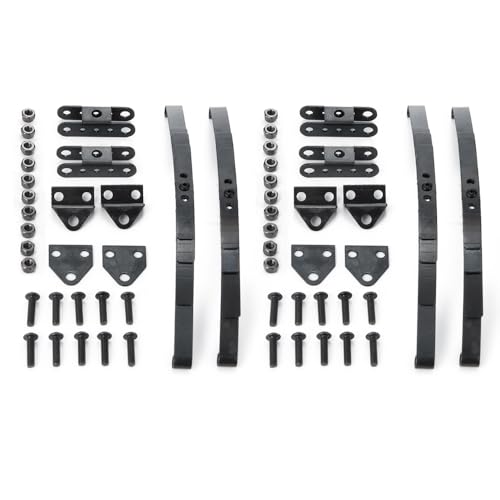
Made of steel material, durable and wear-resistant
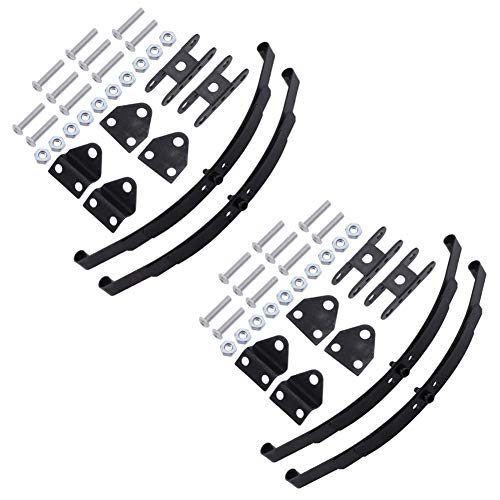
Compatible with 1/10 Scale RC Crawler Truck RC4WD D90 RC Rock Crawler
The Role of Coil Count in Suspension Dynamics
When we explore the role of coil count in suspension dynamics, we uncover just how crucial this aspect is for our RC vehicles’ performance. The coil count directly influences our suspension behavior, affecting how smoothly our cars handle bumps and turns. With higher coil counts, more active coils compress, distributing stress evenly and reducing the risk of fatigue. This means our vehicles can maintain ride height better and have a more progressive response to different loads. A well-balanced coil count allows us to tune our suspension effectively for various track conditions. In short, understanding the significance of coil count helps us optimize our RC cars for an exhilarating driving experience. Additionally, high-quality materials used in suspension components can further enhance durability and overall performance.
Material Considerations for Durability and Performance
Understanding the material used for RC springs is essential, as it directly impacts both durability and performance. When we talk about spring materials, steel springs are often the go-to choice. Their strength makes them durable, handling rough conditions without deforming under load. However, they can rust, so coatings are key for longevity. On the other hand, composite springs—like carbon fiber—offer impressive fatigue resistance and can be much lighter, enhancing vehicle handling. While they’re pricier and less common, their lifespan shines in high-performance contexts. Ultimately, we must weigh these material options carefully to find the perfect balance between durability and performance for our specific RC needs. The right material can make a world of difference in our driving experiences! Additionally, high-quality materials, such as high-quality aluminum construction, can significantly improve overall vehicle performance.
Tuning Techniques for Optimal Suspension Setup
Tuning your RC vehicle’s suspension is where the magic happens—it can drastically improve your handling and performance on the track. First, we should analyze our spring compatibility, ensuring the rates match the terrain we’re racing. If we’re on a rough track, consider softer springs; for high-grip surfaces, stiffer options work better. Next, let’s explore shock adjustment techniques like changing oil viscosity. Thicker oil provides better bump absorption, while thinner oil increases responsiveness for jumps. Adjusting shock mounting positions affects suspension stiffness as well; moving them inward softens the feel, which is great for bumpy tracks. Remember that consistent adjustments help maintain balance across the front and rear, giving us the best chance for competitive success!
Recommended Products
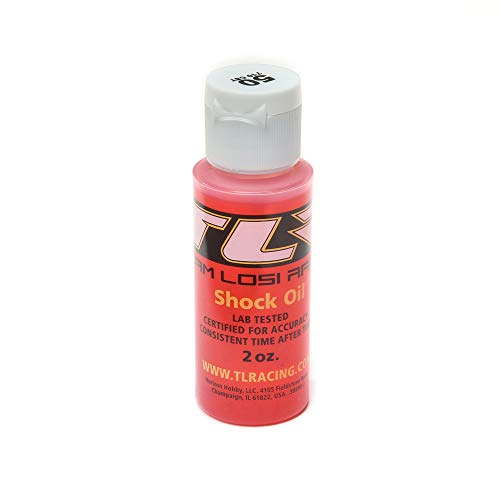
Product Type :Toys And Games

Team Associated Silicone Shock Fluid,20WT 2oz, ASC5421

Note: Shock oil is not included. Select the appropriate viscosity based on your needs.
Cost-Effectiveness of Springs for RC Vehicles
It’s easy to overlook the importance of cost-effectiveness when choosing springs for our RC vehicles, especially with so many options available. We often find that spring value is not just about the upfront cost but also long-term performance. Budget options may seem appealing, priced between $5 to $15, but they might wear out faster, leading us to buy replacements more frequently. On the other hand, investing in higher-quality springs can improve durability and maintain consistent spring rates, ultimately saving us money over time. Mid-range springs strike a balance, offering good performance without breaking the bank. By focusing on the overall cost-effectiveness of springs, we can enhance our RC experience without compromising quality. Choose wisely, and let’s race smart!
User Feedback and Real-World Testing Insights
When we explore user feedback and real-world testing insights, it becomes clear just how crucial these elements are for choosing the right RC springs. Many hobbyists are skeptical of spring myths surrounding barrel springs’ supposed advantages after competition wins. Users often compare Traxxas and Hot Racing springs, but differences in specifications lead to confusion without testing equipment. Some aftermarket brands can influence ride feel considerably, although feedback remains largely anecdotal. We’ve found that spring rate verification tools help confirm claims about stiffness. User preferences vary widely based on driving style and terrain, underscoring the significance of subjective opinions. Ultimately, these insights remind us that selecting springs should blend personal experience with objective testing data for ideal performance.
Tips for Choosing the Right Springs for Your RC Setup
Choosing the right springs for your RC setup can feel overwhelming, but we’re here to simplify the process. First, we need to check the spring rate, which tells us how much force it takes to compress the spring. Softer springs offer better traction for crawling, while stiffer options enhance handling for high-speed jumps. Also, it’s vital to match spring preload with your shock absorbers. This adjustment improves suspension balance and ride quality, making your RC car perform better on various terrains. Don’t forget to take into account the number of coils and wire diameter too! By understanding these factors, we’ll make certain our RC setups are well-tuned for both performance and fun!
Recommended Products

Suit for TRX4 SCX10.

CUSTOM WORKS RC 1820 Big Bore Shock Spring Set
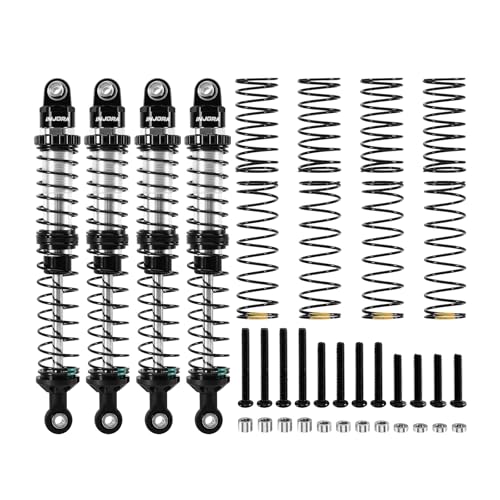
Note: Shock oil is not included. The length is measured eye-to-eye (center-to-center), not overall length.
How Do I Measure a Spring’s Rate Accurately?
To measure a spring’s rate accurately, we should use proper spring measurement techniques, like multiple compression points, and apply spring rate calculations that consider environmental factors and manufacturer data variances. Let’s guarantee precise results together!
Can I Mix Different Brands of Springs?
Sure, we can mix different brands of springs! However, we should consider spring compatibility and brand performance carefully. Balancing rates helps guarantee ideal handling, so let’s consult experts to make informed decisions together.
What Signs Indicate Spring Fatigue or Failure?
We should watch for spring performance fatigue indicators like clunking noises, sagging ride height, and uneven tire wear. These signs reveal potential issues, so let’s inspect and address them early for our vehicle’s safety.
How Often Should I Replace My RC Springs?
We should replace our RC springs every 6-12 months for heavy use, as frequent suspension tuning will keep performance consistent. Notably, regular spring maintenance can extend their lifespan considerably, enhancing our overall driving experience.
Do Environmental Factors Affect Spring Performance?
Yes, environmental factors like weather conditions and terrain types definitely affect spring performance. Let’s consider how extreme temperatures and rough surfaces can alter strength and durability, reminding us to choose springs wisely for our specific needs.