As an Amazon Associate, we earn from qualifying purchases. Some links on this site are affiliate links at no extra cost to you. Our recommendations are based on thorough research and editorial judgment.


How To Setup Event Participation?

To set up event participation effectively, we should start by defining clear goals and objectives that align with our brand’s strategy. Next, we can streamline registration and check-in using technology like QR codes for quick access. Enhancing the onboarding process helps attendees feel welcomed and informed. Engaging participants through interactive experiences is key to retaining interest. Additionally, coordinating with vendors guarantees everything runs smoothly. Curious about more details? There’s plenty more to explore!
Key Takeaways
- Establish clear event goals and objectives using SMART criteria for effective participation alignment.
- Create personalized onboarding communications to engage attendees before the event starts.
- Simplify registration and check-in processes with digital kiosks and QR code validation.
- Implement interactive elements and gamification strategies to enhance attendee engagement during the event.
- Ensure efficient vendor coordination by maintaining clear communication and detailing roles and expectations.
Defining Event Goals and Objectives
You may be interested



When we think about planning an event, defining our goals and objectives is essential. These goals represent the specific and measurable outcomes we want to achieve. It’s important to ask ourselves, “Why are we holding this event?” Clearly defined goals align with our brand’s marketing strategy and help set realistic expectations.
Objective measurement comes into play when we break these goals down into smaller, actionable steps. For example, if our goal is to increase ticket sales by 20%, an objective might be partnering with five promoters for outreach. Using the SMART criteria guarantees our goals are achievable and time-bound, creating a clear roadmap. Additionally, understanding motor performance factors can help us create engaging event experiences that resonate with attendees. Let’s commit to effective goal setting, paving the way for a successful event that resonates with our audience!
Effective Participant Onboarding Strategies
Creating an effective onboarding experience is essential for ensuring participants feel welcomed and ready to engage with your event. We should implement preboarding strategies to connect with attendees before the event starts, providing important information about logistics and their role. This helps build anticipation and reduces no-shows. Personalizing onboarding is equally important; we can tailor communications to reflect each participant’s interests and backgrounds, making them feel valued. It’s imperative to communicate expectations clearly, as this fosters a sense of belonging. When we effectively engage participants through these methods, we’ll enhance their overall experience, improving retention and satisfaction rates. Let’s embrace these strategies to create a successful onboarding journey for every event we host! Additionally, incorporating elements like advanced technology can enhance interactivity and engagement during the onboarding process.
Streamlining Registration and Check-In
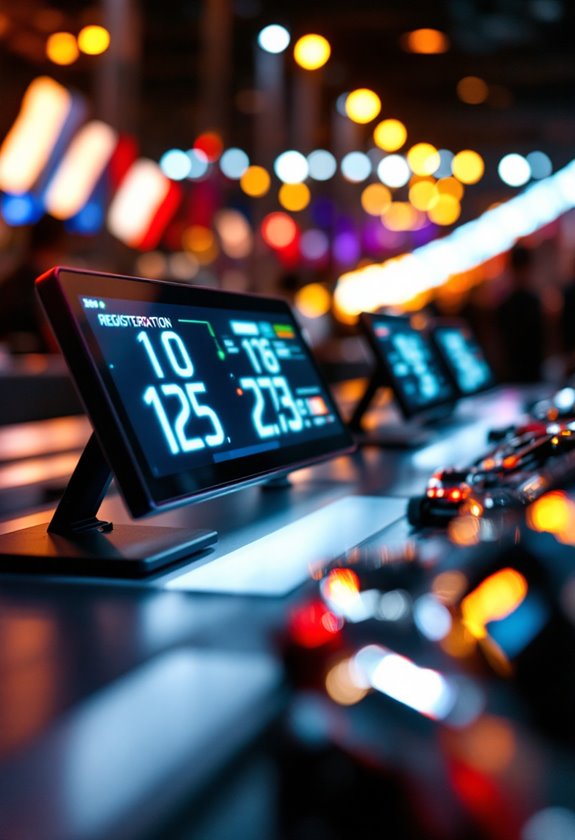
Streamlining registration and check-in is essential for guaranteeing a seamless experience at our events. To achieve registration simplification, we need to utilize both manual check-ins for smaller or VIP events and digital self-service kiosks for larger gatherings. By leveraging check-in technology like QR code scanning, we can validate tickets and access attendee data in no time. Integrating our event management platform with registration tools guarantees accurate and efficient processing, minimizing errors. We should keep registration forms concise to facilitate ease of completion. Sending pre-event communications, including instructions and reminder emails with QR codes, prepares everyone for a smooth check-in day. Together, these strategies will create an enjoyable and efficient experience for all attendees! Additionally, we can enhance our timing accuracy by employing GPS tracking technology, ensuring that event schedules run smoothly and on time.
Enhancing Attendee Engagement and Experience

How can we truly elevate attendee engagement and experience at our events? By incorporating immersive experiences and interactive elements, we can create memorable environments. Gamification strategies, like polls and quizzes, not only boost participation but also keep attendees excited. Let’s not forget about enticing educational content paired with strong networking opportunities, which are key drivers for attendance. Incentive programs, such as contests and giveaways, will attract more guests and heighten overall interest. Additionally, designing micro events allows for deeper connections in smaller groups. Finally, leveraging multichannel engagement guarantees we reach all participants, virtual or in-person, maximizing our event’s impact. Together, we can craft events that truly resonate and inspire our attendees! Furthermore, ensuring that the support team is familiar with event rules is essential for smooth participation, enhancing the overall experience for everyone involved.
Coordinating Vendors and Logistics
When planning an event, coordinating vendors and logistics is essential for success. We must start with thorough vendor evaluation to guarantee we select the right partners. This includes checking online reviews and reviewing vendor portfolios to confirm their reliability. Next, we’ll plunge into logistics planning by organizing pre-event walkthroughs to clarify setup needs and roles. It’s crucial we communicate regularly with our vendors, using multiple channels to keep everyone informed. Drafting detailed contracts that outline deliverables and timelines will help minimize misunderstandings. By strategically placing vendors for peak flow, we can enhance the event experience. Additionally, integrated LED lighting options can improve visibility during the event setup. Finally, we should maintain a centralized system to track information, securing smooth coordination on the big day. Let’s set up our event for success!
Establishing Technology and Support Infrastructure
After we’ve got our vendors and logistics sorted out, it’s time to look at the technology and support infrastructure that will power our event. First, we’ll assess our event technology needs, like microphones and sound systems tailored to our venue. Next, we’ll specify video requirements, including projectors and cameras for streaming. For lighting, we’ll consider stage wash and creative effects to enhance our atmosphere.
Connectivity is key, so we’ll guarantee robust Wi-Fi for all attendees, while providing separate networks for staff. Don’t forget powered needs—outlet locations and dedicated circuits for high-draw equipment are essential. Additionally, stable temperature control for soldering equipment will ensure reliability during technical setups. Finally, dedicated technical support on-site will keep everything running smoothly. By planning these elements, we can guarantee an exceptional experience for everyone involved!
Recommended Products

DUAL-BAND WIFI 6 ROUTER: Wi-Fi 6(802.11ax) technology achieves faster speeds, greater capacity and reduced network congestion compared to the previous gen. All WiFi routers require a separate modem. Dual-Band WiFi routers do not support the 6 GHz band.

NIGHTHAWK WIFI 6 ROUTER FOR YOUR WHOLE HOME: Delivers fast, reliable WiFi across every room of your apartment or small home for streaming, gaming, video calls, and smart home devices, all running at the same time without slowing each other down.

𝐅𝐮𝐭𝐮𝐫𝐞-𝐑𝐞𝐚𝐝𝐲 𝐖𝐢-𝐅𝐢 𝟕 - Designed with the latest Wi-Fi 7 technology, featuring Multi-Link Operation (MLO), Multi-RUs, and 4K-QAM. Achieve optimized performance on latest WiFi 7 laptops and devices, like the iPhone 16 Pro, and Samsung Galaxy S24 Ultra.
What Are the Key Elements of Successful Event Promotion?
To successfully promote our event, we must identify our target audience and create compelling content that resonates with them. By combining effective digital marketing channels and personalized messaging, we can boost engagement and attendance markedly.
How Do I Measure Event Success After Completion?
Like gathering stars in a night sky, we measure event success through evaluation metrics and attendee feedback collection. By analyzing check-ins and satisfaction scores, we illuminate our path to future improvements and engagement.
What Are Common Pitfalls to Avoid When Planning an Event?
When planning an event, we should avoid overspending beyond budget constraints, neglecting guest logistics, and skipping communication. It’s essential to guarantee everyone knows their roles, and we regularly track expenses to stay organized and efficient.
How Can I Involve Sponsors Effectively in the Event?
To involve sponsors effectively, we should emphasize their value proposition through targeted engagement strategies. By showcasing tailored analytics and promoting meaningful interactions, we can create compelling reasons for sponsors to invest and participate actively.
What Follow-Up Actions Should Be Taken Post-Event?
After the event, we should prioritize feedback collection and initiate timely communication to enhance attendee engagement. Utilizing multiple channels and personalizing messages can strengthen connections and encourage future participation, ensuring we keep the momentum alive.